MP70-16: In pediatric patients with an upper tract urinary stone of less than 2cm in diameter does ureteroscopy compared to shock wave lithotripsy improves the stone-free rate? A systematic review and meta-analysis from the EAU Urolithiasis Pannel
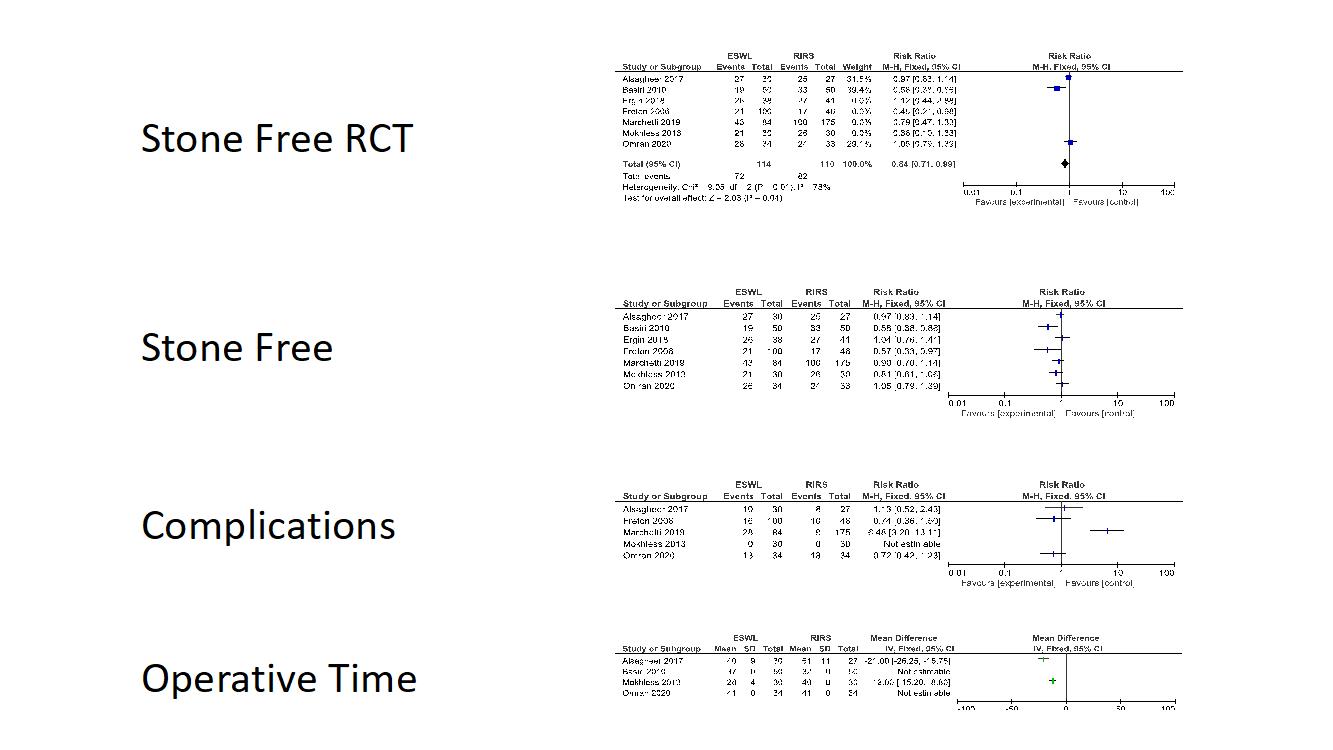
Introduction: To determine which treatment between ureteroscopy (RIRS) and shockwave lithotripsy (ESWL) has a better stone free rate in paediatric patients ( <18 years) with upper tract stones ( <2cm) Methods: Using PubMed, Web of Science, and the Cochrane database, we identified studies published until August 2022 reporting surgical outcomes of paediatrics patients undergoing ULT and ESWL with renal stone < 2cm. Protocol was registered in the PROSPERO database. Only comparative studies were considered for analysis. Stone free rate, operative time and complications were analyzed. Review manager was used for analysis. Results: A total of 7 studies were included in the analysis and out of them three were randomized clinical trials. A total of 786 patients were analyzed. Mean age ranged from 6.5 to 11.5 years. The ESWL group presented a range of stone free rates between 20 and 90% while the RIRS group presented a range of stone free rates between 37 and 97%. The meta-analysis of the three randomized clinical trials favored the RIRS group over the ESWL group in terms of stone-free rate (RR: 0,84; p<0,05) (Figure). Only four studies included complication rate and rates were comparable between both groups. In terms of operative time only four studies included data and most of them favored ESWL over RIRS (Figure). Conclusions: Based on the best evidence available RIRS is superior to ESWL in terms of stone free rate. Complication rate is similar for both procedures while operative time is shorter in ESWL. SOURCE OF Funding: none