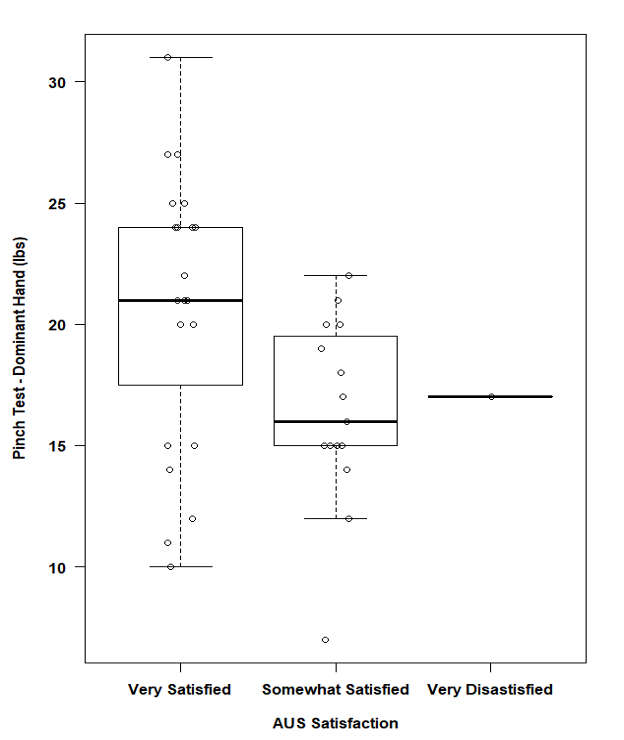
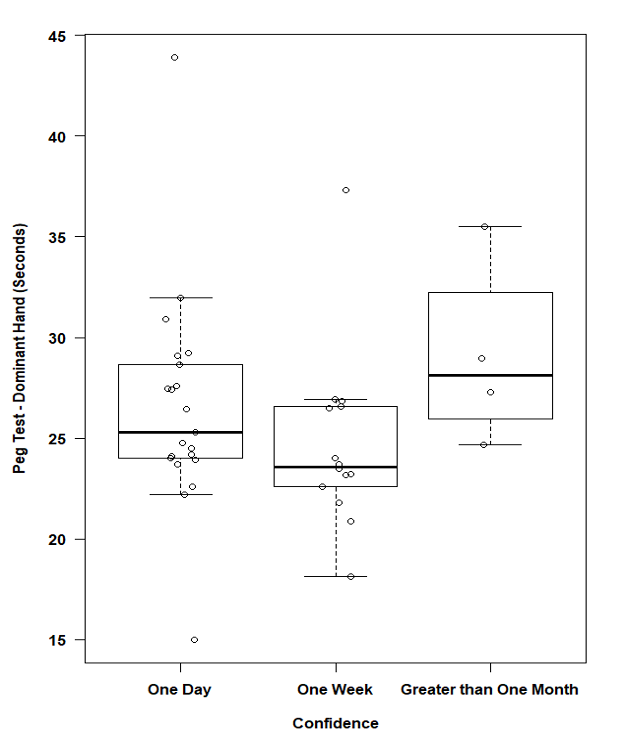
Introduction: Artificial urethral sphincters (AUS) remain the gold standard for treatment of stress urinary incontinence in men. Dexterity diminishes with age and some men can have difficulty operating the device. There is scarce information on effective preoperative screening for this issue. Here we investigate the ability of pinch and grip strength, peg-transfer, and Disabilities of the Arm Shoulder and Hand Outcome questionnaire (DASH) to predict postoperative success. We hypothesize that strength and dexterity as measured by these tests will correlate with patient satisfaction. Methods: A timed 9-hole peg test, pinch and grip strength assessment, and DASH questionnaire were administered during the pre-operative visit before AUS placement. In addition to standard pre-operative workup, incontinence questionnaire (ICIQ-SF) and physician handshake were recorded. Activation occurred 6 weeks after surgery along with assessment of adequacy of pump placement. 3 months from surgery a repeat ICIQ-SF and a survey measuring satisfaction, difficulty of use, and confidence were given. Correlation between pre-operative assessment variables and the post-operative questionnaire was assessed. Results: 39 patients were included. Average age and BMI were 68.8 years and 28.8 kg/m2 respectively. 92.3% had prior prostatectomy, and 46.2% had prior pelvic radiation. Postoperatively 59.0% of patients were very satisfied; 64.1% of patients reported no difficulty of use; 53.8% felt confidence within one day; and 66.7% had much better bladder control. Average pad improvement count was 5.3. Pinch test was associated with satisfaction (p= 0.011) while peg test was associated with confidence (p = 0.049). Handshake and DASH were not significant. Conclusions: Pinch and 9-hole peg transfer test could be useful adjuncts during AUS evaluation for patients whose manual functional status is unclear. Additionally, these tests are cheap and easy to perform in clinic. SOURCE OF Funding: Midwest Stone Institute

.jpg "Kendrick Campbell, MD (she/her/hers) photo")