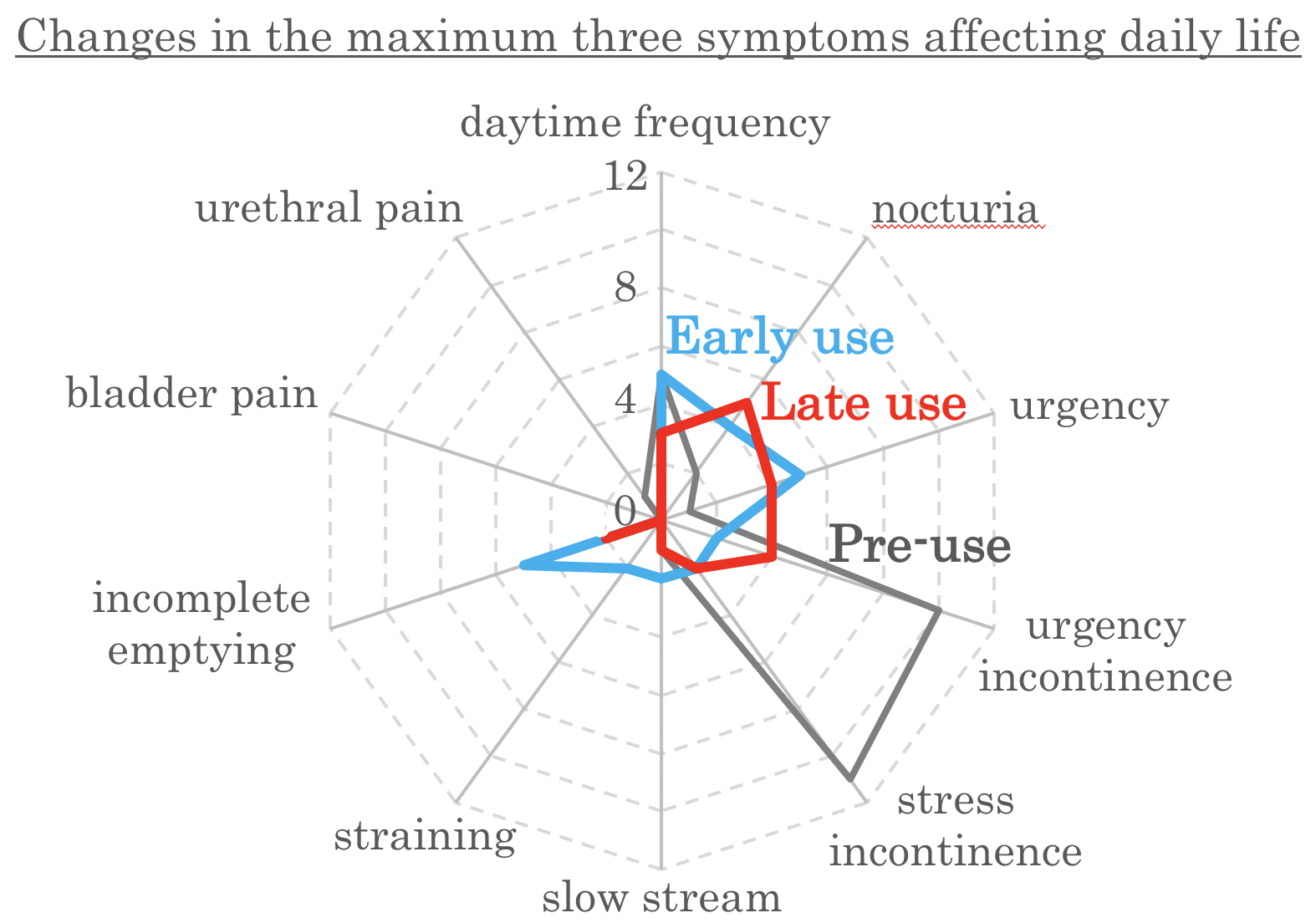
Introduction: While the artificial urinary sphincter (AUS) can significantly improve continence status, improved continence has been shown to worsen slightly over time. However, few studies have evaluated the trend in lower urinary tract symptoms (LUTS) other than incontinence. The frequently used International Prostate Symptom Score questionnaires may not adequately assess LUTS due to a lack of queries regarding incontinence and pain. The Core LUTS Score (CLSS) allows for an overall assessment of LUTS, which addresses 10 important symptoms from the 25 defined by the International Continence Society standardization steering committee. The CLSS questionnaire was used to assess LUTS after AUS implantation, longitudinally. Methods: The subjects were 19 male who underwent initial AUS implantation at Tokyo Medical and Dental University from 2018 to 2021. LUTS were assessed before AUS implantation as well as one month (early use) and 12 months (late use) after implantation. CLSS data was collected from 13 patients before implantation and 19 patients during early and late use.This study was approved by our ethics committee (approval number: #2018-157). Results: The median age at surgery was 74 years. The causes of urinary incontinence were radical prostatectomy and benign prostatic hyperplasia surgery in 18 and one patient, respectively. All patients achieved social continence of =1 pad/day, and the quality of life index improved significantly from 5.6 to 1.8 (0: delighted to 6: terrible) in early use (p <0.001) in 13 patients with preoperative evaluations. The most bothersome symptom was urinary incontinence in 11 (85%) patients and frequent urination in 2 (15%) patients before use, while two in early use and four in late use listed incontinence-related symptoms. Longitudinal change between early and late use showed improvement in voiding and post-micturition symptoms. On the other hand, no apparent improvement in storage symptoms was observed (Fig.1). On late use, 3 (16%) were receiving medication for overactive bladder. Conclusions: Post AUS implantation, urinary incontinence distress decreased, and other LUTS became more prominent. There was no trend toward improvement of the storage symptoms over time, and pharmacotherapy should be adiministered as needed. SOURCE OF Funding: None