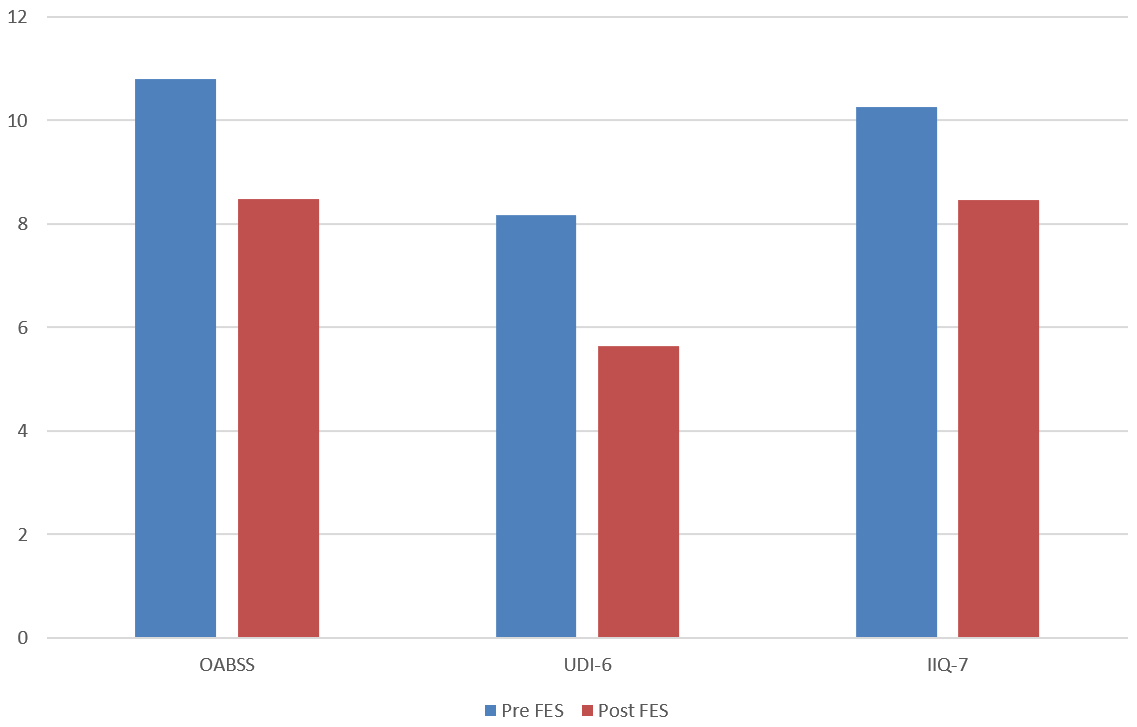
Introduction: Post-prostatectomy incontinence (PPI) is a bothersome complication after receiving radical prostatectomy. Incontinence may significantly interfere with quality of life and increase activity dependency. Functional electrical stimulation (FES) is one of the treatment tools of urinary incontinence. FES is the only conservative management in Taiwan National Health Insurance. The aim of this study was to analyze the effectiveness of FES in PPI treatment. Methods: Patients who received robotic-assisted radical prostatectomy between 2019 to 2022 with complications of PPI were enrolled. The patient received FES twice every week (one course). Urinary distress inventory, short form (UDI-6), overactive bladder symptom score (OABSS) and Incontinence Impact Questionnaire, Short Form (IIQ-7) were applied for incontinence symptoms assessment and quantification. Measurements were obtained before and after 3 courses of FES treatment. Pre-FES and post-FES scores were collected and analyzed by pair sample T-test. Results: Questionnaire data of 33 patients with PPI were collected in this study. No complication was noted during the whole treatment course of FES. Bothersome questionnaire scores significantly improved at follow up when compared to the baseline. The average score of OABSS (10.8 to 8.48, p=0.00017) and UDI-6 (8.18 to 5.65, p=0.00026) both got significant reductions. But there is no difference between pre and post-FES IIQ-7 score (10.26 to 8.46, p=0.09). Conclusions: Our study revealed the incontinence symptoms improvement after receiving functional electrical stimulation therapy. Functional electrical stimulation is a safe and effective treatment for post-prostatectomy incontinence. SOURCE OF Funding: None

.jpg "PinChun Liu (he/him/his) photo")