Assistant Professor (Education Specialist) The Ohio State University Wexner Medical Center
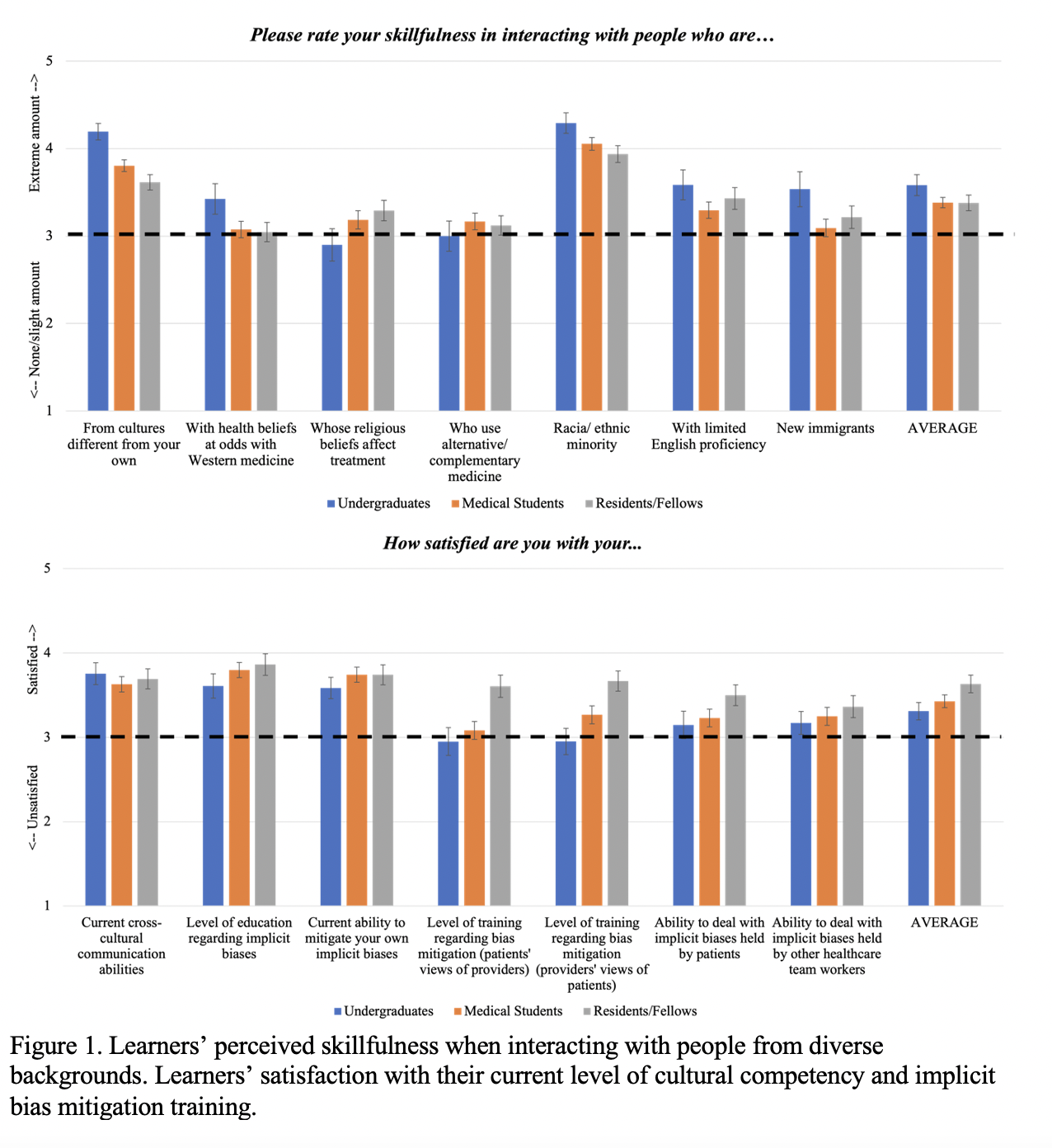
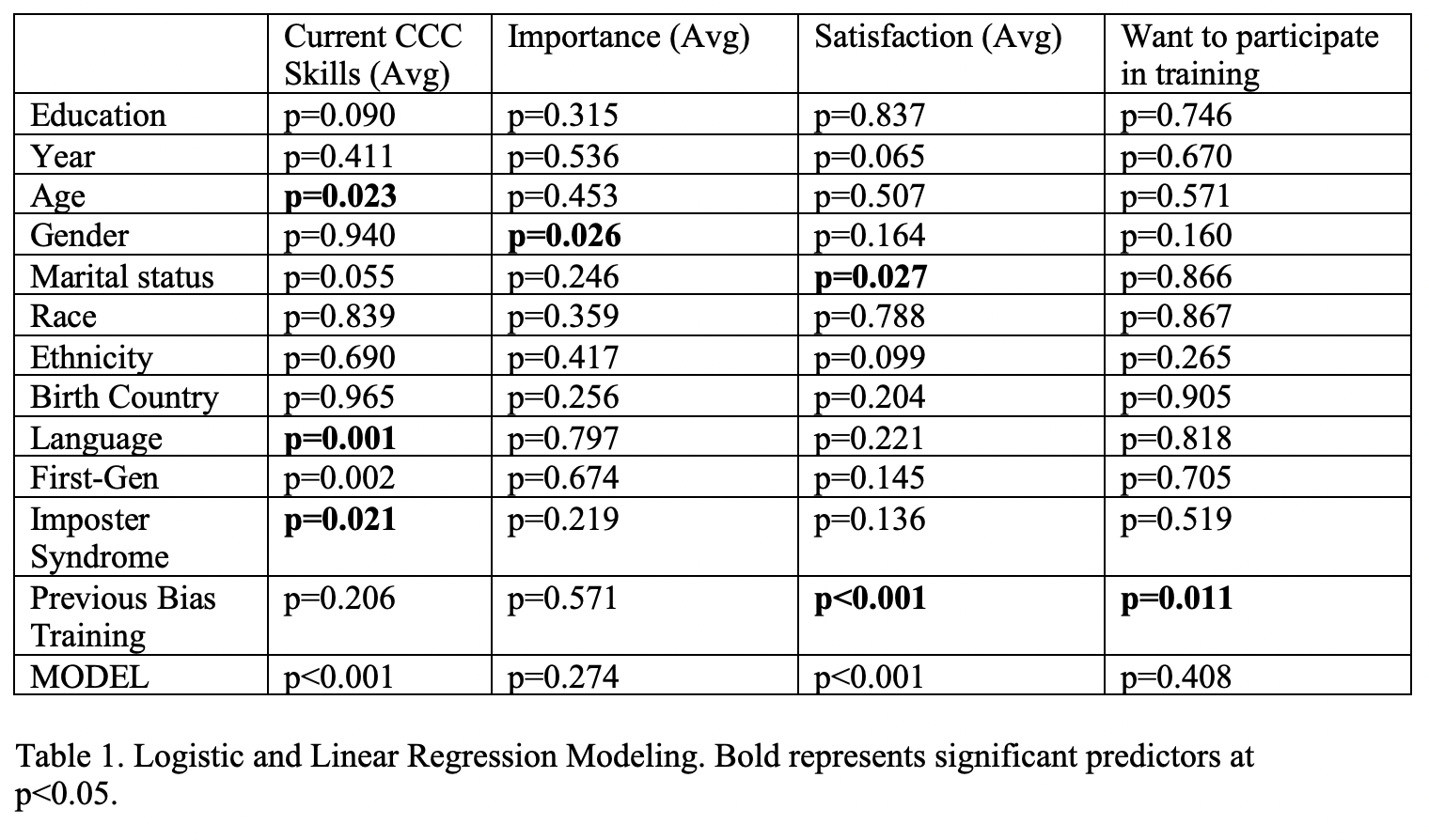
Introduction: Implicit biases, or unconscious stereotypes, are typically formed based on identity and can influence behavior/judgment, including the physician-patient relationship. Although some education around implicit bias has been developed, formal programming and scholarly reports are limited, particularly at the trainee level. Our objective was to identify (a) what implicit bias programming medical trainees have received to date, (2) what type and how much more training is needed to succeed in a healthcare career. Methods: A survey-based needs assessment was sent via REDCap to pre-medical undergraduate students (n=75), medical students (n=75), and resident/fellows (n=55) at our institution. Participants reported demographics, plus current skill level, attitude, previous experience, satisfaction, and training needs as related to implicit bias training and ability to deliver cross-cultural patient care. Results: Trainees felt it was important to be aware of biases and to communicate competently but felt much more training and education on how to do so was needed, considering their lack of cross-cultural skills/confidence as related to delivering medical care (p>0.1). Modeling indicated that older participants (p=0.023), non-English (as a first language) speakers (p=0.001), and those who felt less imposter syndrome (p=0.021) had greater perceived skills in cross-cultural competence and communication. Previous training was a significant predictor of satisfaction with current level of training (p < 0.001). Learners indicated their preference for implicit bias mitigation training as a single 2-3 hour session (31%) or a 1-hour weekly session (30%). Conclusions: Medical trainees’ need for implicit bias training should not be overlooked, particularly given the call for this training in faculty and staff at many medical centers and institutions. Healthcare workers interact with diverse patient populations at an increasing rate and results from this needs assessment suggest much more work is done to expose and train early learners in this domain. SOURCE OF Funding: OSU Medical Student Research Scholarship OSU Undergraduate Research Apprenticeship Program The Women's Place