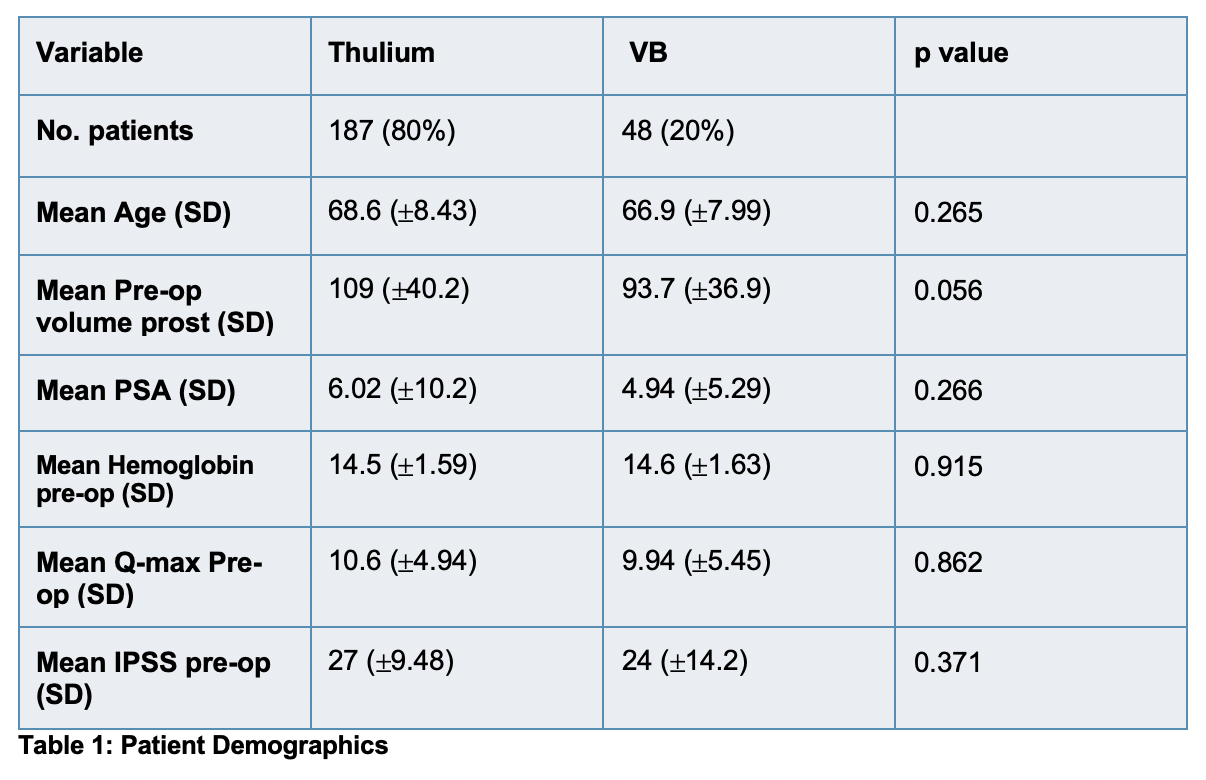
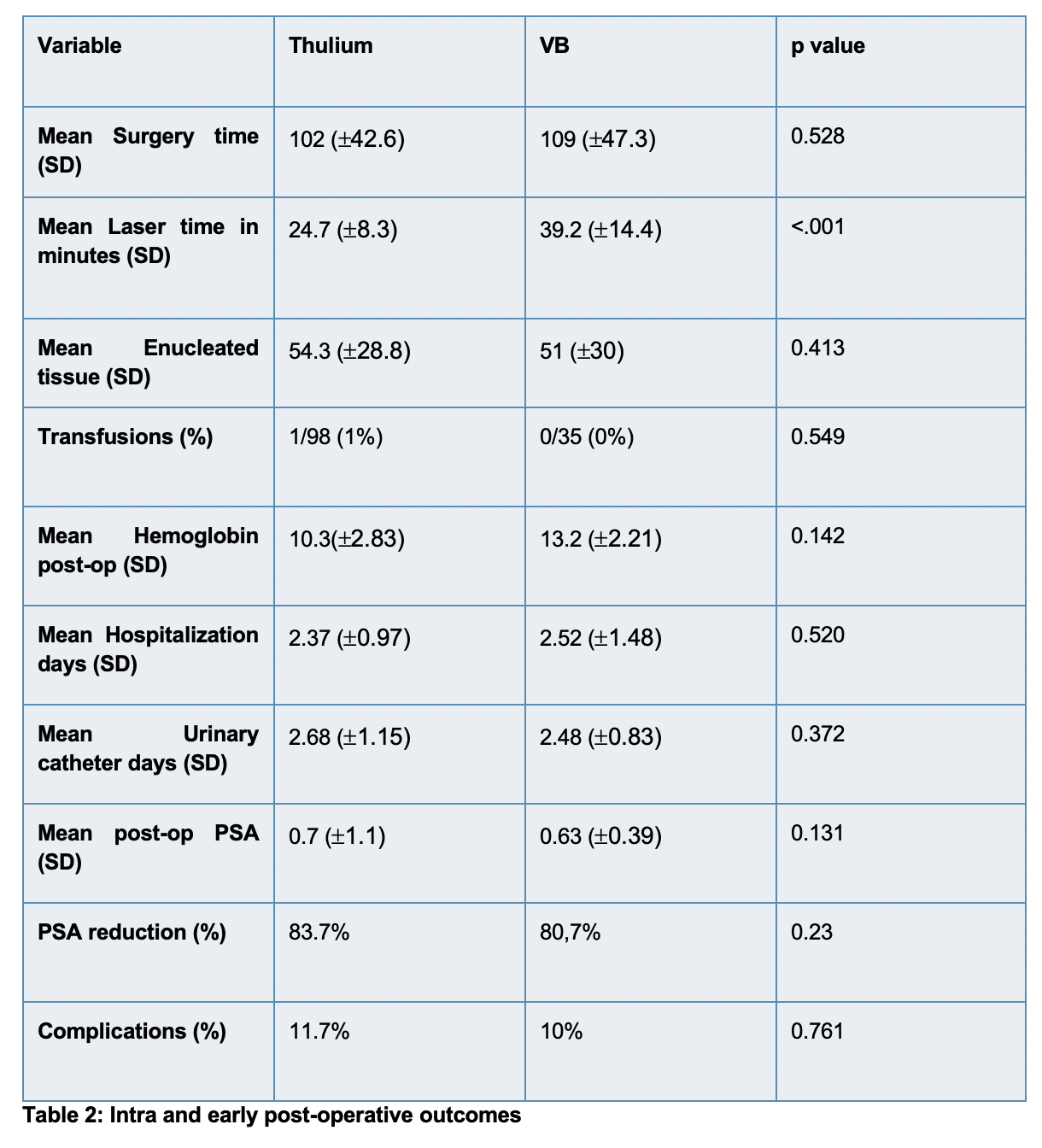
Introduction: To maximize HoLEP performance, Virtual Basket (VB) pulse modulation technology has showed better hemostasis and shorter surgical times when being applied to HoLEP. However, in recently published systematic reviews comparing HoLEP with Thulium-YAG Enucleation (ThuLEP), a superior hemostatic capacity was observed with ThuLEP instead of HoLEP. We aimed to evaluate and compare the perioperative results between HoLEP using Virtual Basket (HoLEP-VB) versus ThuLEP. Methods: An IRB database was retrospectively analyzed to identify a total of 235 patients, 48 (20%) were treated with HoLEP-VB (Group 1) and 187 (80%) were treated with ThuLEP (Group 2) between January 2018 and August 2022 by a single surgeon using a two-lobe technique. To lower the impact of the learning curve, the first 50 HoLEP and ThuLEP done were not included. Perioperative outcomes and complications according to the Clavien-Dindo classification were compared between groups. The primary endpoint was hemoglobin decrease. Results: The median prostate size was 106 cc and the mean surgical time was 103 minutes. No differences were observed with regards to preoperative characteristics between the groups including age, prostate size, PSA, IPSS and mean preoperative flow (Table 1). In the intraoperative results , there were no significant differences in surgical time (109 vs 102 minutes, p=0.52). Laser time was longer for HoLEP-VB (39.2 vs 24.7 minutes, p<0.001). The mean hemoglobin decrease was 1.8 g/L of the cohort and there was no difference in the primary endpoint between the groups. In addition, there were no significant differences in the length of stay, days of use of urinary catheter and incidence of complications, including the need for transfusion and reinterventions (Table 2). Conclusions: The use of Virtual Basket pulse modulation during HoLEP appears to provide a similar hemostatic control than Thulium-YAG. Patients that underwent HoLEP-VB had similar perioperative outcomes to patients treated with ThuLEP. SOURCE OF Funding: none