Department of Pharmacology, Kochi Medical School, Kochi University
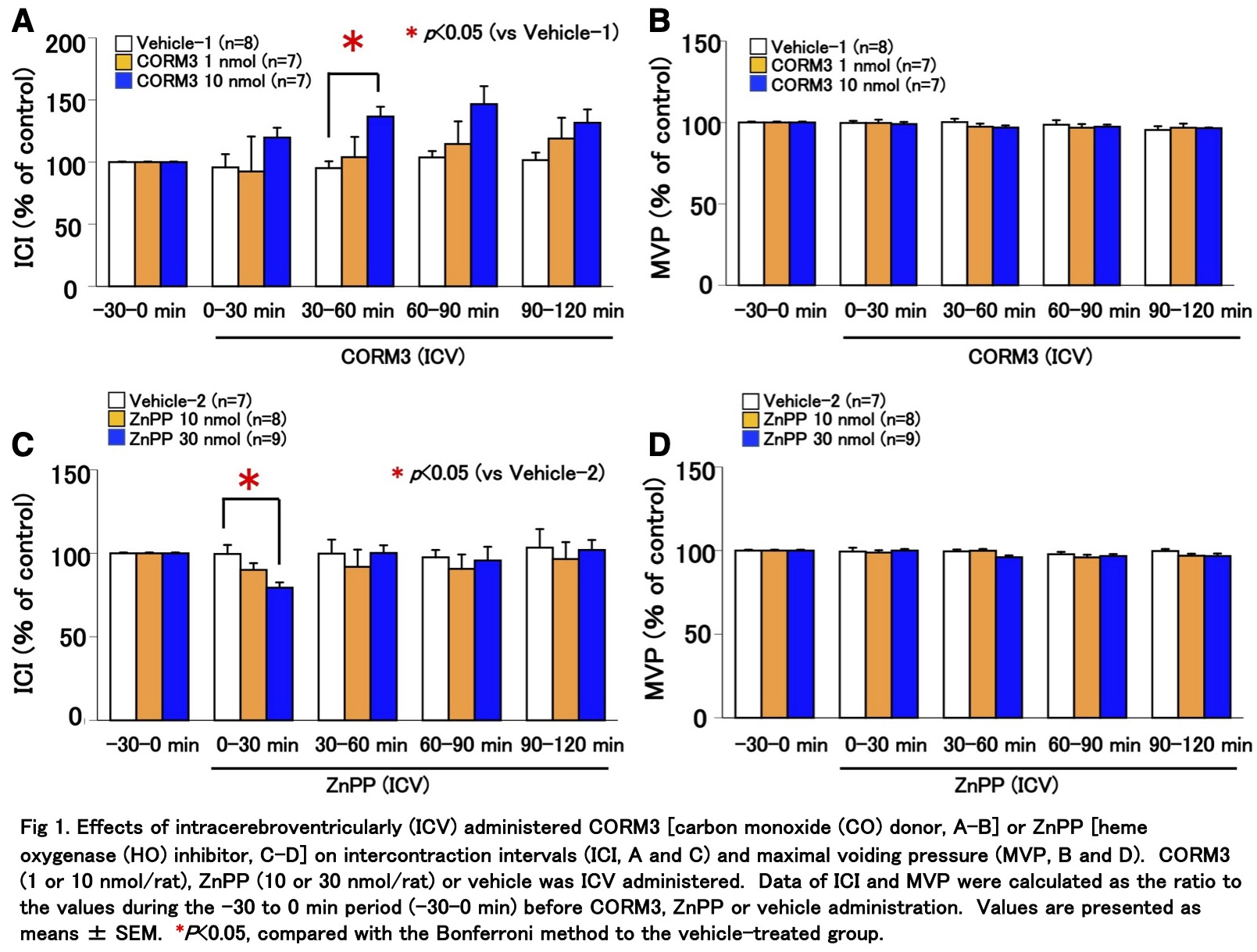
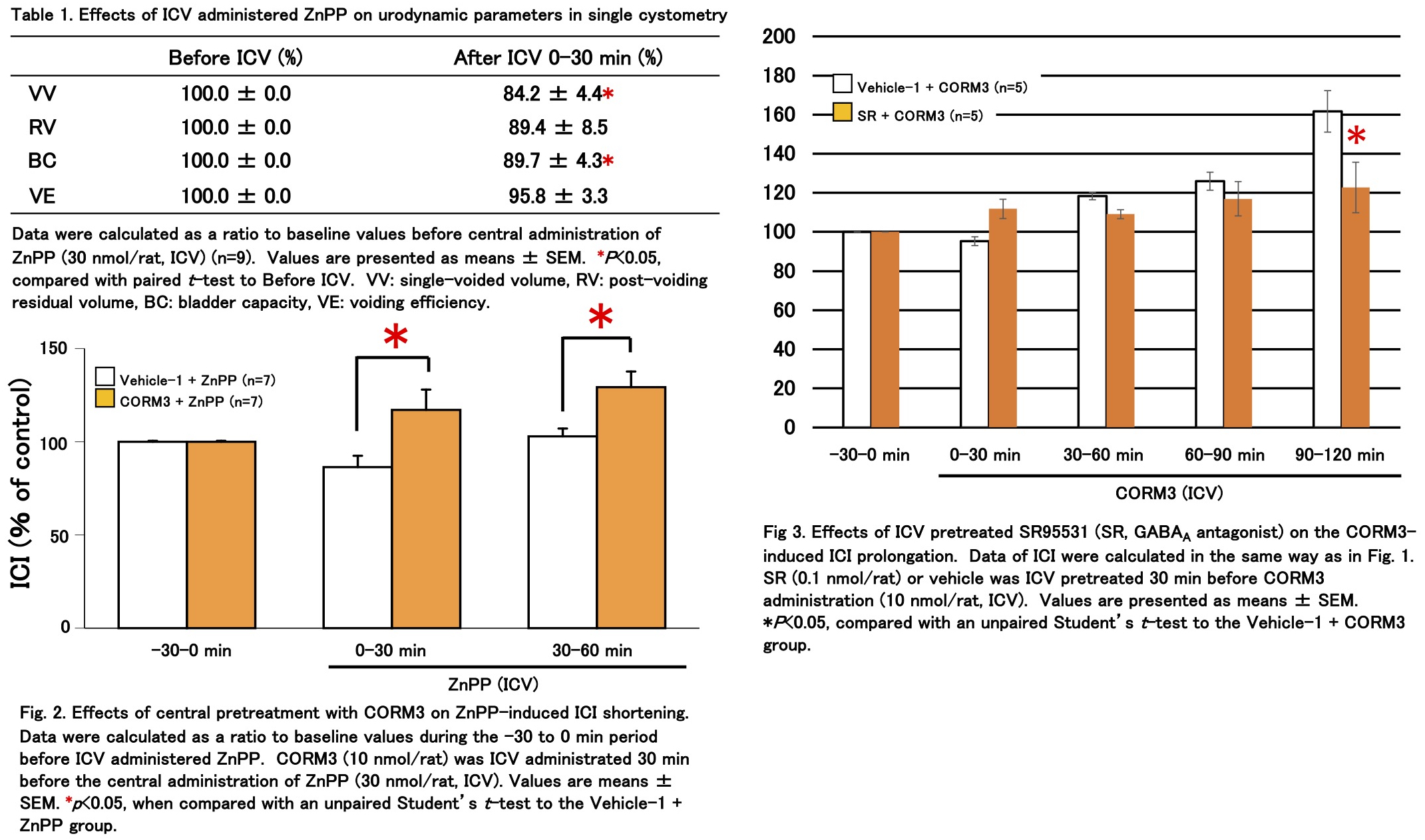
Introduction: Carbon monoxide (CO) is a well-known toxic gas but is also reported as a gasotransmitter besides nitric oxide and hydrogen sulfide. Endogenous CO is produced by heme oxygenase (HO)-induced heme catabolism and shows physiological functions such as anti-inflammation and neuromodulation. In this study, we examined effects of centrally administered CORM3 (CO donor) and ZnPP (HO inhibitor) on the rat micturition. Methods: Urethane anesthetized (0.8 g/kg, ip) male Wistar rats (350-450 g) were used. A catheter was inserted into the bladder to perform continuous cystometry (12 ml/h saline infusion). Three hours after the surgery, CORM3 (1 or 10 nmol/rat), ZnPP (10 or 30 nmol/rat) or vehicle was intracerebroventricularly (ICV) administered. In some rats, effects of ICV pretreated SR95531 (SR, GABAA antagonist, 0.1 nmol/rat) on the CORM3 (10 nmol/rat, ICV)-induced responses were examined. Continuous cystometry and evaluation of intercontraction intervals (ICI) and maximal voiding pressure (MVP) were started 30 min before the first ICV administration. In some rats, before and after ZnPP administration (30 nmol/rat, ICV), single cystometry (12 ml/h saline infusion) was performed. Results: CORM3 dose-dependently prolonged ICI without changing MVP (Fig. 1A-B). On the other hand, ZnPP dose-dependently shortened ICI without changing MVP (Fig. 1C-D). In single cystometry, ZnPP significantly reduced single-voided volume and bladder capacity without changing post-voiding residual volume (Table 1). The ZnPP (30 nmol/rat, ICV)-induced ICI shortening was reversed in the central presence of CORM3 (10 nmol/rat, ICV) (Fig. 2). The CORM-3-induced ICI prolongation was suppressed by SR (Fig. 3). Conclusions: Brain CO endogenously suppresses the rat micturition via brain GABAA receptors. Thus, the brain CO might be a new therapeutic target for neurogenic bladder overactivity. SOURCE OF Funding: JSPS KAKENHI (#21K09428, #20K07827)