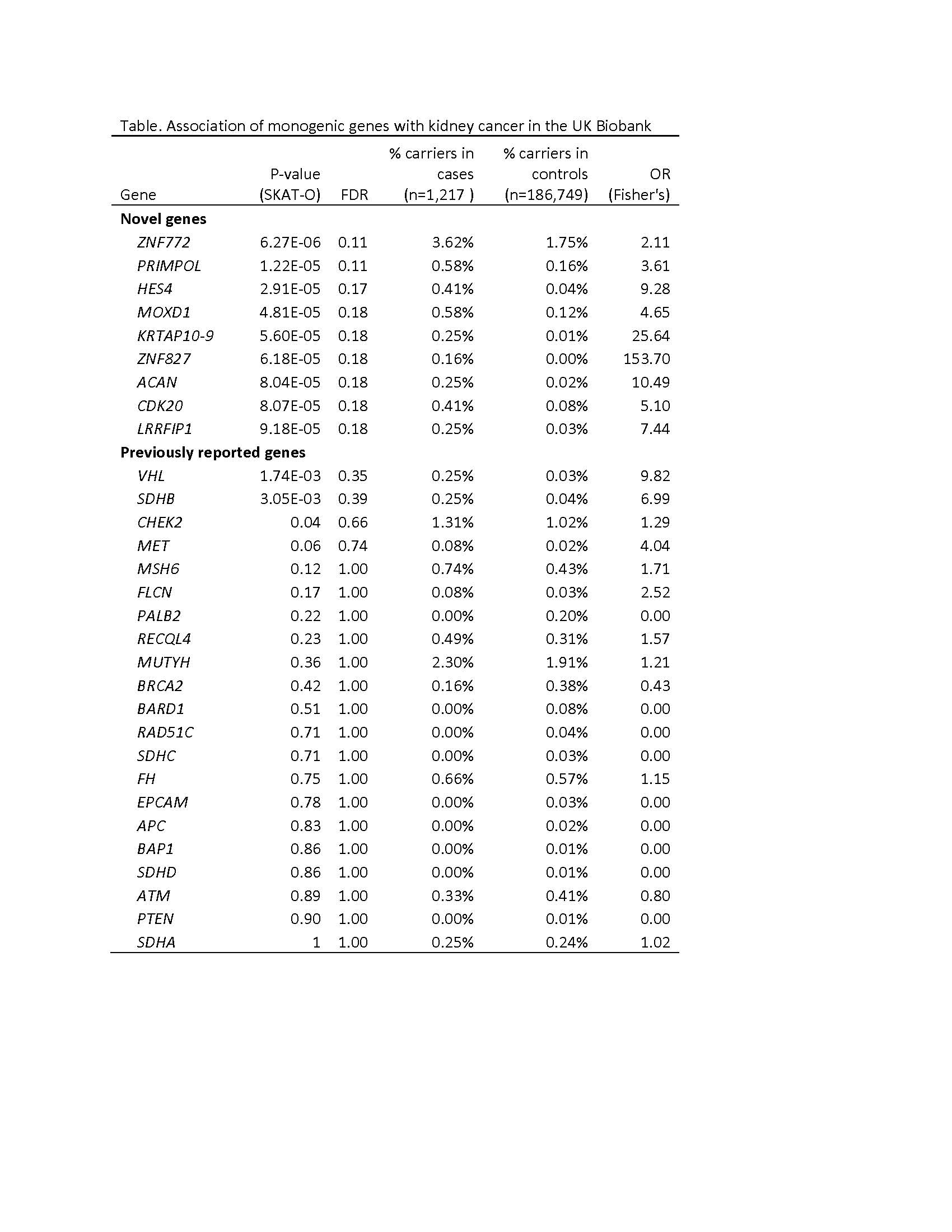
Introduction: Pathogenic mutations in several cancer susceptibility genes have been reported in kidney cancer patients. However, their associations with kidney cancer have not been formally tested in well-characterized case-control studies and using the same sequencing and analytical pipeline. The objective of this study was to systematically evaluate association of kidney cancer with genes in the exome in a well-characterized prospective population-based case-control cohort. Methods: A total of 187,966 subjects from the UK Biobank (UKB) with whole exome sequencing data were included in the analysis, including 1,217 kidney cancer patients (ICD10 C64). Pathogenic/likely pathogenic (P/LP) mutations were annotated based on criteria of the American College of Medical Genetics. The robust SKAT-O, a novel gene-based analysis that properly controls for type I error rates due to unbalanced case-control ratio, was used for association tests adjusting for age at recruitment, gender and genetic background. Results: Among the 21 previously reported candidate genes, three were statistically significant at P<0.05, including VHL, SDHB, and CHEK2 (Table). In addition, associations with 9 novel genes (at P<0.0001) were found, including ZNF772, PRIMPOL, HES4, MOXD1, KRTAP10-9, ZNF827, ACAN, CDK20, and LRRFIP1. While these associations were only marginally significant after adjusting for multiple testing, they have potential roles in cancer development. For example, ZNF772 is predicted to enable DNA-binding transcription factor activity, RNA polymerase II-specific and RNA polymerase II cis-regulatory region sequence-specific DNA binding activity which are all known to be dysregulated in cancer. Conclusions: Identification of genes that influence kidney cancer may advance our understanding of disease etiology and identify potential therapeutic targets. Using the same sequencing method and mutation annotation pipeline in the largest population-based cohort to date, we confirmed several previously reported genes and identified several novel candidate genes for their association with kidney cancer. Confirmation in independent study populations is required for these novel candidate genes. SOURCE OF Funding: None.