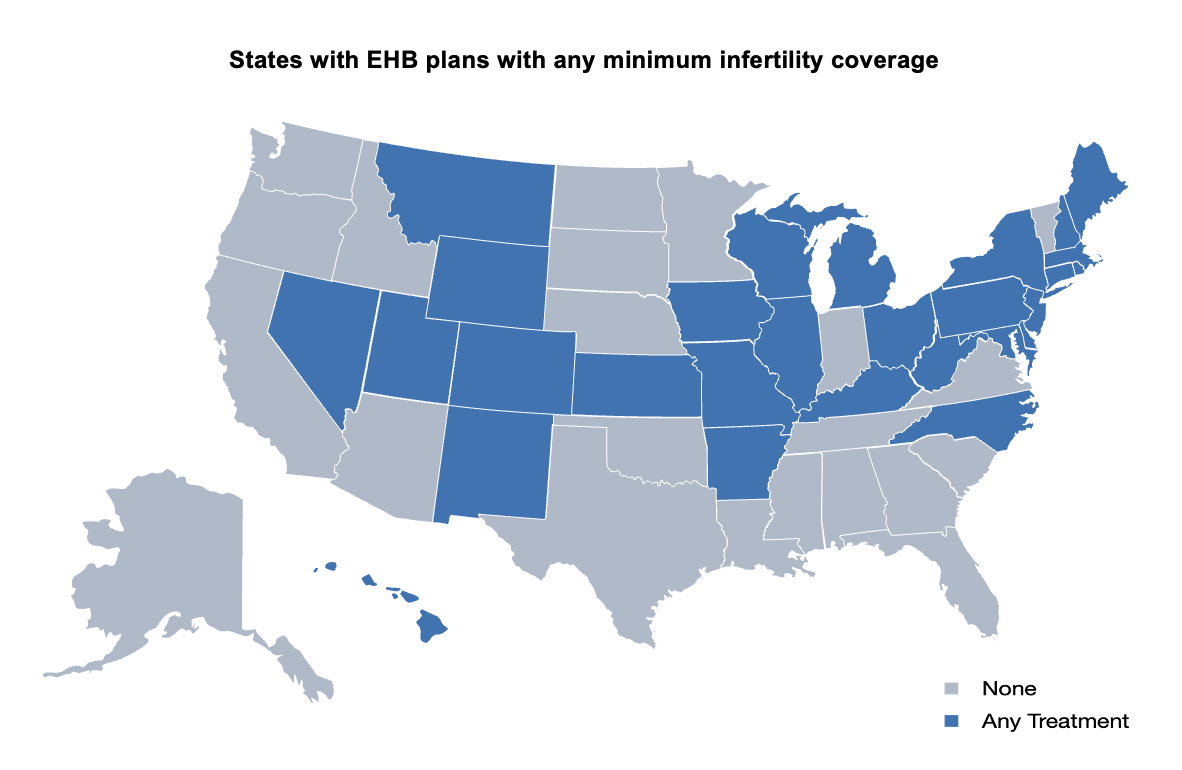
Introduction: One in five heterosexual couples in the United States experience infertility. The costs of diagnosis and treatment may not be covered by health insurance. This study aimed to evaluate disparities in infertility coverage in the United States. Methods: State essential health benefit benchmark (EHB) insurance plans submitted to Centers for Medicare and Medicaid were reviewed. We identified provisions that detailed coverage or exclusions for infertility. A literature search was performed to identify states with legislation related to coverage for infertility. State demographic information was derived from Census data. Results: Data was available for 50 states and the District of Columbia. Twenty states had legislation related to infertility coverage. Two states required employers to offer at least one such plan, and one state only prohibited exclusions for treatment based on the diagnosis of infertility. In benchmark offerings, 19 states did not provide any minimum coverage for diagnosis or treatment of infertility. Twenty-five states offered some type of treatment, of which 9 covered treatments only for underlying causes of infertility (i.e. fibroids, ductal obstruction). Ten states codified coverage for prescription medications, 10 states for artificial insemination, and six states codified coverage for assisted reproductive technologies such as in vitro fertilization (IVF). Two states codified cryopreservation of ova, but only for patients actively undergoing treatment for infertility. Higher state median income was significantly associated with a state-requirement to offer infertility coverage as well as coverage of artificial insemination (p=0.039), but not with other coverage options, including IVF. States with higher populations enrolled in Medicaid or Children’s Health Insurance Program were more likely to have requirements for some level of infertility coverage (p=0.039). Conclusions: Nineteen states do not codify any minimum level of infertility coverage in EHB benchmark plans. Higher state median income is associated with codification of coverage of artificial insemination, but most types of coverage are not significantly associated with income. Overall, health insurance coverage for the diagnosis and treatment of infertility is highly variable and continues to be a barrier faced by patients desiring to conceive. SOURCE OF Funding: None