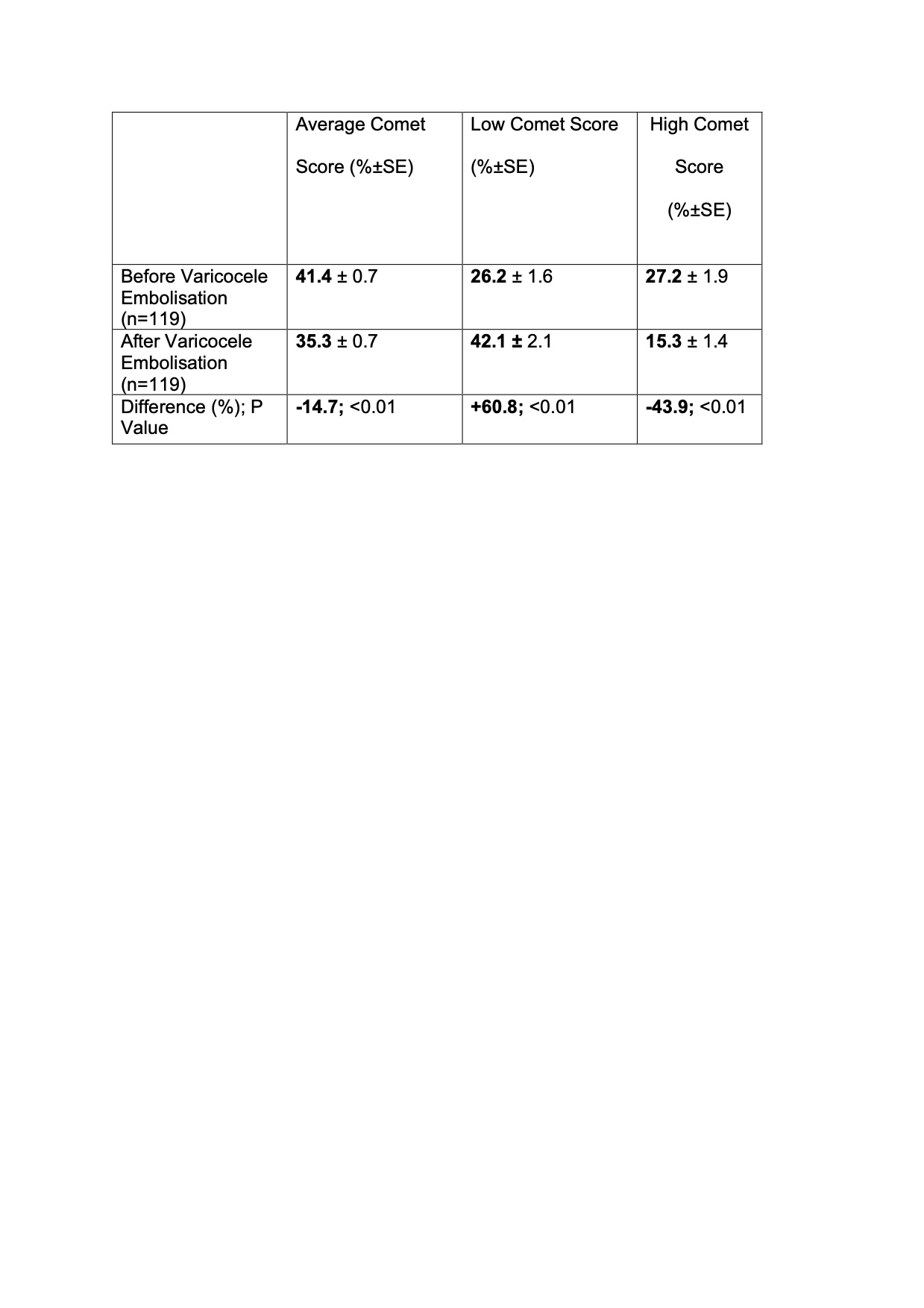
Introduction: A varicocele is a common and treatable cause of male infertility. Current guidelines advocate for treatment of varicoceles based on abnormal semenalysis rather than abnormal sperm DNA fragmentation (SDF). High SDF has been associated with poor pregnancy outcomes following ART. The aim of the study was to determine the outcomes of varicocele embolisation in an infertile male population on SDF and subsequent ART outcomes. Methods: A retrospective study of 130 consecutive male partners of infertile couples with a clinical varicocele between 2015 and 2022 were included. 119 of these men underwent varicocele embolisation by a team of 2 radiologists, whilst 11 declined. SDF was assessed by the alkaline Comet test pre-intervention and at least 3 months after. 84 treated and the 11 untreated men proceeded to ICSI. Baseline couple parameters such as age, and pregnancy and live birth rate outcomes in the ART cycle following this intervention between groups were analysed. T & chi-square tests were used on continuous and categorical data respectively (significance rate p<0.01). Results: Varicocele embolisation significantly reduced the proportion of sperm with DNA damage across all three Comet parameters (p < 0.01). (Table 1). Only 18% of these men had normal semenalysis. Baseline parameters for men and women were similar with an average male age of 39 and female age of 37 for both groups. Couples who underwent embolisation had a significantly better pregnancy rate (65% vs 18%, p <0.01) and higher live birth rate which did not reach significance due to low numbers (32% vs 9%, p =0.11). Conclusions: There was a significant reduction in SDF following varicocele embolisation in this population of men of couples with infertility, with a significant difference in pregnancy rate outcomes in the treated group. Repair of clinical varicoceles improves sperm DNA quality, and can optimize fertility treatment success, even in patient with normal semenalysis. Limitations of the study include small numbers in the ‘untreated’ arm and lack of randomisation, a future avenue for research. SOURCE OF Funding: None