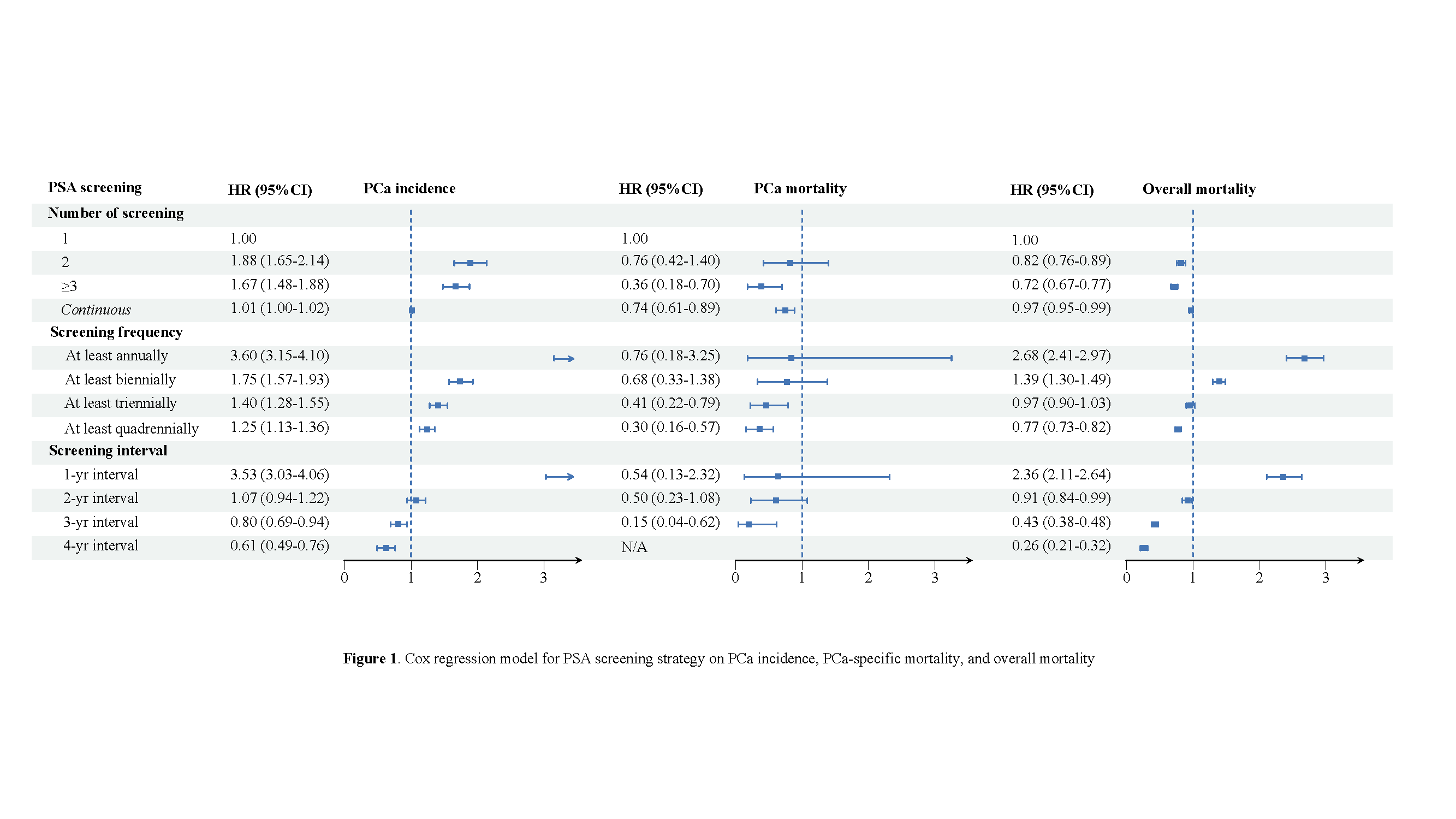
Introduction: Evidence regarding the benefit of prostate-specific antigen (PSA) testing for prostate cancer (PCa) is limited in China. Scarce research so far explores the optimal frequency and interval of repeated PSA testing. This study aims to evaluate the effects of serial screening in different frequencies and intervals against PCa incidence and mortality among Chinese population. Methods: Data of this study came from the Chinese Electronic Health Records Research in Yinzhou (CHERRY) Study. Briefly, the CHERRY study is a population-based cohort study comprising more than one million adults enrolled from 1 January 2009 in Yinzhou, China. The population census, primary care, electronic medical records, health checks, surveillance, and death registry databases have been integrated into the CHERRY study. A total of 420,941 male participants aged over 45 at recruitment were included in the present study. Among them, a subgroup of 75,362 men who have undergone any PSA testing was selected for analysis. The number of receiving PSA screening, screening frequency and interval, PCa diagnosis and death were extracted from the electronic health records system. Results: People receiving more than three times of PSA testing had 67% (95% confidence interval [CI]: 48-88%) higher risks of PCa detection, but 64% (95%CI: 30-82%) lower risks of PCa-specific mortality and 28% (95%CI: 23-33%) lower risks of overall mortality. Receiving at least one screening per four years could increase 25% (95%CI: 13-36%) risks of PCa detection, but decrease 70% (95%CI: 43-84%) and 23% (95%CI: 18-27%) risks of PCa-specific and overall mortality. For those repeated attenders, 2-yr to 3-yr intervals could decrease 50-85% risks of PCa-specific mortality and 9-57% risks of overall mortality (Figure 1). Conclusions: This study provides the first evidence for the benefits of PSA screening in Chinese general population, and supports that receiving serial screening at least once per four-year is beneficial for overall and prostate cancer-specific survival. SOURCE OF Funding: This work was in supported by grants from National Natural Science Foundation of China (Grant No. 81972645), Shanghai Youth Talent Support Program, intramural funding of The University of Hong Kong to Dr. Rong Na, and Shanghai Sailing Program (22YF1440500) to Dr. Da Huang.