Clinical Assistant Professor University of Calgary
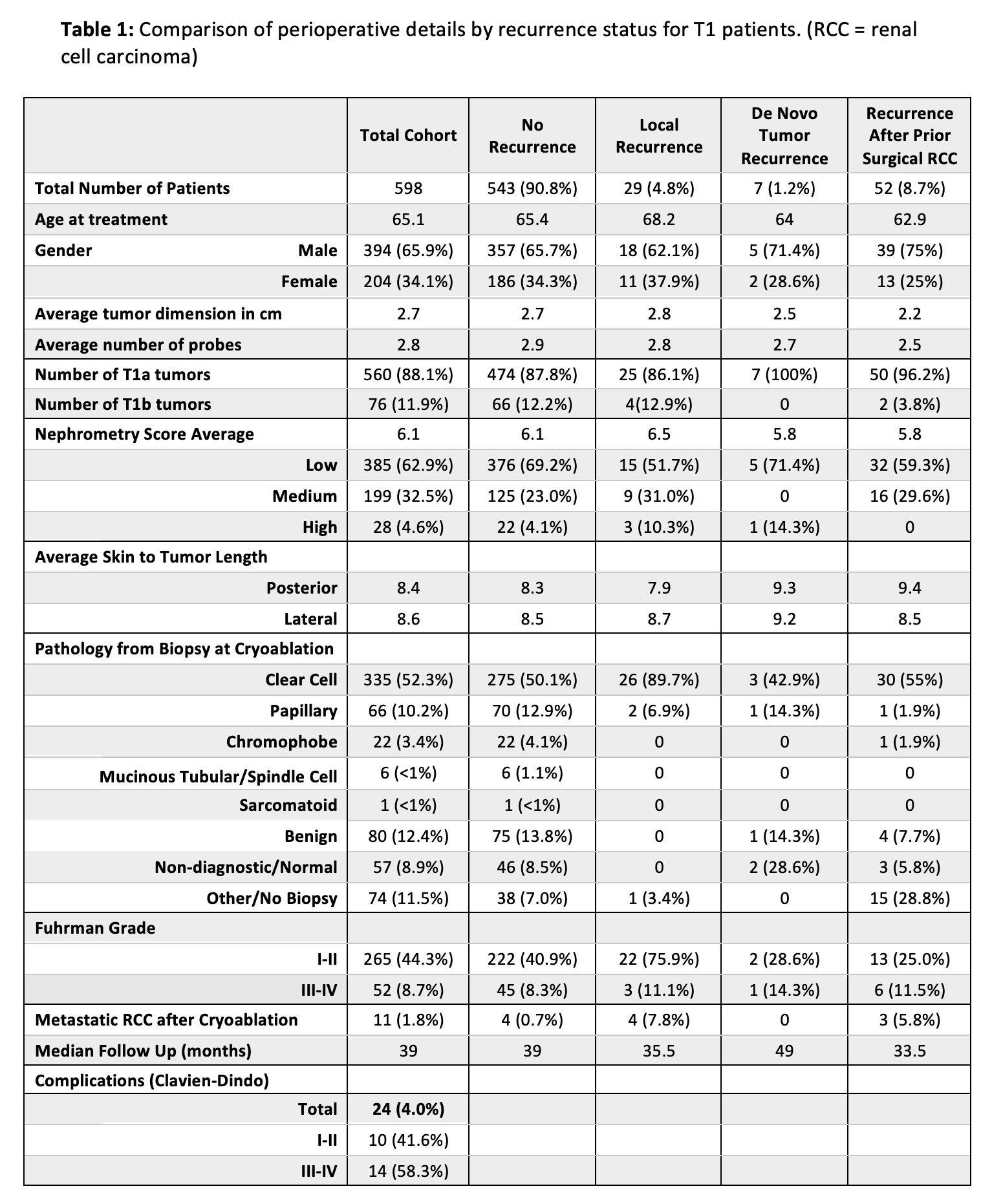
Introduction: Historically, the standard of care for renal cell carcinoma (RCC) has been partial nephrectomy (PN) or radical nephrectomy (RN). Image-guided percutaneous cryoablation (PCA) of renal masses has emerged as a nephron-sparing, minimally invasive alternative. In this study, we aim to assess outcomes of percutaneous renal cryoablation at a single centre over 15 years. Methods: Patients who underwent PCA of renal masses from 2006 to 2022 were included with no exclusions. All patients had cross-sectional imaging prior to the procedure and most underwent biopsy at the time of procedure. Cryoprobe placement and ice-ball formation was monitored via computed tomography (CT) imaging during the procedure. Data were collected via electronic medical record review, as well as pre-, intra-, and post-procedure imaging review. Data included demographics, tumor characteristics, pathology, local recurrence and metastatic disease rates, complications, pre- and post-procedure renal function and blood counts, co-morbidities, and mortality rate of patients in follow-up. Results: This study included 598 patients in the analysis with a median age of 65.1 years and median follow-up of 39 months (Table 1). The average size of tumor was 2.7 cm. Overall local recurrence rate was 4.8% including surgically resected and hereditary RCC. Average nephrometry score was 6.1. Median time to local recurrence was 2.0 years. Five percent of patients made up 52% of the recurrences. Overall survival rate was 82.3% at time of analysis. Cancer-specific survival overall was 97.3%. Average length of time to discharge was 28.2 hours. The Clavien-Dindo 3+ complication rate was 2.3%. Overall metastatic rate was 1.8% and 0.7% in patients with no recurrence. Conclusions: PCA outcomes in this large cohort with no exclusions and long-term follow-up revealed an overall low recurrence rate, low complication rate, and an acceptable metastatic rate. SOURCE OF Funding: None.