University of Nebraska Urology Resident University of Nebraska Medical Center
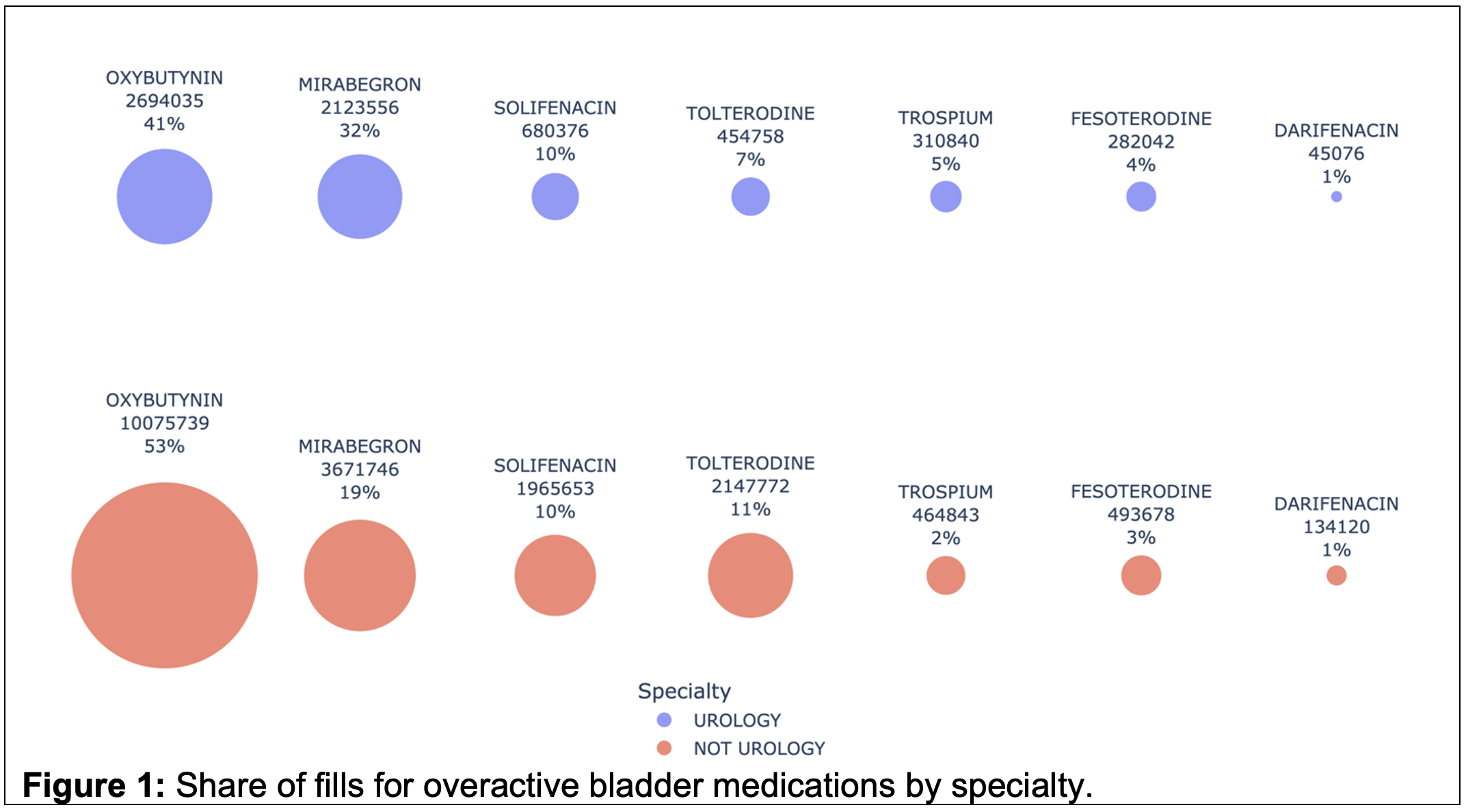
Introduction: Overactive bladder (OAB) is a common chronic condition in adults that increases in prevalence with age. AUA guidelines recommend first line treatment with behavioral therapy, with the next step being anti-muscarinic or beta-3 agonist medications. The risks of anti-muscarinic use in the elderly may outweigh the benefit, as reflected in the Beers Criteria for Potentially Inappropriate Medications for the Elderly. We hypothesized that urologist prescribing for OAB medications better adheres to the principals of the Beers Criteria than does that of other prescribers. Methods: We queried the IQVIA Human Data Science Cloud, representing >90% of retail pharmacy fills in the US, for OAB medication from Jan 1, 2018 – Oct 31, 2020. We assessed effect of prescriber type on distribution of common OAB medications in those 65 or older (to whom the Beers Criteria are intended). Statistical analysis was performed using Chi-Square. Results: There were 25,544,234 OAB medication fills for patients 65 years or older. 6,590,683 (25.8%) and 18,953,551 were prescribed OAB medication by urologists and non-urologists. Oxybutynin was the most frequently prescribed medication (50%). When comparing individual OAB medications, urologists were significantly more likely to adhere to Beers Criteria, moving away from antimuscarinics and towards beta-3 agonists for patients 65 or older (Figure 1, p<0.05). Conclusions: Urologists prescribe 25% of OAB medications for patients 65 years of age or older. In this population, urologists are more likely to prescribe beta-3 agonists than are other prescribers, reflecting expertise in treating patients with OAB. Pharmacologic treatment of OAB requires shared decision-making, taking into account patient-specific side-effect and efficacy profiles. SOURCE OF Funding: Data were supplied by IQVIA through the Human Data Science Research Collaborative in the Era of COVID-19. This material is based upon work supported by the Google Cloud Research Credits program with the award 202575010. The funders had no role in preparation of this work and this work was not subject to their review.