MP49-10: An Automated Whatsapp Assisted-Web Based Stent Tracking Registry in Preventing Missed Appointment for Ureteral Double-J Stents Removal in a Developing Country
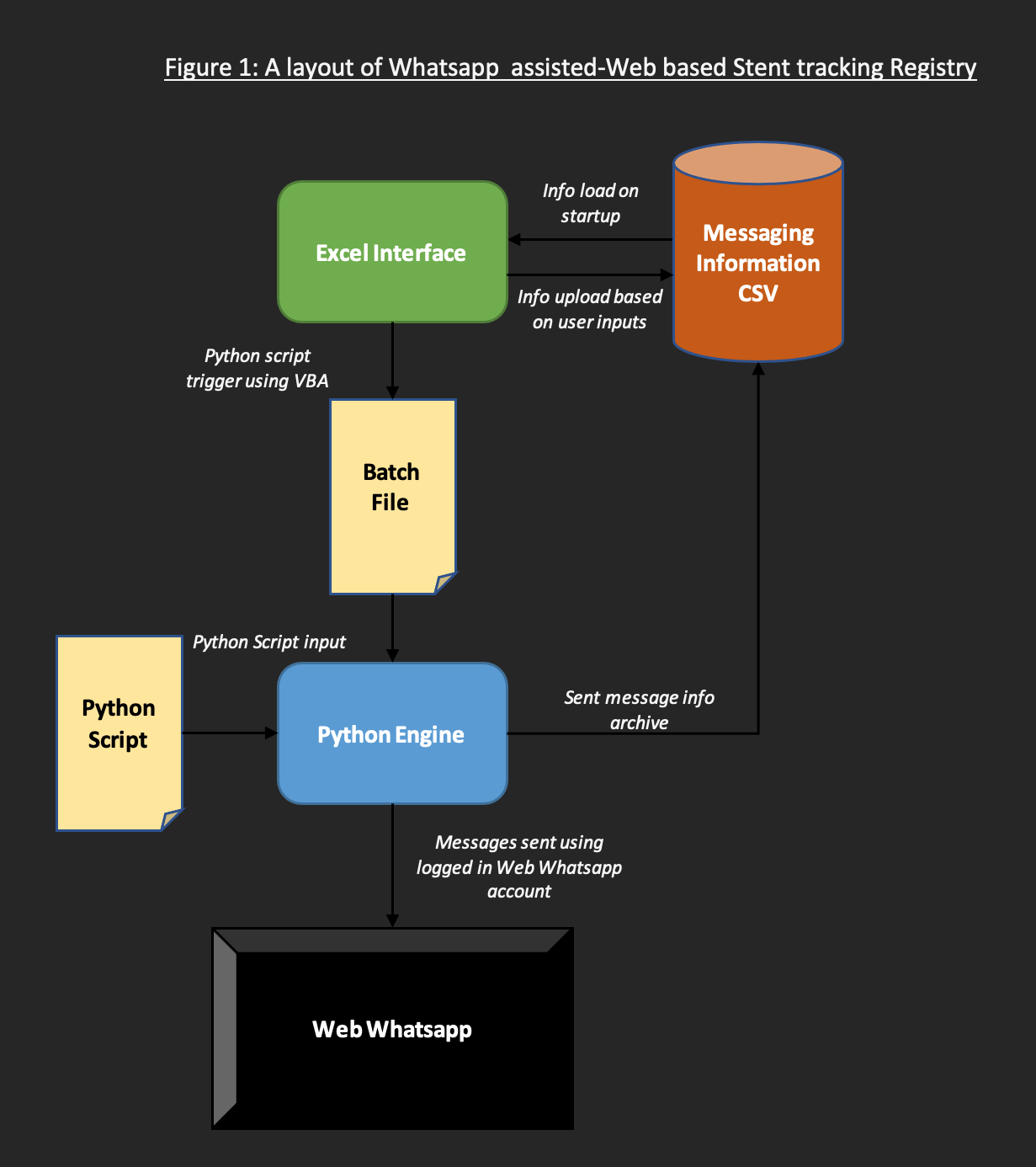
Introduction: Missed double-J (DJ) stents removal appointment can lead to various complications. Here, we detail a novel model designed to minimize the incidence of missed appointment of ureteral stents removal in a resource challenged environments. Methods: We designed a tool i.e Web based stent tracking registry- consisting of Web Whatsapp, Microsoft excel workbook and Python software.The tool works on the URL based functionality of Web Whatsapp, where we add the details. As a GUI (Graphical User Interface) an excel workbook serve as a place. A message template is sent based on the patient’s appointment date. A button is provided which when clicked by the user does the following steps (fig.1): 1.Takes the information from the excel workbook and saves in a CSV (comma separated values) file. 2.Open a batch file which in turn runs the python script housing the Whatsapp messaging code. 3.The python script opens the base CSV for reference and sends messages to patients one at a time. 4.One messages takes few seconds to send to account for the lag in opening and sending of messages through Web Whatsapp. 5.The tool then overwrites the CSV with information of which messages have been sent, and the time of sending messages. 6.Then the Python script gets closed. 7.The saved CSV is then auto loaded whenever the user opens the Excel Interface. Results: Based on early feasibility study we found the tool to be useful to send bulk messages to both patients and doctors. Pending extensive data collection, effect on appointment attendance shows a positive trend towards Whatsapp based reminders. Conclusions: Today, smartphones and computers are an integral part of our daily lives. For tracking patients with indwelling DJ stents, our automated Whatsapp-assisted web based stent tracking registry may help in preventing missed appointment of stents removal and its associated complications in an underserved environments. SOURCE OF Funding: None