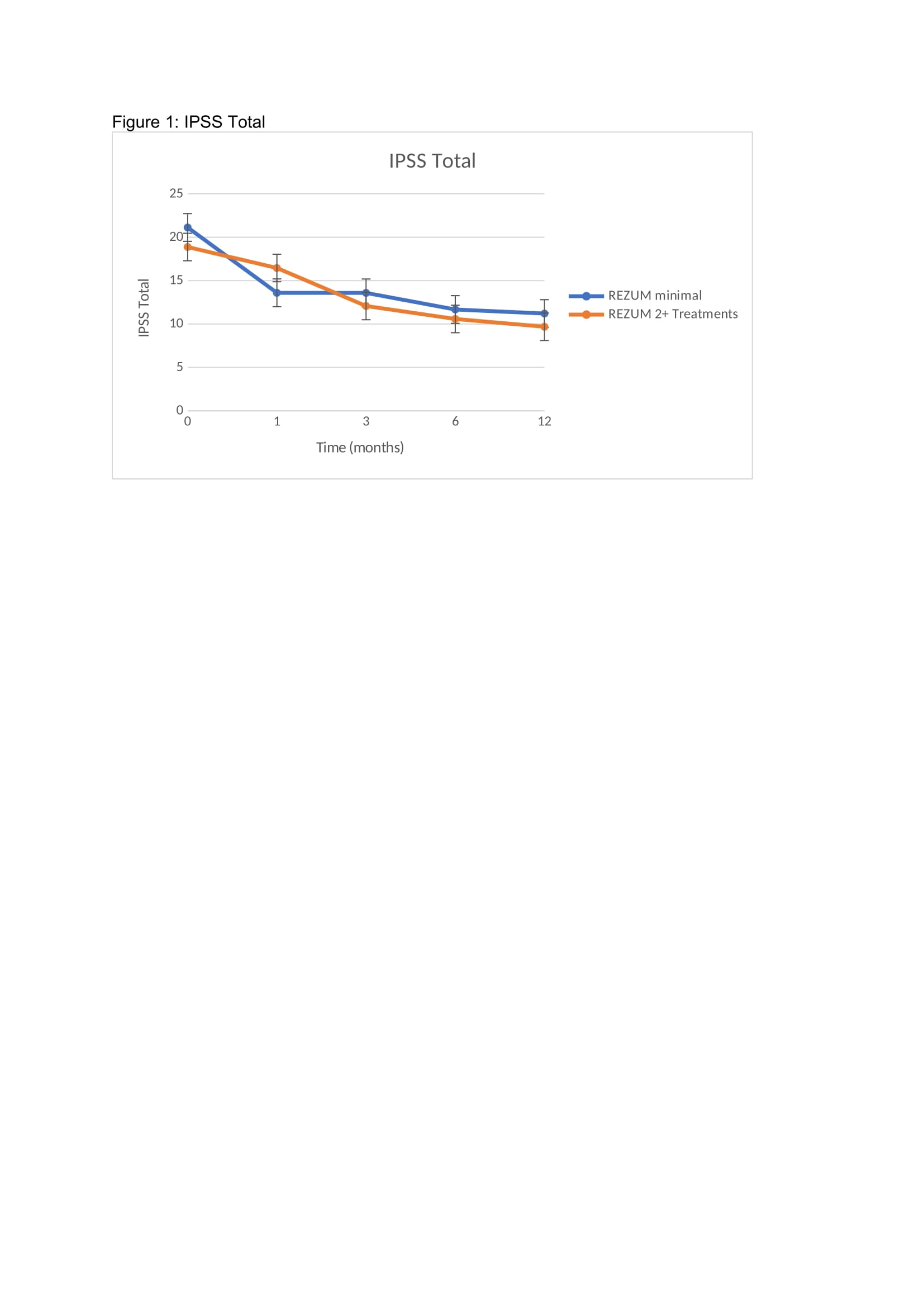
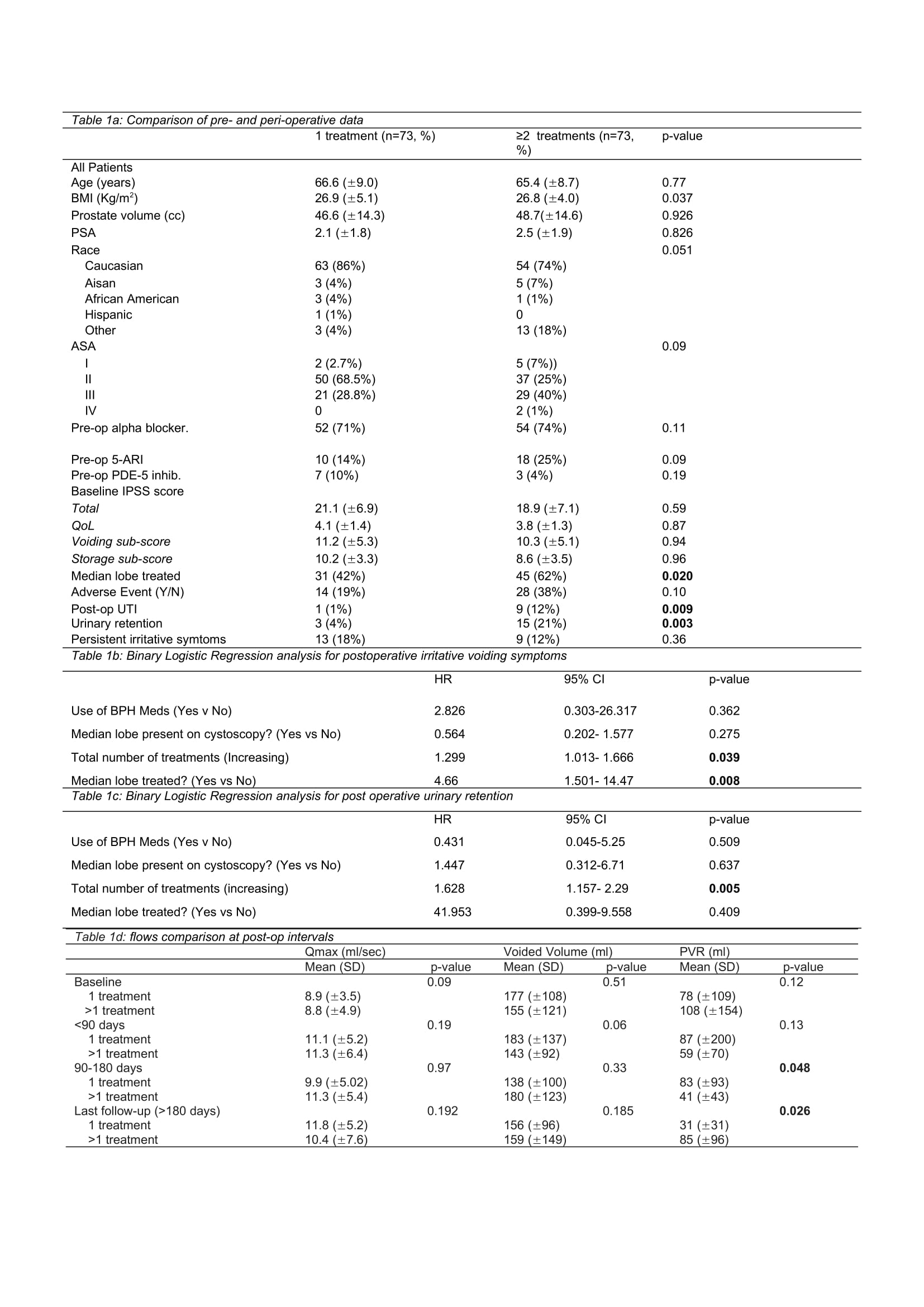
Introduction: We sought to evaluate the effect of a minimal approach of water vapor thermal therapy (Rezum), defined as 1 vapor treatment per prostate lobe, on postoperative outcomes and symptoms compared to patients who received multiple treatments per lobe. Methods: We performed a multi-institutional retrospective review of patients who underwent Rezum procedure for symptomatic BPH from 2018 to 2022. Propensity score matching (PSM) was utilized to generate patient cohorts based on the number of treatments per lobe (1 per lobe including median lobe if present vs =2 per lobe) matched for age, BMI, and pre-operative prostate volume. Primary outcome of interest was post-operative complications and irritative symptoms. We then conducted a non-PSM independent T-test to analyze the differences in International Prostate Symptom Score (IPSS), QOL sub-score, and flow rates both before and after the procedure.Patients with existing urinary retention were excluded. Results: 146 patients were included in the PSM with 73 patients in each arm. The =2 treatment group showed higher post-operative de-novo retention (p=0.009) and UTI (p=0.003) and had their median lobe more frequently treated (p=0.021) (Table 1a). On MVA, an increasing number of treatments (HR 1.3, p= 0.039) and treatment of the median lobe (HR 4.7, p=0.008) were significant risk factors for post-procedure irritative symptoms (Table 1b). Mean IPSS and IPSS sub-scores were similar by 3 months up to 12 months after the procedure (Figure 1). At 6 months, patients treated with 1 injection per lobe showed comparable Qmax and voided volumes and better post-void residual volumes (Table 1d). Conclusions: Minimal Rezum treatment approach with a single water vapor injection per lobe, including median lobe, is a safe and effective option for patients undergoing treatment for BPH and is associated with improved postoperative complicationsand irritative voiding symptoms, and with comparable IPSS and flow outcomes. Further studies are needed to investigate the effect of this minimal approach on longer-term outcomes. SOURCE OF Funding: None