MP52-06: Clinical and Sociodemographic Characteristics of Patients with Spinal Cord Injury are Independently Associated with Choice of Bladder Management Method
The Ohio State University Wexner Medical Center Department of Urology
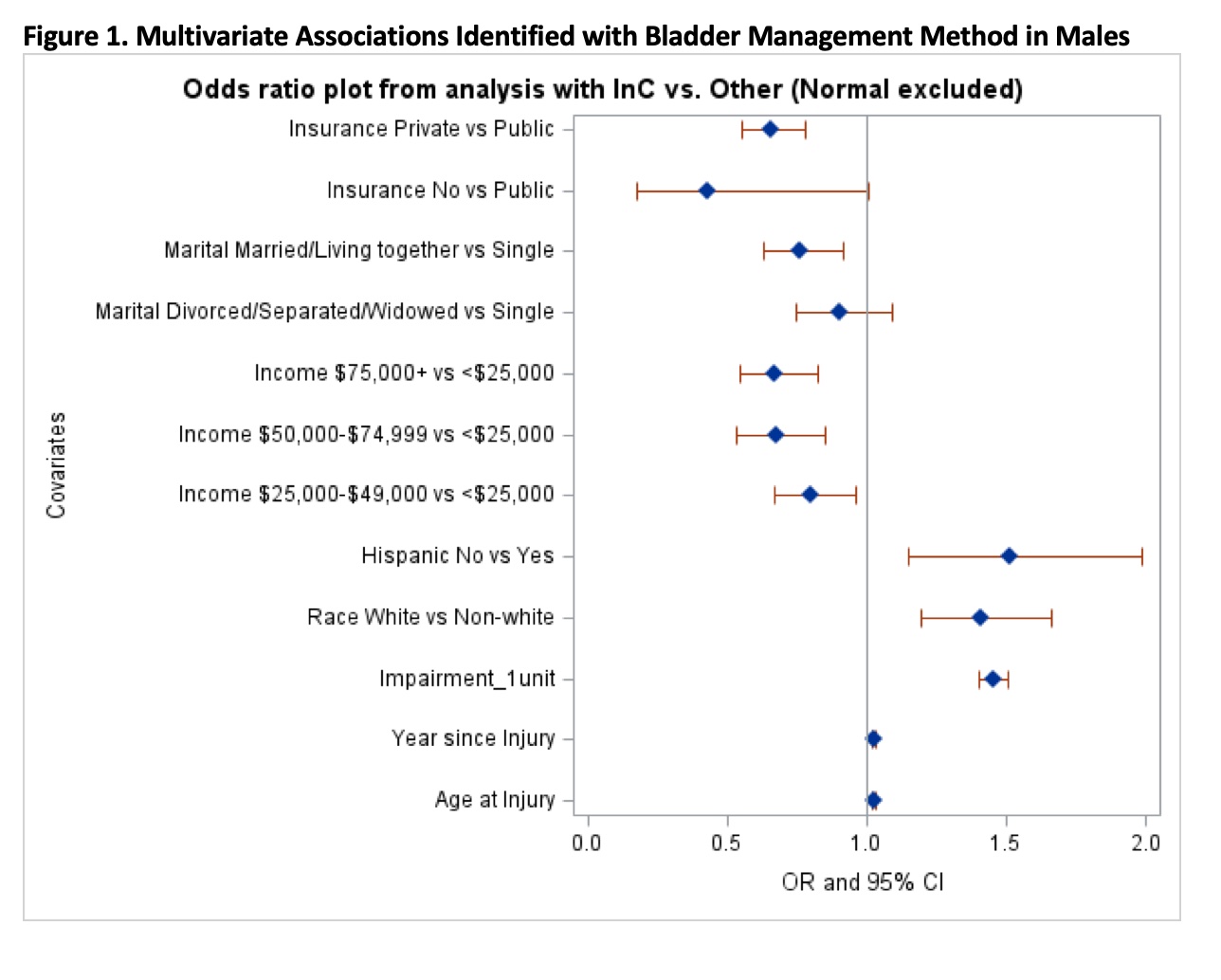
Introduction: Clinical factors are known to impact choice of bladder management method (BMM) in patients with spinal cord injury (SCI) such as injury level, impairment severity, manual dexterity, as well as patient preference. The primary objective of this study was to evaluate the effect of sociodemographic characteristics of patients in this context. Methods: From the Spinal Cord Injury Model System adult patients (>18 at time of injury) were screened. Exclusion criteria included death within one year of injury and lack of BMM data. Outcomes of interest included age, gender, race, education, marital status, household income, employment status, health insurance type, injury level, injury etiology, ventilatory status, neurological impairment category (quadriplegic vs paraplegic), composite poverty scale, and American Spine Injury Association (ASIA) impairment scale. Logistic regression models and multivariate analysis was used to determine associations between sociodemographic factors and use of indwelling catheters as primary choice of BMM. Results: A total of 12,708 patients were screened and 9,097 were included. Majority of patients were male (79.4%), white (71.2%), had an average annual income of < $25,000 (33.3%) and public insurance (68.5%). Most were tetraplegic (47.3%) with ASIA score of “A” (complete impairment, 57.5%).The BMM breakdown was those that used indwelling catheters (34.4%) versus those with “other” methods (intermittent catheterization, external catheters, or urinary diversion; 65.6%). On multivariate analysis, after adjusting for disease characteristics, men were significantly more likely to be impacted by sociodemographic factors. In men, white race, non-Hispanic ethnicity, having public insurance, lower income, higher impairment severity, older age at injury and longer injury duration was associated with higher use of indwelling catheters (Figure 1). In females, only age at injury and neurologic impairment were significant. Conclusions: Sociodemographic variables are significantly associated with the choice of BMM in men with SCI. The reason for the discrepancy between genders is unknown. Further analysis utilizing this database to discern BMM choice between groups could guide future patient counseling and optimization of care. SOURCE OF Funding: None