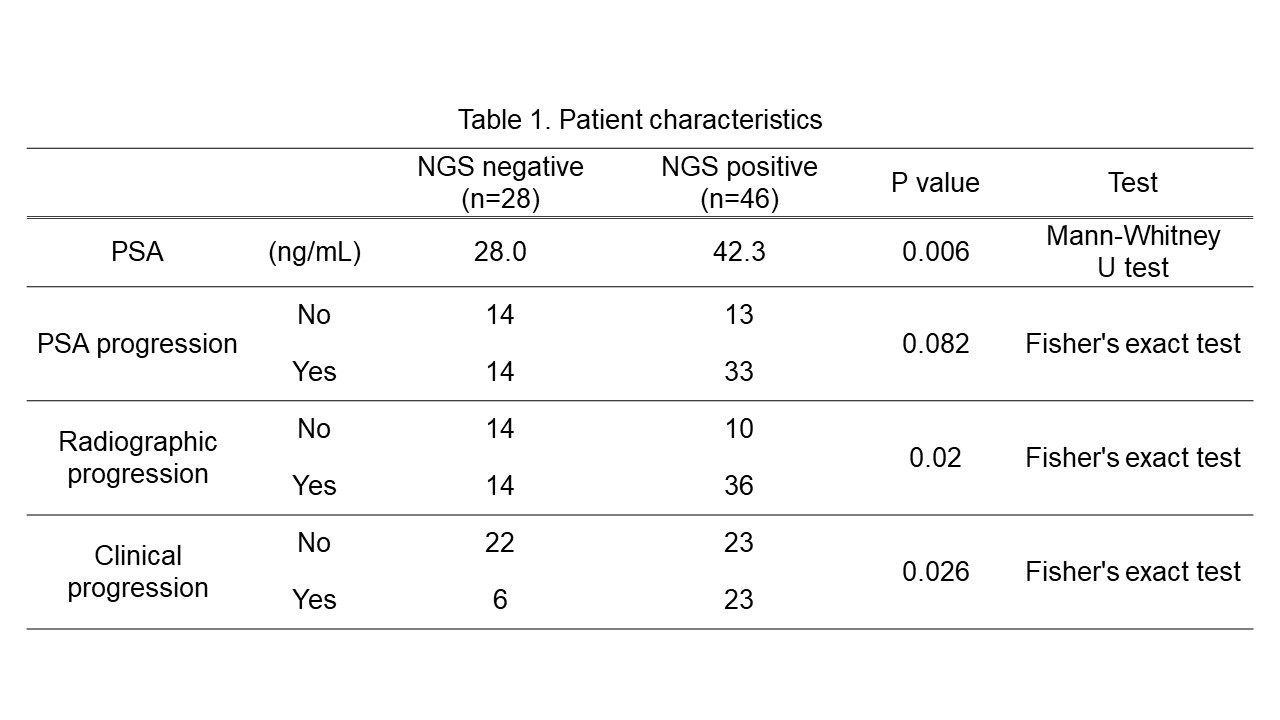
Introduction: Circulating tumor DNA (ctDNA) can be a reliable source of genomic information of the metastatic prostate cancer (mPC) tumors. In particular, next-generation sequencing (NGS) of the ctDNA may provide clinically relevant genomic alterations such as androgen receptor (AR) aberrations, homologous recombination repair (HRR) genes, and mismatch repair (MMR) genes. Yet, the positivity rate of ctDNA NGS varies between 30-70% in patients with mPC, making it challenging to incorporate the test as a regular practice. We recently started ctDNA NGS in clinic. We aimed to analyze factors associated with ctDNA NGS positive results basd on our initial experience. Methods: We retrospectively analyzed ctDNA NGS results of mPC patients in our institute, from May 2021 to July 2022. We used a custom panels of 101 genes known to be detected in malignant tumors. Samples were read by position indexed sequencing using Nova 6000 sequencer. Interpretation of the variants were based on the four-tier system guidelines of Association of Molecular Pathology (AMP), American Society of Clinical Oncology (ASCO), and College of American Pathologists (CAP). Test positivity of ctDNA was determined by detection of Tier 1 or 2 genomic alteration(s) associated with prostate cancer. Results: We analyzed 74 mPC ctDNA samples. We found somatic alterations from cell-free DNA as well as germline alterations from white blood cell fraction. Within somatic alterations, frequently altered genes include AR(16.2%), TP53(14.7%), RB1(9.6%) and CDK12(4.4%). Mutations of HRR genes (BRCA1/2, ATM - 9.6%) and MMR genes (MSH2, MSH6 – 4.4%) were also found. ctDNA-positive samples (n=46) had higher serum PSA than negative samples (n=28)( 42.3ng/mL vs 28ng/mL, p = 0.006) at the time of sampling. Also, samples of radiographic progression were more likely to be ctDNA-positive (36 of 46 (78.3%) vs 14 of 28 (50%), P = 0.02), and samples of clinical progression were more likely to be ctDNA-positive (23 of 46 (50%) vs 6 of 28 (21.4%), P = 0.026). Conclusions: Circulating tumor DNA analysis may detect clinically relevant genetic alterations in patients with mPC especially at the time of disease progression. SOURCE OF Funding: none