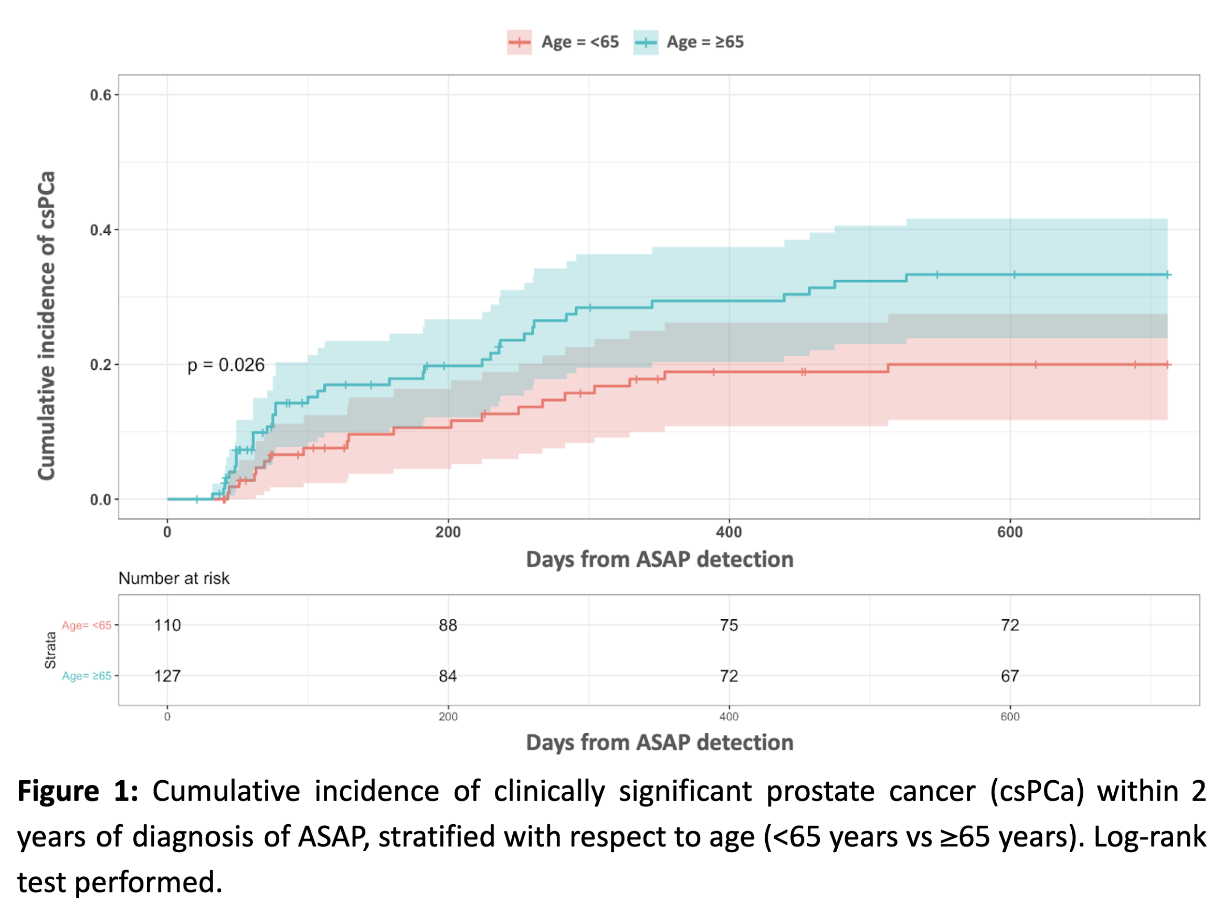
Introduction: Atypical small acinar proliferation (ASAP), found in 5% of prostate biopsies, represents a focus of atypical cells. There is a paucity of high-quality evidence on follow-up of ASAP with repeat biopsies. We aim to assess the incidence of ASAP and detection of PCa, particularly the proportion which are clinically significant (csPCa). Methods: We conducted a retrospective review of electronic patient records (OSF protocol registration ID: CU96T) for all consecutive patients between Jan 2010 and Nov 2021 at a single tertiary institution. csPCa was defined as any Gleason pattern 4 disease. Between group median PSA levels were compared using the Kruskal-Wallis test. Results: Approximately 13000 prostate samplings were performed (11000 needle biopsy and 2000 HOLEP/TURP specimen). ASAP was identified in 617/13000 (4.7%) biopsy samplings involving 523 patients. Of these, 10 (1.9%) and 41 (7.8%) patients had concurrent or a history of PCa respectively and were excluded from further analysis (N=472). At detection of ASAP, the median age was 66 years (IQR:61-71) with a median pre-biopsy PSA of 7.25ng/mL (IQR: 5.35-10.75). A total of 237 (50.2%) patients had a repeat biopsy within a median of 92 days (IQR:56-283). Median PSA after 3-6 months of ASAP detection was higher among patients who subsequently underwent repeat biopsy (6.70 vs 5.08ng/mL, p=0.001). Of 237 patients who underwent repeat biopsies within 2 years, csPCa was found in 57 (24.1%) patients (18 high grade vs 39 intermediate grade) at a median interval of 128 days (IQR:61-260). Clinically insignificant PCa was more common on follow-up, detected in 77 (32.5%) patients. The incidence of csPCa was lower in those younger than 65 years (0.20 vs 0.32, p=0.026) (Figure 1). csPCa was detected on the ipsilateral side of ASAP diagnosis in 46/57 (80.8%) patients. When including patients who did not undergo repeat biopsies and had stable PSA on follow-up ( <10 ng/mL over 2 years; n = 78), overall incidence of csPCa was 18.1% (57/315). Conclusions: PCa detected in follow-up biopsies in patients with ASAP was clinically significant in approximately one quarter of cases. Ipsilateral side with ASAP should be adequately sampled owing to association with detection of csPCa. Current guidelines should be revised to consider resampling following detection of ASAP. SOURCE OF Funding: NIL