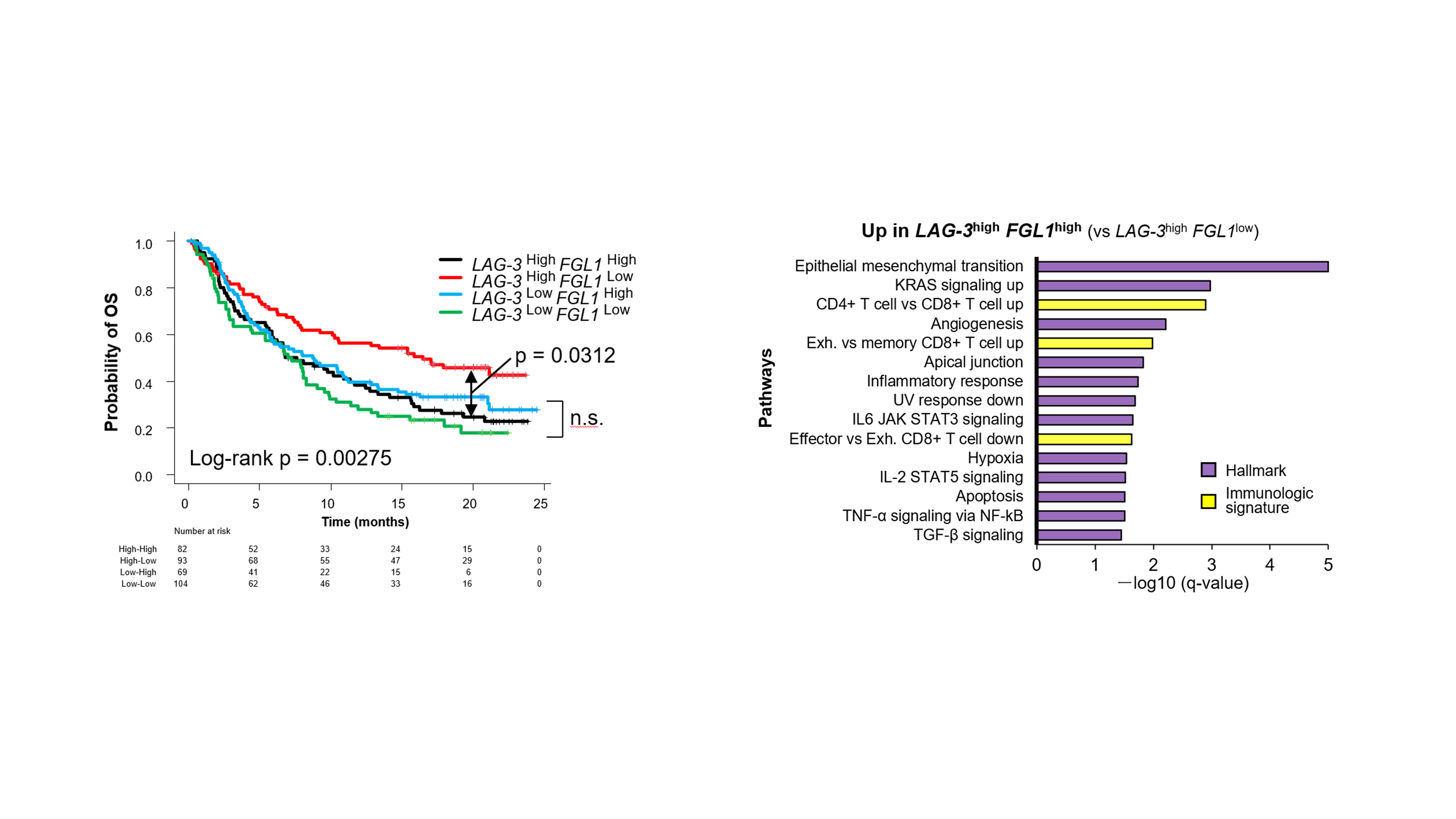
Introduction: PD-1/PDL-1 blockade is standard therapy in advanced urothelial carcinoma (UC), although few cases respond to this therapy. Lymphocyte activation gene-3 (LAG-3), T-cell immunoglobulin and mucin domain-containing-3 (i.e., TIM-3), and T cell immunoreceptor with Ig and ITIM domains (i.e., TIGIT) are major, co-expressed immune checkpoint receptors associated with tumor immune escape. However, the correlation of these receptors and their ligands with immunotherapeutic sensitivity remains unclear in UC. Therefore, we conducted this study to clarify how these checkpoint molecules are associated with response to immunotherapy. Methods: We retrospectively analyzed a total of 851 patients from the public database and Kansai Medical University database. Clinical and molecular analyses and multiplex immunohistochemistry were performed to characterize immune cell infiltration in UC. Results: Among the three checkpoint receptors, only LAG-3 was associated with the responsiveness of PD-1/PDL-1 blockade. In tumors with high LAG-3 levels, the increased expression of fibrinogen-like protein-1 (FGL-1), not for other LAG-3 ligands, such as major histocompatibility complex II and galectin-3, showed a significantly negative impact on response to anti-PD1/PDL-1 therapy and overall survival. Moreover, although the tumor infiltration of CD8+ T-cells was remarkable regardless of FGL-1 expression, high FGL-1 mRNA levels were linked to the upregulation of CD39 and neuropilin-1, as well as an increase in CD4+ regulatory T-cells and M2-like macrophage gene signatures, which may indicate CD8+ T-cell exhaustion. Further, enrichment analyses suggested that high LAG-3-FGL-1 co-expression was significantly correlated with the activation of epithelial-mesenchymal transition, transforming growth factor-beta, and angiogenesis signaling pathways. Conclusions: This study indicates that not only high LAG-3 expression but also co-expression of FGL-1 are crucial factors for predicting adverse oncological outcomes, associated with the presence of immunosuppressive contextures in tumors in cases of PD-1/PDL-1 blockade. Emerging combination therapy of anti-LAG3 and PD-1 blockade could be promising management for such UC patients. SOURCE OF Funding: none