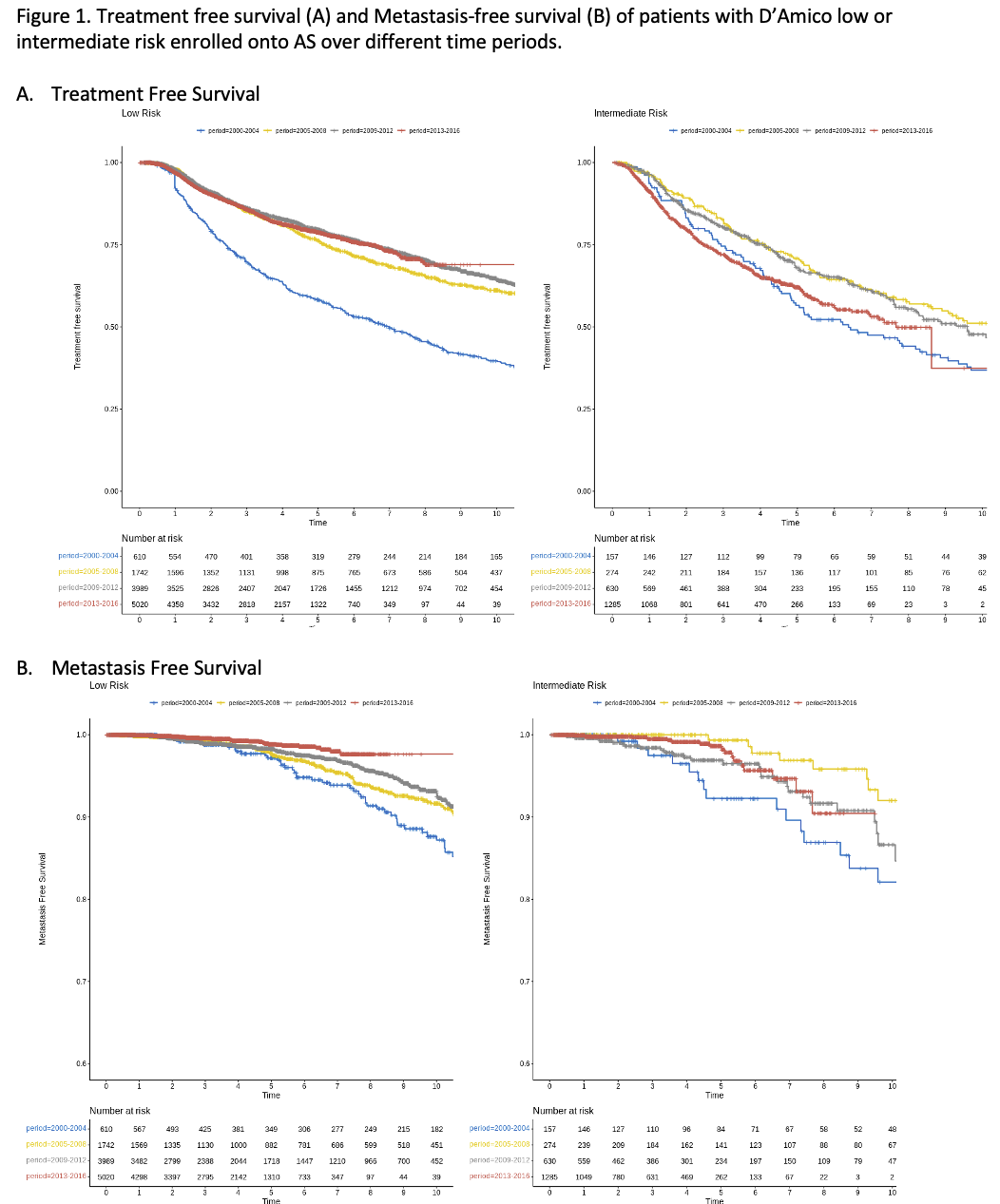
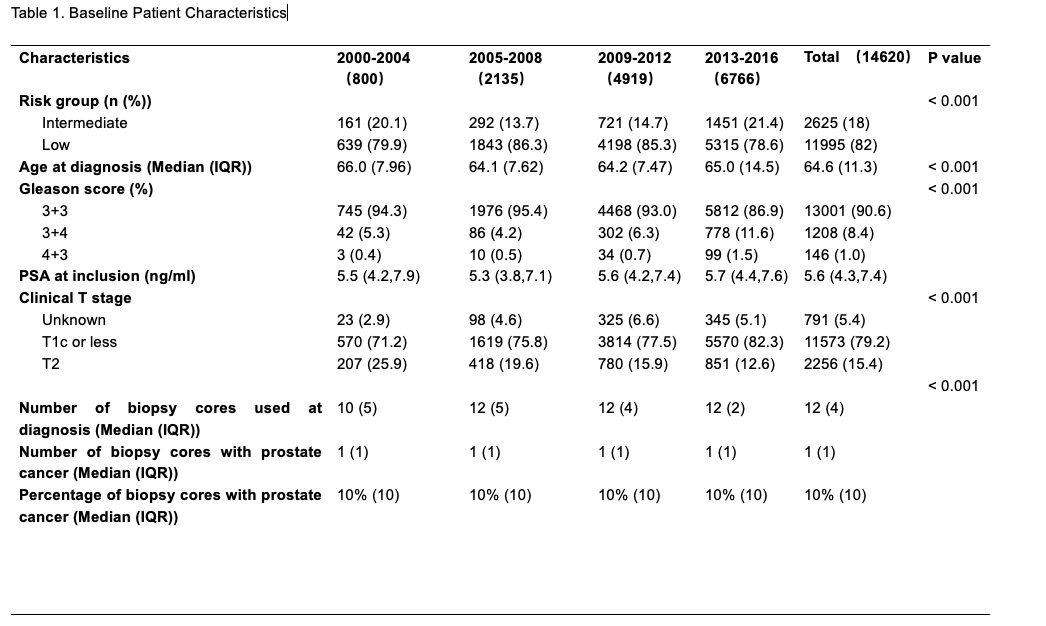
Introduction: Active Surveillance (AS) has matured into a widely applied treatment for low-intermediate risk prostate cancer (PCa). The safety of AS protocols has always been a key concern due to the risk of missing progression. This concern is reflected in national statistics for the uptake of AS which vary widely, in Europe 75-95% of low-risk cancers are treated with AS, in Australia 71%, in the USA 50% and in Asia 10-56%. Potentially, diagnostic tools such as mpMRI have improved the safety of AS protocols. This study aims to describe the evolution of AS protocols overtime including criteria for selection and long-term clinical outcomes for over 26000 patients in the GAP3 database. Thus, assessing the safety and acceptability of AS as a treatment for PCa. Methods: From October 2022 we have released an updated version of the GAP3 database containing 26999 patients from 25 sites and 15 countries (v4.1.1). We performed an analysis of patients who started on AS between 2000 and 2016. The D’Amico risk classification and baseline characteristics of patients were assessed over time. We assessed treatment free survival (TFS) and metastases free survival (MFS) as clinical endpoints with Kaplan Meier curves Results: Table 1. compares the baseline characteristics over different time periods demonstrating increased numbers of patients enrolled to AS. During the 2000-2004 and 2013-2016 periods the highest proportion of intermediate risk cancers were enrolled. TFS and MFS are demonstrated in Figures 1a/b. During the time periods assessed TFS rates have remained the same however there has been improvement in MFS in more recent times. Conclusions: There is increasing use of AS for prostate cancer over time and MFS has improved. However, a proportion of intermediate risk cancer patients still develop metastases. Thus, further improvement in selection and monitoring of these patients is required. SOURCE OF Funding: The Movember Foundation