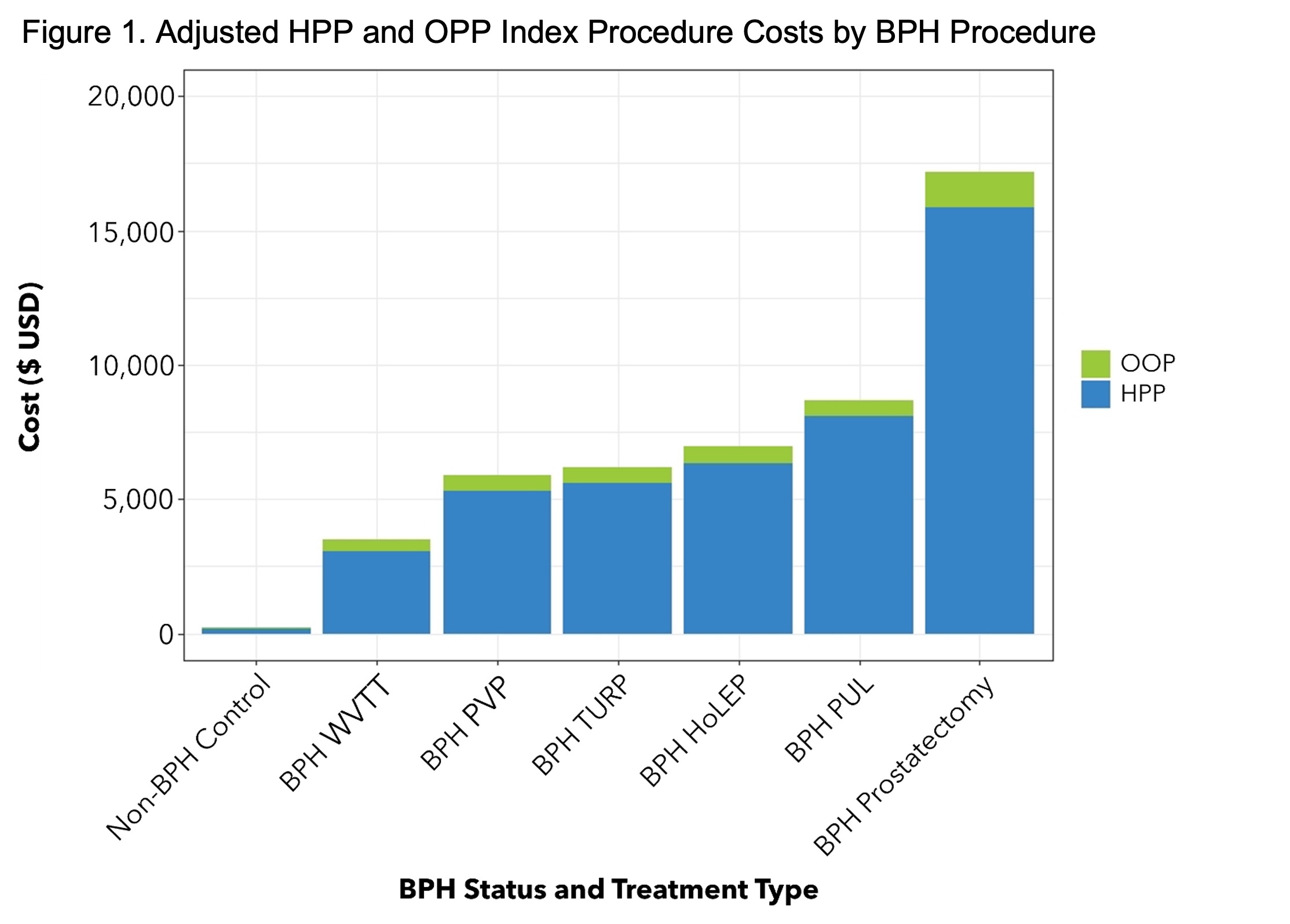
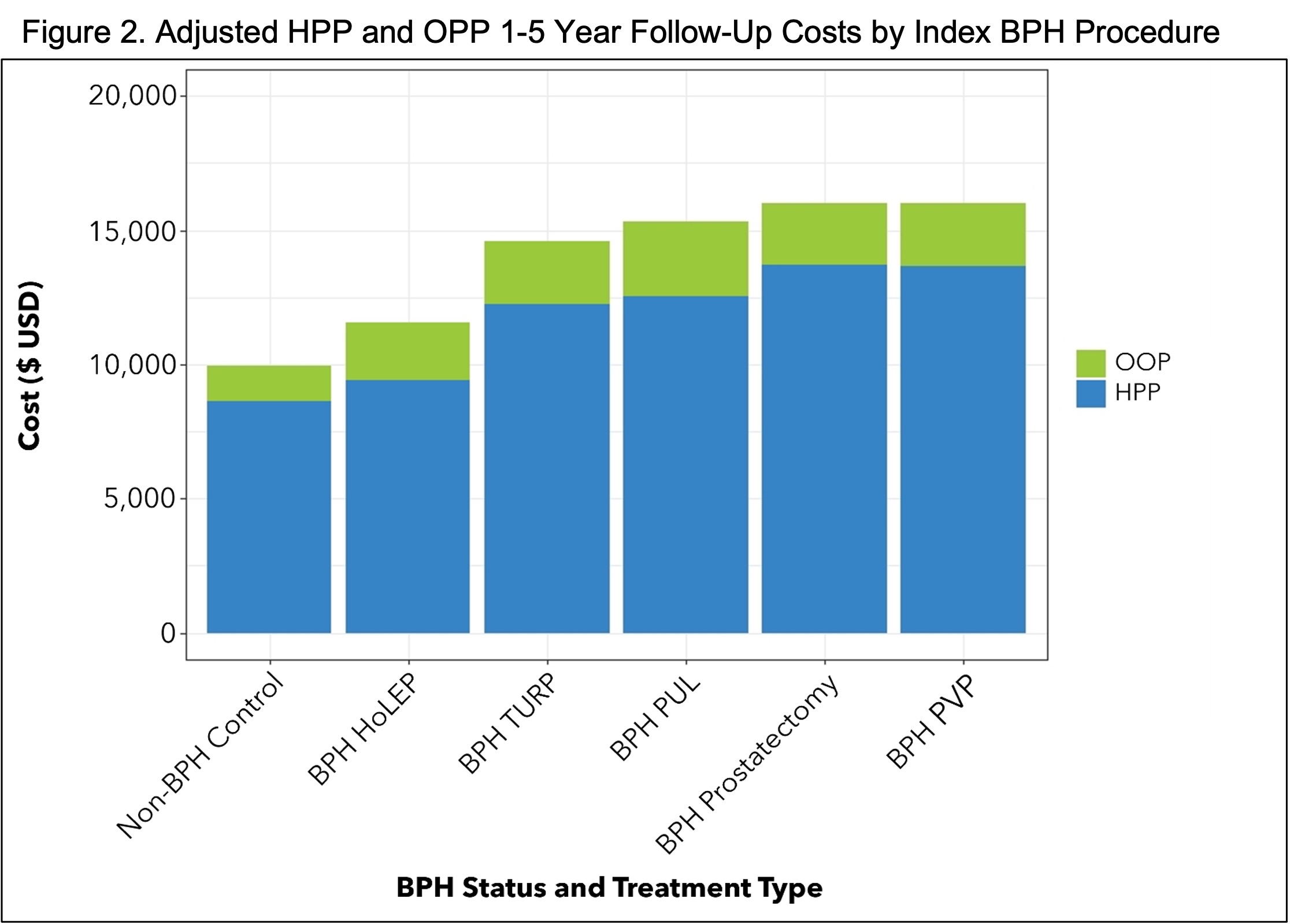
Introduction: A multitude of surgical treatment options exist for BPH - with differences in the level of invasiveness, complications, and durability. Despite the high prevalence of BPH treatment and its significant economic impact, limited data are available comparing the financial burden of specific surgical interventions. Methods: We identified all commercially insured patients with a diagnosis of BPH who underwent a procedure of interest (SP, TURP, HoLEP, PVP, PUL, or WVTT) between 2015-2020 with the OptumLabs Data Warehouse, which includes commercial insurance and Medicare Advantage data. Patients were matched to a non-BPH control group based on demographic and clinical characteristics. The primary outcomes were patient out-of-pocket (OOP) costs and health plan paid (HPP) costs for the index procedure and combined follow-up years 1-5. A generalized linear model was used to estimate adjusted costs controlling for baseline demographic and clinical characteristics. Patients undergoing WVTT and SP were dropped from follow-up cost analyses due to limited data. Results: Among 21,844 patients with BPH, 10,387 (48%) underwent TURP, 5,300 (24%) underwent PVP, 3,751 (17%) underwent PUL, 1,331 (6%) underwent SP, 906 (4%) underwent HoLEP, and 169 (.7%) underwent WVTT. Average costs for index procedure varied significantly by procedure with WVTT being the least costly with an aggregate cost of $3,516 ($441 OOP; $3,075 HPP), and SP being the most costly with an aggregate cost of $17,155 ($1,293 OOP; $15,862 HPP) (Figure 1). When evaluating combined 5-year follow-up costs, HoLEP was the least costly with an aggregate cost of $11,579 ($2,161 OOP; $9,418 HPP), and PVP was the most costly with an aggregate cost of $16,015 ($2,298 OOP; $13,717 HPP) (Figure 2). Conclusions: BPH treatment modality has a significant impact on patient and system level costs. Minimally invasive options, such as WVTT, may offer initial cost reductions; however, with the inclusion of longer-term follow up, HoLEP was associated with the lowest patient and HPP costs. SOURCE OF Funding: Robert D and Patricia E Kern Center for the Science of Health Care Delivery