Urology PGY-2 Resident at The Smith Institute for Urology Smith Institute for Urology
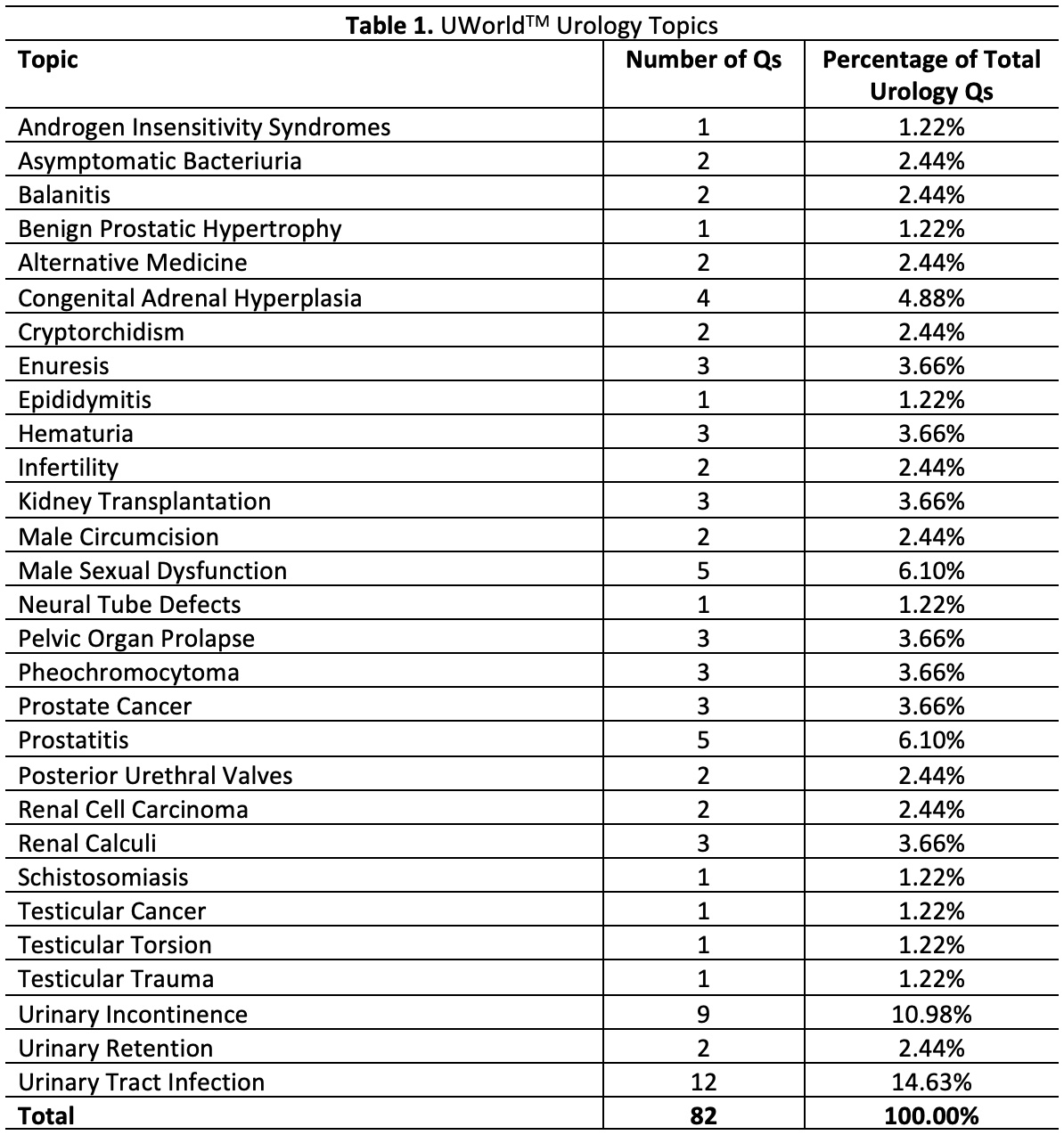
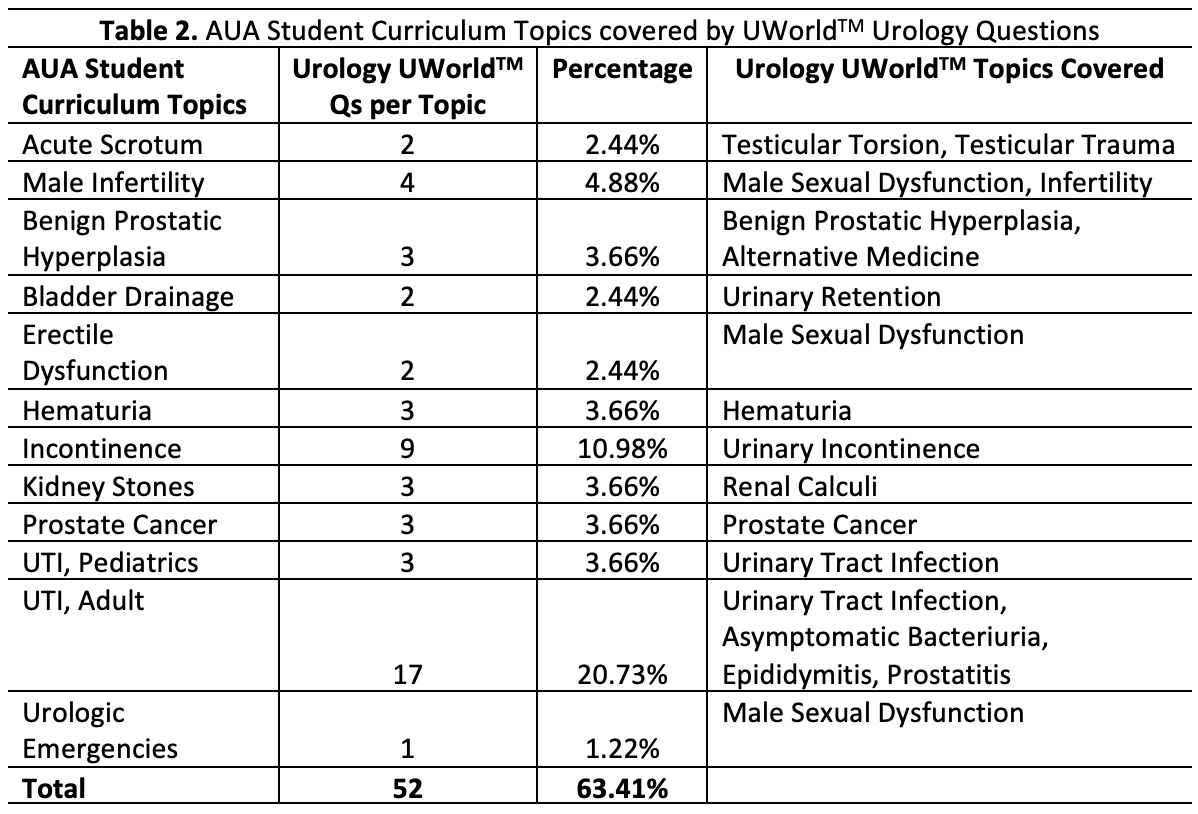
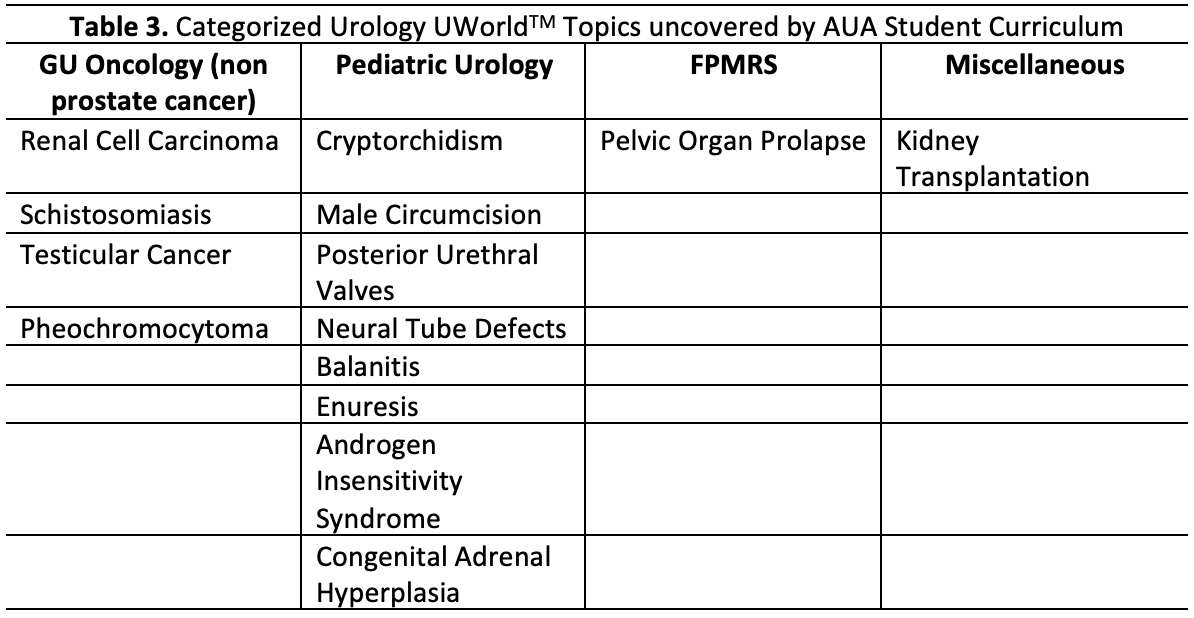
Introduction: Urologic education in U.S. medical schools has steadily declined despite the known increasing burden of urological disease complaints in our aging population. The AUA created a medical student curriculum to codify the urologic topics graduating medical students should know. We sought to identify the urologic topics deemed relevant to all physicians as defined by board exams (USMLE Step 3) and further, to compare these to the AUA curriculum. Methods: The UWorld™ Step 3 question bank was queried on June 20th, 2022. Questions were categorized as urologic and non-urologic by two independent reviewers and a third reviewer to resolve discrepancies. Inter-rater reliability testing was performed. Urologic questions were categorized by topic (Table 1) and then compared to the AUA medical student curriculum (Tables 2, 3) to determine if topics were covered. Results: A total of 82 urology questions (4.44%) were identified within the UWorldTM question bank. A majority (63.4%) were covered within the AUA medical student curriculum. Topics not covered in the curriculum can mainly be categorized into GU oncology (non-prostate cancer) and pediatric urology. Inter-rater reliability was high (91.89% with a Cohen’s kappa coefficient of 0.46). Conclusions: Despite waning urologic education in medical school, this knowledge is required for all practicing physicians with over 4% of Step 3 practice questions being urologic. While the AUA medical student curriculum covers the majority of necessary urologic education, there are gaps, especially within oncology and pediatric urology. SOURCE OF Funding: None.