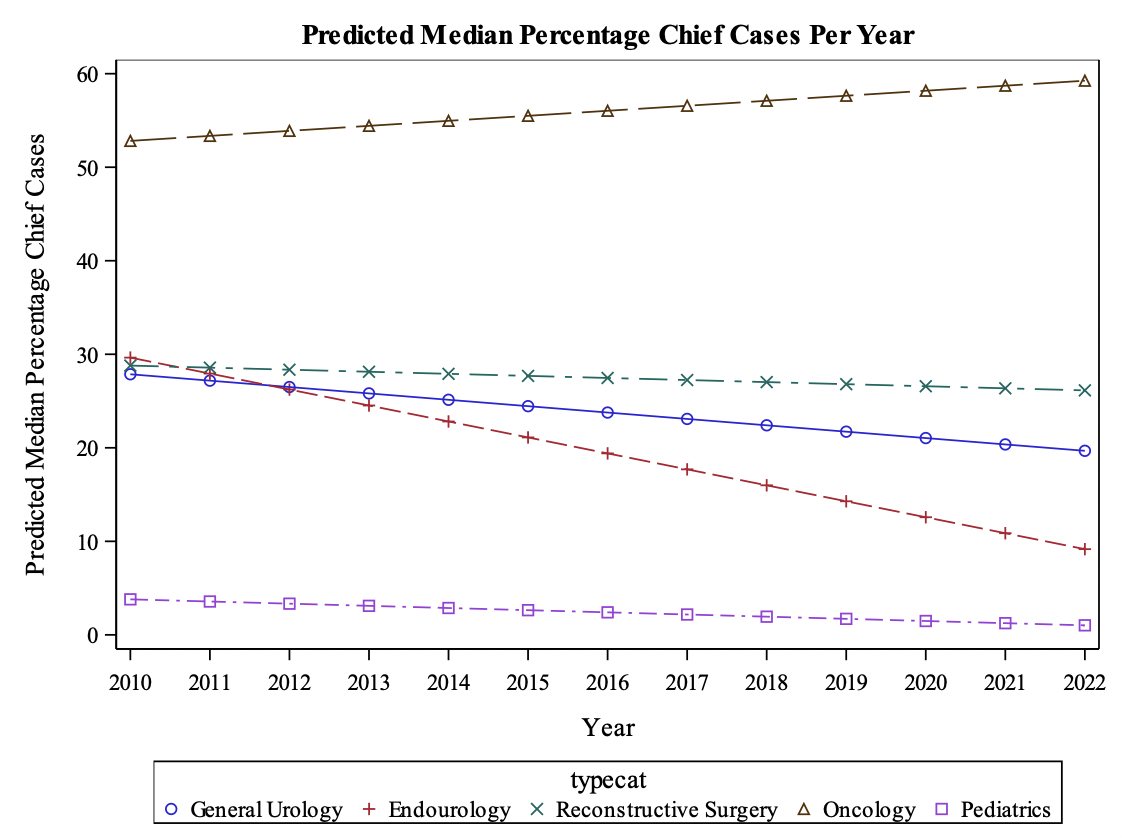
Introduction: A critical component of residency education is ensuring that trainees are optimally prepared for independent practice upon graduation. The Accreditation Council for Graduate Medical Education establishes minimum case requirements but does not specify a timeline for case exposure. At present, there is limited research to understand the temporal arc of cases completed during training. Therefore, the objective of this multi-institutional experience was to characterize the case distribution that residents complete during their chief year compared to their entire residency. Methods: Urology resident case logs from 2010-2022 were obtained and de-identified from 13 different institutions for chief years and total residency. Five categorized index procedures were included for analysis: (1) General Urology; (2) Endourology; (3) Reconstructive Urology; (4) Urologic Oncology; and (5) Pediatric Urology. Interactions were tested between the trends for total case exposure in residency training relative to the chief resident year. Results: From a sample of 479 resident graduates, a total of 1,287,433 total cases were logged, including 375,703 during the chief resident year (29%). Urologic Oncology had the highest median percentage of cases completed during chief year (57%) followed by Reconstructive Urology (32%), General Urology (31%), Endourology (23%), and Pediatric Urology (12%). Across the study period, all categories of cases had a downward trend in median percentage completed during chief year except for Urologic Oncology (Figure). However, only trends in General Urology (slope of -0.68, p = 0.013) and Endourology (slope of -1.71, p = <0.001) were significant. Conclusions: Over 50% of cases completed by chief residents are Urologic Oncology procedures. Current declining trends indicate that residents are being exposed to proportionally fewer General Urology and Endourology cases during their chief year. More research is needed to determine if lack of exposure to general urology and endourology during chief year translate into decreased preparedness for independent practice. SOURCE OF Funding: None