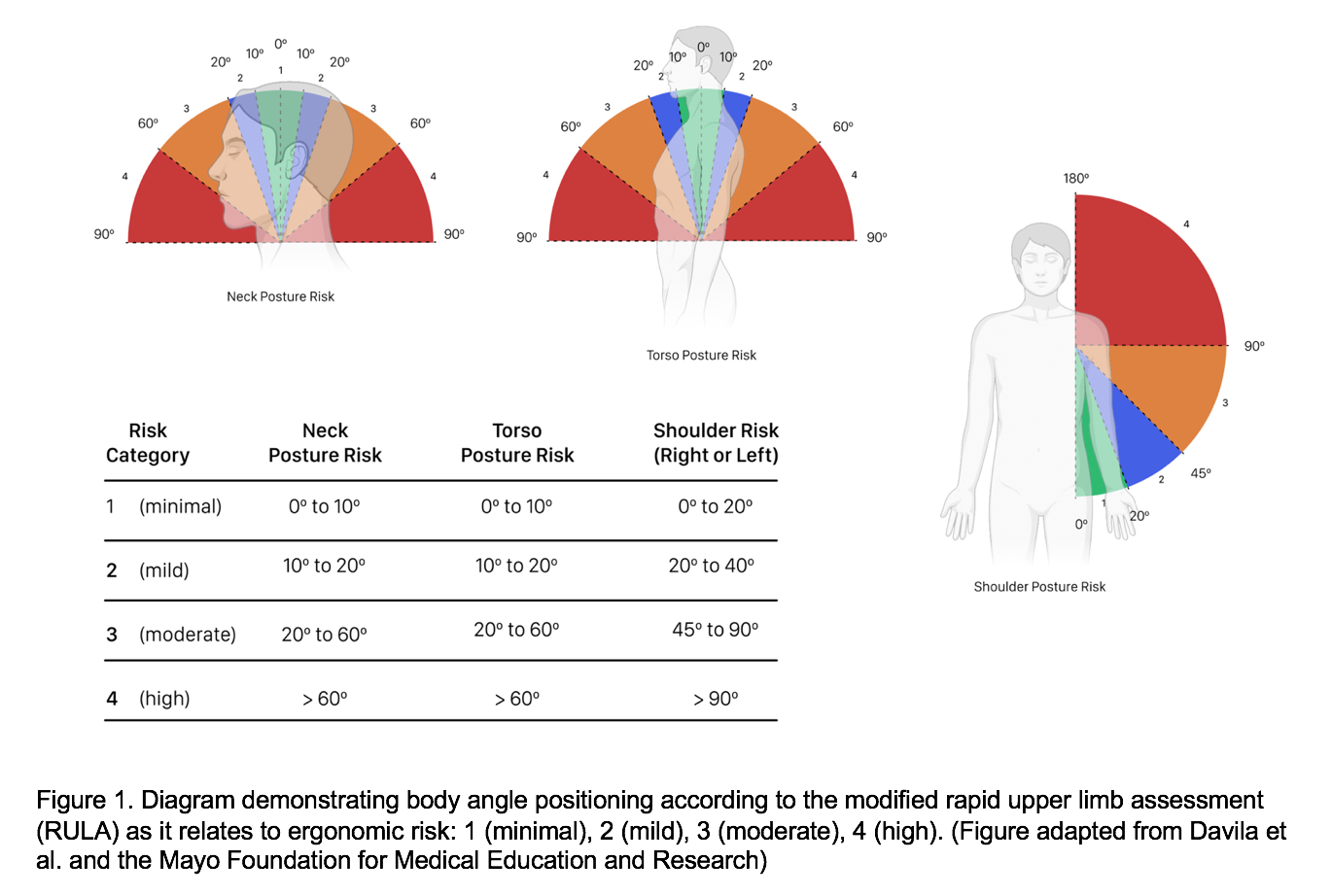
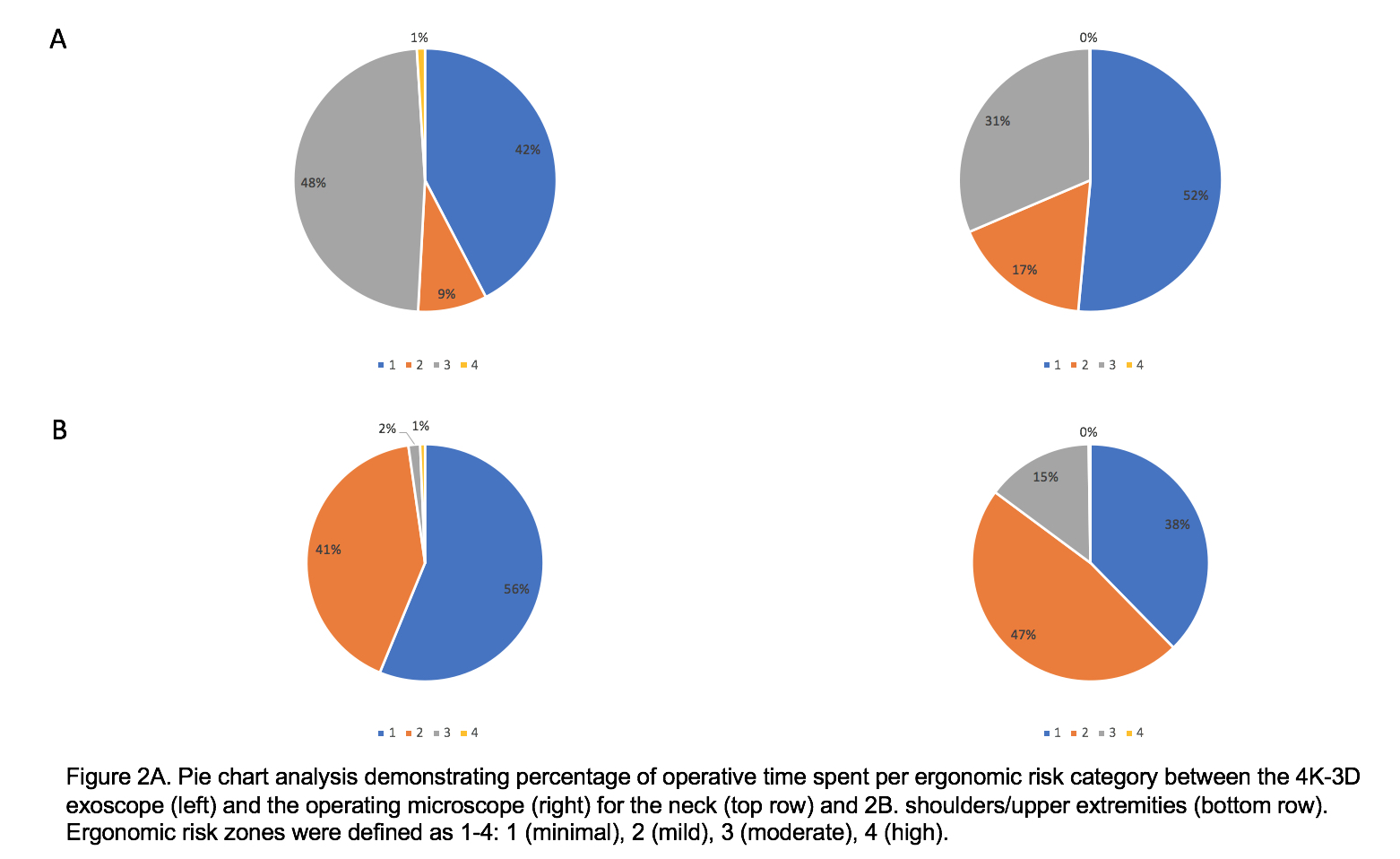
Introduction: The standard operating microscope (OM) places microsurgeons in uncomfortable and risky positions. The 4K-3D exoscope lacks eyepieces allowing for a “heads up” posture. Additionally, surgeons may maintain a more “neutral” upper arm position. We aim to stratify ergonomic risk amongst infertility surgeons using the 4K-3D exoscope versus the OM with wearable technology. Methods: The surgeon was calibrated with wearable sensor inertial measurement units (IMUs) on the head and upper arms. Each IMU contained an accelerometer, magnetometer, and gyroscope to measure surgeon joint angle change during microscopic procedures for male fertility. The validated modified rapid upper limb assessment was used to determine the proportion of time spent in ranges of risk. Categories 1-4 were assigned for the head and upper extremities (4= highest ergonomic risk) (Figure 1). Chi-squared analysis was used to test proportions. Results: A total of 500 and 479 microsurgical minutes from 4K-3D exoscope and OM guided surgeries were analyzed. The 4K-3D exoscope significantly favored upper arm category 1 positioning compared to the OM (56.2% vs. 37.7%; p < 0.0001) (Figure 2). The OM exposed the surgeon to higher category 3 positioning (14.6% vs. 1.6%; p <0.0001). More time was spent with the neck “extended” using the 4K-3D exoscope (51.8% vs. 19.5%; p < 0.0001). During 4K-3D exoscope use, 67% of neck extension time was between 0-10 degrees (category 1). Only 1% of 4K-3D exoscope operative time was spent with the neck in the high-risk interval (category 4). When considering both neck extension and flexion, more time was spent in risk group 1 and 2 with the operating microscope (p < 0.0001). Conclusions: The 4K-3D exoscope offers favorable ergonomic positioning for the upper extremities which may reduce work stress related injury. More operative time was spent with the neck in mild extension with 4K-3D exoscope use. However, the OM favored longer operative times in low-risk neck ergonomic positions. SOURCE OF Funding: Investigator initiated funding from Olympus. NIH Grant R01 DK130991 and Clinician Scientist Development Grant from the ACS to RR