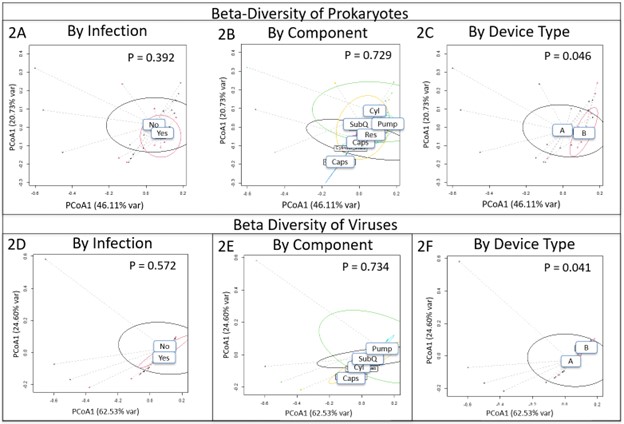
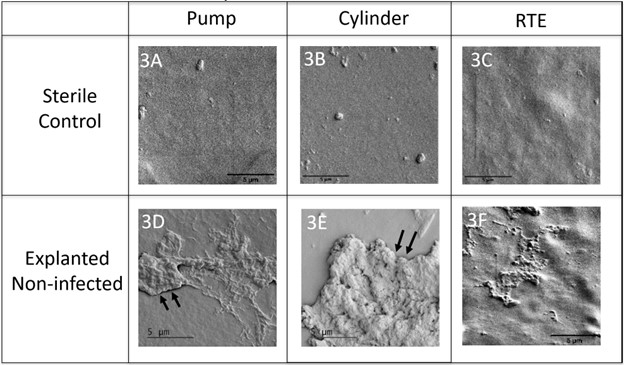
Introduction: To characterize microbial biofilms of indwelling penile prostheses by device component, manufacturer and infection status. Understanding biofilms in the presence and absence of infection will guide development of novel materials and coatings resistant to pathogenic biofilm formation – improving strategies for the prevention and treatment of device infection. Methods: Penile prosthetic devices were removed in 20 patients having mechanical failure, pain, or infection. Device components were subjected to sonication, DNA extraction, next generation sequencing, shotgun metagenomics, and culture-based approaches. Curated reads were compared to known bacterial, viral, fungal, and protozoal databases, then mapped to KEGG and antibiotic resistance gene databases. Results: Biofilms were detected in all 102 prosthetic components. 65% of species were prokaryotic, 15% viral, 15% protozoan, and 0% fungal in origin. Beta-diversity of prokaryotes and viruses did not differ by infection status or device component, but differed by device type (p < 0.05) (Figure 1). The most abundant bacterial phyla were Proteobacteria and Actinobacteria. Mobiluncus curtisii was enriched in Manufacturer A (M.A.) device biofilms relative to Manufacturer B (M.B.). Bordetella bronchialis and Methylomicrobium alcaliphilum were enriched in M.B. relative to M.A. devices. The most abundant viruses across device components were the bean 58058 virus and cotesia congregate virus. The angelica virus and magnaporthe oryzae chrisovirus were enriched in M.B. relative to M.A. devices. Conclusions: Penile prostheses harbored biofilms regardless of device component and infection status (Figure 2). The significance of biofilm differences based on device type remains unknown. Stable, non-pathogenic biofilms may inhibit pathogenic infection and further investigation is needed into prevention of the transition to a state of dysbiosis. SOURCE OF Funding: This study was funded by the 2020 Sexual Medicine Society of North America Young Clinicians Research Grant.