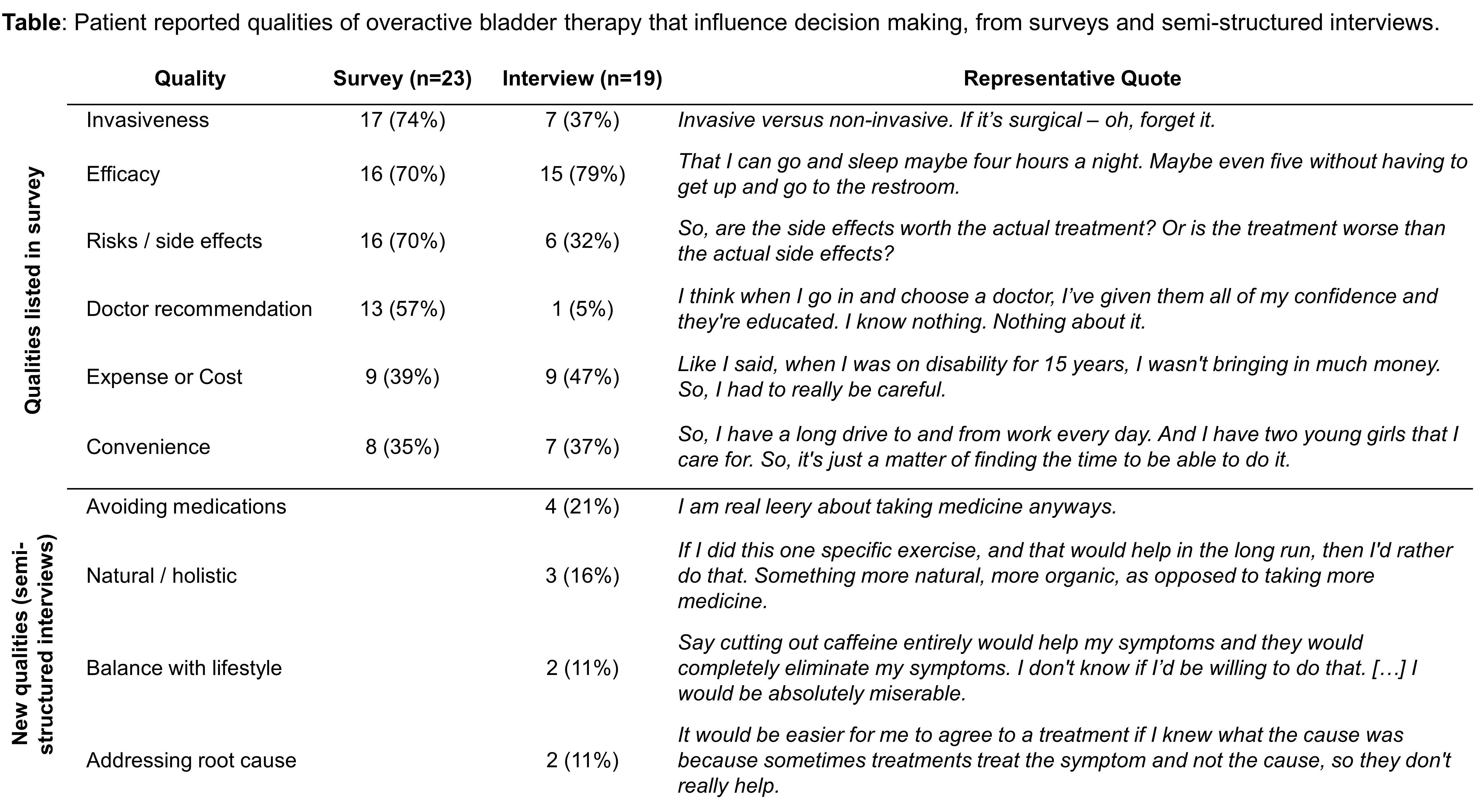
Introduction: Overactive bladder (OAB) management includes multiple therapeutic options with comparable efficacy but a range of administration modalities and side effects, creating an ideal setting for shared decision making (SDM). We elicited patient perspectives on what is important when selecting a therapy for OAB, to ultimately inform future patient-centered decision aids. Methods: We conducted a concurrent triangulation mixed methods study of patients with OAB symptoms recruited from a tertiary care clinic and online health research portal. Participants completed a questionnaire and a semi-structured interview to assess health beliefs surrounding decision making and expectations for OAB treatment. The semi-structured interview guide probed qualities of OAB therapies patients valued, their process of treatment selection, and their experiences with therapies. Interview recordings were transcribed and coded, and emerging themes were developed through inductive analysis using interpretive description. Results: Of 23 surveyed patients, the mean age was 58 and most were female (91%). All patients experienced urinary urgency or urge incontinence with median LURN-SI score of 12 (IQR 10-19), and 87%, 65% and 43% had tried first, second, or third line OAB therapy, respectively. In both surveys (n = 23) and interviews (n=19), participants frequently cited invasiveness, efficacy, and safety as the most important qualities that influenced their decision when selecting OAB therapy. Additional themes that emerged in interviews included a desire to avoid medications, wanting therapies that are natural and address the root cause of OAB, and the need to balance therapies with lifestyle (Table). Conclusions: The list of treatment qualities developed for the survey did not fully capture the wide range of themes shared by patients in the interview, highlighting the importance of seeking patient perspectives. Many patients discussed a balance between qualities, demonstrating that there is no single quality that drives treatment decisions, but that patients weigh pros and cons to select a therapy that best fits their lifestyle and preferences. These data support an OAB management paradigm centered around patient preference and SDM. SOURCE OF Funding: K12 -DK111011-06 NIDDK UroEPI Career Development Program