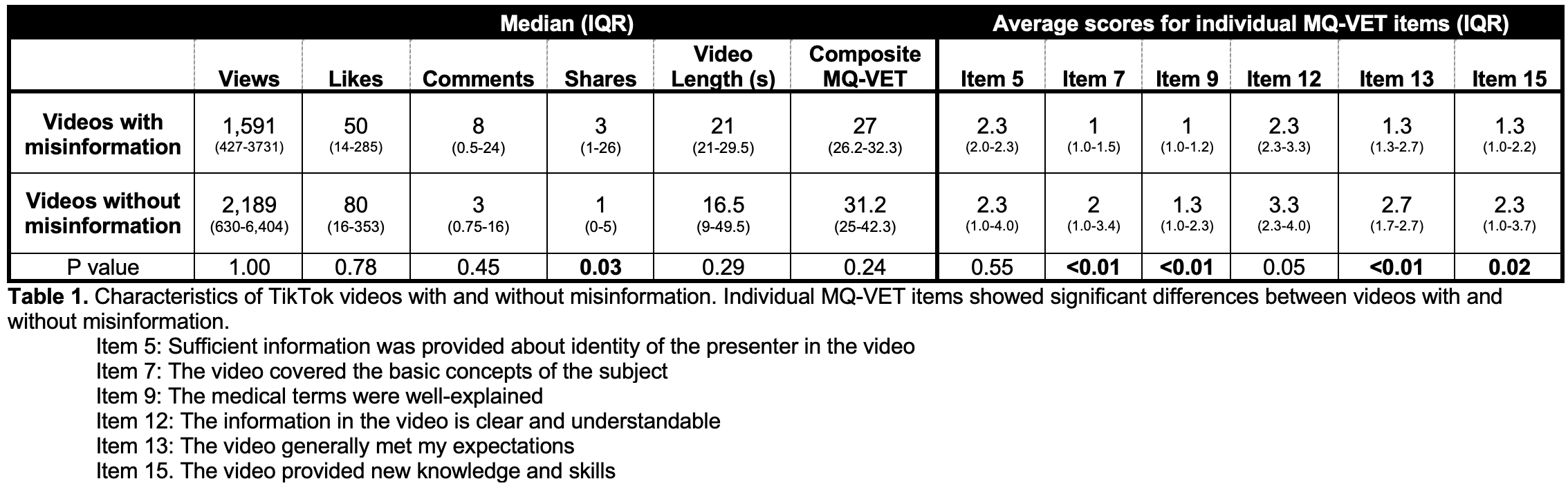
Introduction: Social media is an increasingly used health information resource; TikTok’s role in this space is not well-researched. In this study, we evaluated the presence of misinformation and quality of TikTok posts related to overactive bladder (OAB). Methods: “Overactive bladder” and “OAB” were queried on TikTok. The first 100 results were identified, excluding videos that were private, unavailable, or not in English. Three independent reviewers scored videos using the Medical Quality Video Evaluation Tool (MQ-VET), a validated instrument for evaluating the quality of medical videos. The three MQ-VET scores were used to create a composite score ranging from 15-75. Reviewers also noted if any misinformation was present. Results: The 95 videos included had a median of 1,727 views, 56 likes, four comments, and two shares. Median video length was 21 seconds. The median composite MQ-VET score was 29 (IQR 25.7-39). Videos longer than the median length had higher composite MQ-VET scores (39.7 vs 27.0 seconds, p<0.01). Misinformation was identified in 40% of all videos and in 74% of duplicated videos. The most common type of misinformation was mislabeling stress urinary incontinence as OAB. Seventeen videos had content that either replicated another user or consisted of a user’s reaction to the video. Composite MQ-VET scores did not differ between videos with and without misinformation , but there were significant differences in specific MQ-VET items (Table 1). Videos containing no misinformation scored higher in covering the basic concepts of OAB (item 7), explaining medical terms (item 9), and promoting new knowledge and skills (item 15) (p < 0.05). Videos containing misinformation were shared more often. Conclusions: Information about OAB on TikTok is readily accessible, but the video posts contain substantial misinformation and are of poor quality. Longer videos were of higher quality than shorter videos. It is concerning that videos with misinformation are shared and duplicated more often, allowing incorrect information to be widely disseminated. Providers should be aware of the medical information and misinformation promoted on popular social media platforms such as TikTok when counseling patients with OAB. SOURCE OF Funding: None