MP32-08: Aortic calcification burden is associated with an increased risk of acute kidney injury in patients who undergoing radical cystectomy: A multi-institutional retrospective cohort study
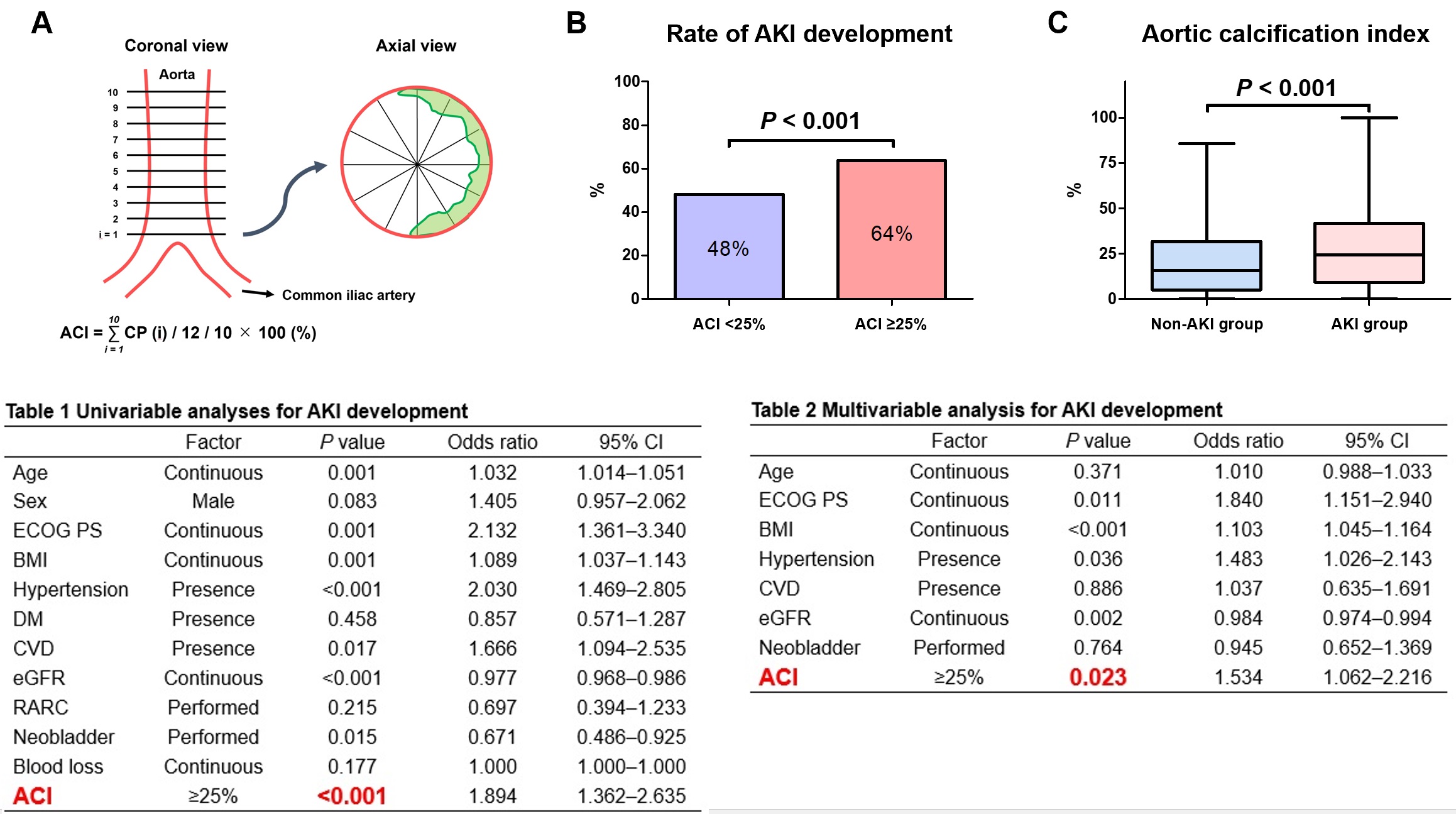
Introduction: Although acute kidney injury (AKI) is one of the frequent complications in patients undergoing radical cystectomy (RC), its risk factors remain unclear. As arterial degradation is suggested to be a risk factor for renal impairment, we hypothesized that preexisting aortic calcification may play a crucial role in AKI development. Methods: This multi-institutional retrospective cohort study included 616 patients with muscle invasive bladder cancer who underwent RC between September 1998 and April 2022. Aortic calcification burden was quantified with aortic calcification index using preoperative computed tomography scan (ACI, %) (Fig. A). Patients were divided into two groups: lower ACI (ACI <25%) and higher ACI groups (ACI =25%). AKI was defined according to the KDIGO criteria. Multivariable logistic regression analysis was performed to evaluate the association between aortic calcification burden and the risk of AKI. Results: Of 616 patients, 248 (40%) were classified as the higher ACI group and 335 (54%) developed to AKI (any stage). Rate of AKI development in the higher ACI group was significantly higher than that of the lower ACI group (Fig. B; P < 0.001). ACI in patients who developed AKI was significantly higher than that in patients who did not (Fig. C; P < 0.001). In univariable analyses, age, performance status, body mass index, hypertension, cardiovascular disease, renal function, neobladder reconstruction, and ACI were associated with AKI development (Table 1). After adjustment for these confounding variables, ACI was selected as a significant independent risk factor for AKI development (Table 2; odds ratio 1.534, P = 0.023). Conclusions: High aortic calcification burden is a risk factor for AKI in patients who undergoing RC. SOURCE OF Funding: None