MP32-09: A Predictor of Complications after Radical Cystectomy: The Modified GLIM Status in a Propensity Matched Analysis of the American College of Surgeons - National Surgical Quality Improvement Program Data
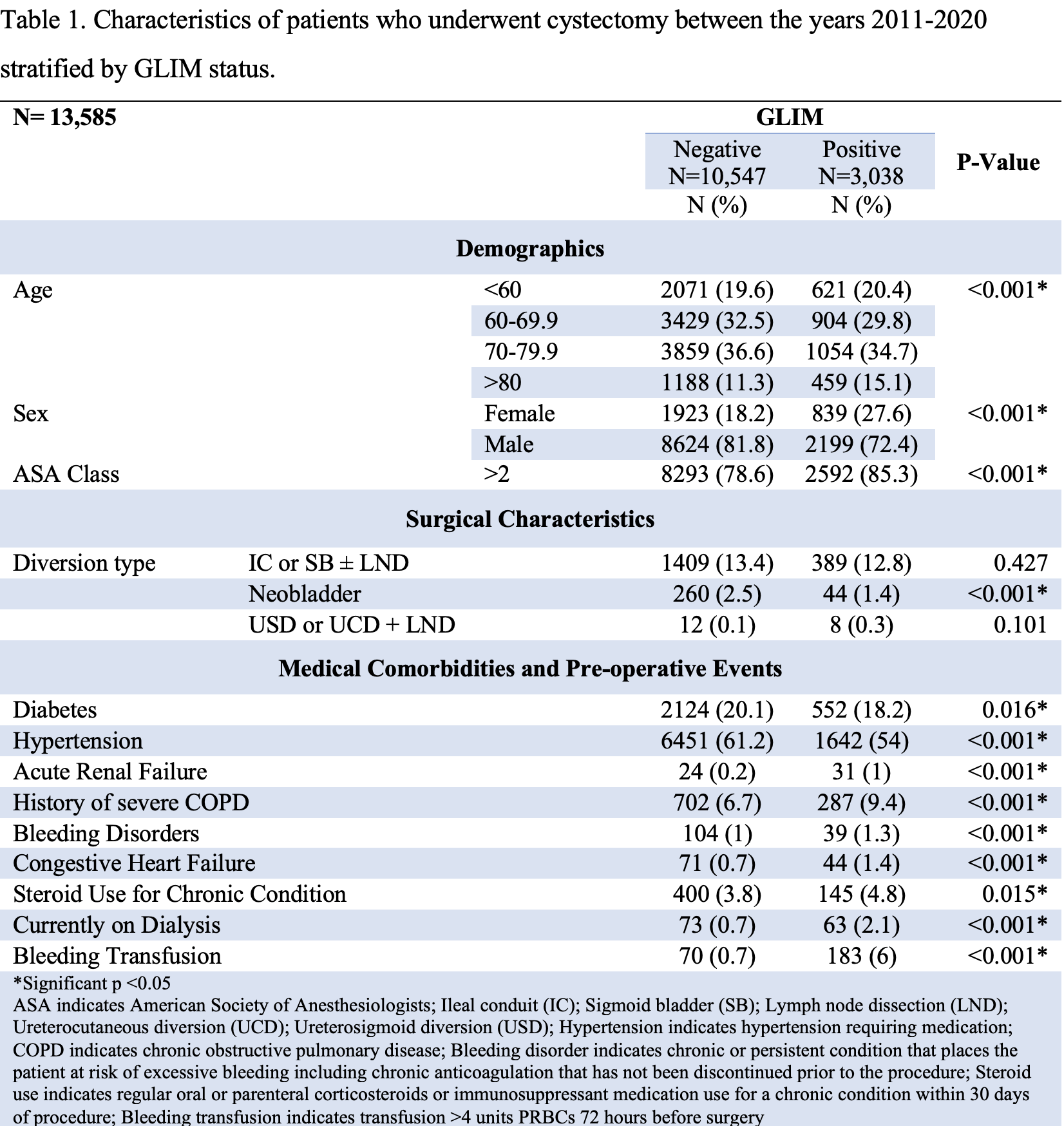
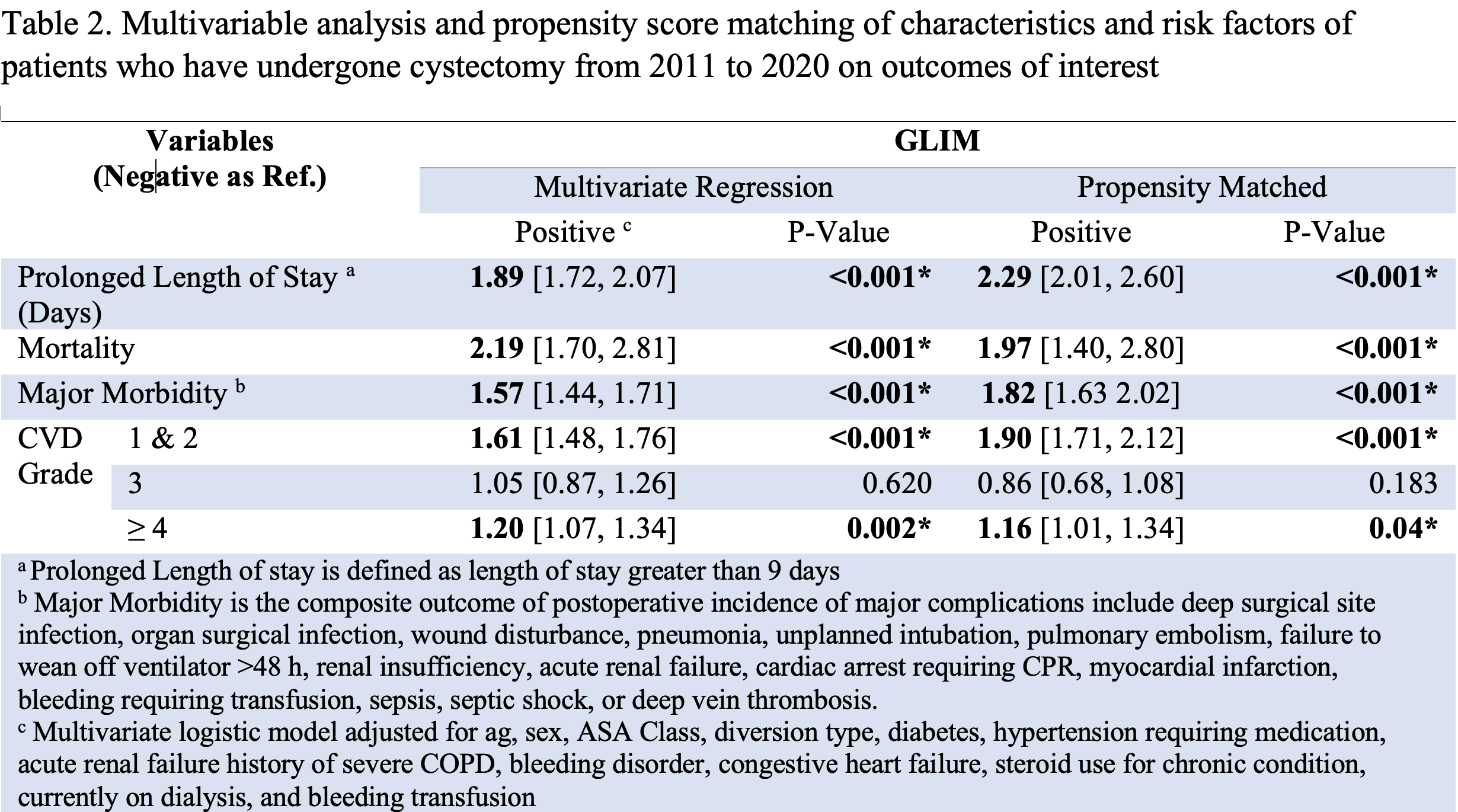
Introduction: Nutritional status and malnutrition are important predictors of morbidity and mortality after surgery. For this reason, we aim to assess the modified Global Leadership Initiative on Malnutrition (mGLIM) status as a predictor of post-operative mortality and morbidity in patients undergoing Radical Cystectomy (RC). Methods: Using the American College of Surgeons - National Surgical Quality Improvement Program (ACS-NSQIP) dataset, we selected patients who underwent RC between the years 2011-2020. A positive mGLIM status includes patients with preoperative albumin levels <3.5 g/L, or patients with = 10% weight loss over 6 months or BMI = 21 kg/m2. We compared prolonged length of stay, mortality, major morbidity and Clavien-Dindo complications between mGLIM positive and negative patients. We also performed multivariable logistic regression models and propensity score matching to control for possible confounders. Results: The unmatched cohort consisted of 13,585 patients whereas the matched cohort yielded 5,610 matched patients who underwent RC. Patients with a positive mGLIM status were more likely to be older, with a higher ASA class, and with comorbidities (p < 0.001). After multivariable analysis and propensity score matching, patients with a positive mGLIM status had higher odds of prolonged length of stay (OR=2.29), mortality (OR 1.97), major morbidity (OR=1.82), Clavien-Dindo class I and II (OR=1.90), and Clavien-Dindo class = IV (OR=1.14) as compared to those with a negative mGLIM status (p < 0.04). Conclusions: A positive mGLIM status is associated with prolonged hospital stay, morbidity, and mortality following RC. This highlights the importance of optimizing patient pre-operative nutritional counseling. SOURCE OF Funding: None