Session: MP35: Stone Disease: Surgical Therapy (including ESWL) II
MP35-07: Impact of preoperative ureteral stenting size on postoperative outcomes of retrograde intrarenal surgery for urolithiasis: A prospective study.
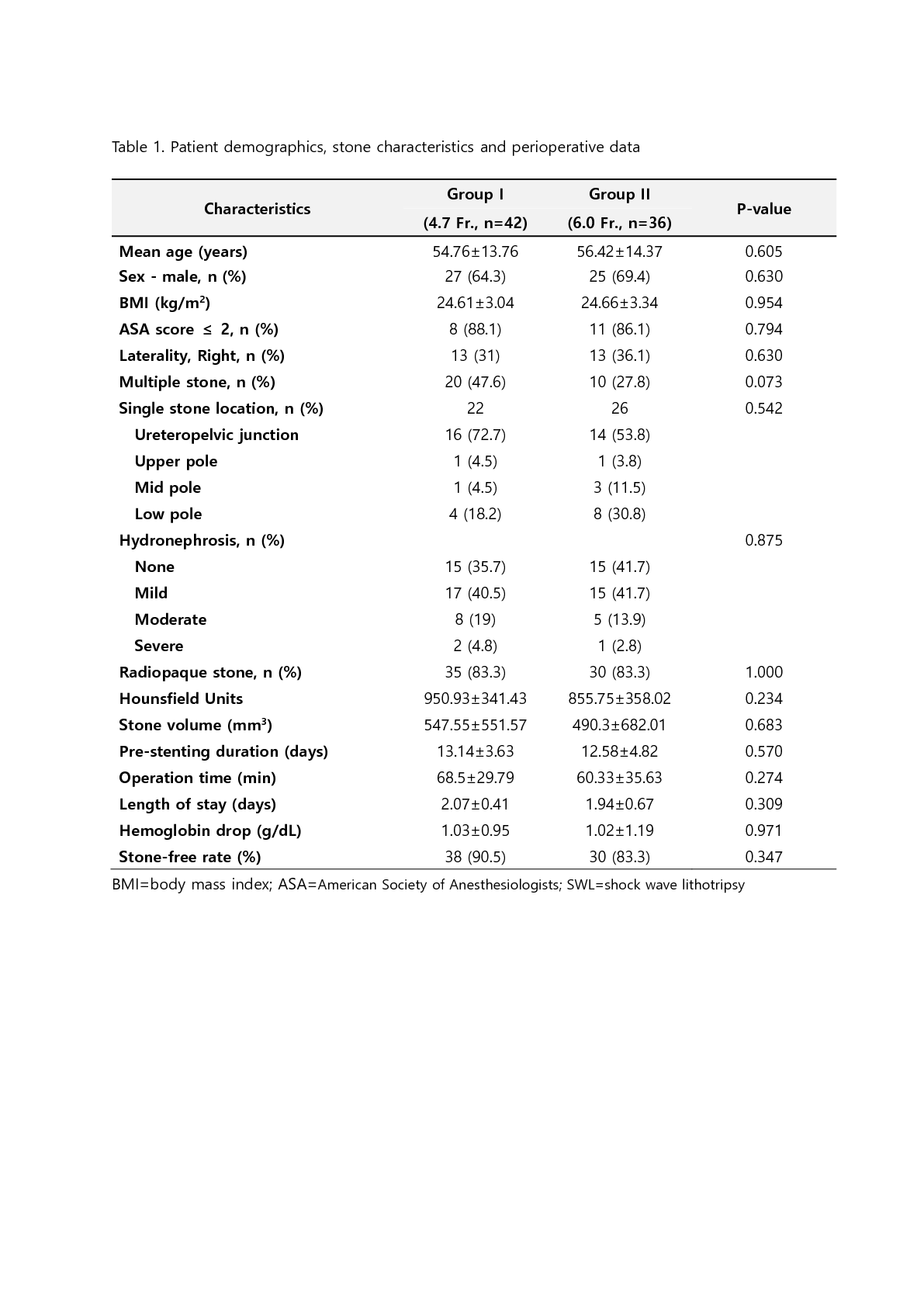
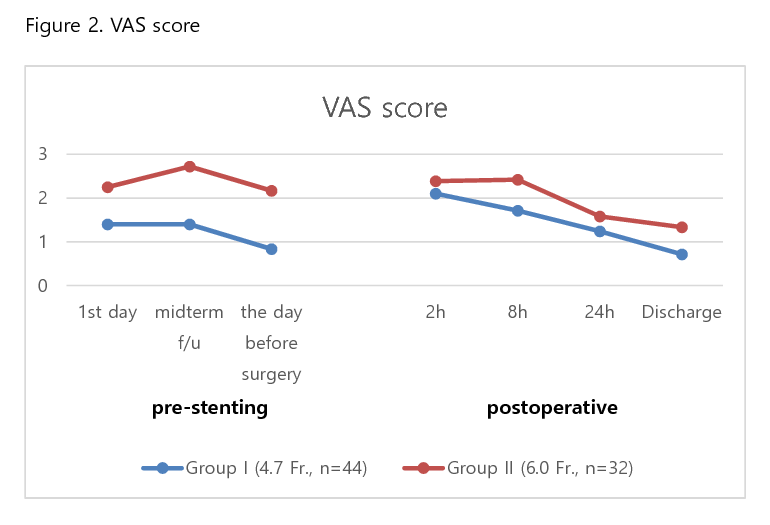
Introduction: It is widely known that preoperative ureteral stenting (pre-stenting) prevents intraoperative ureteral injury and increases the success rate of access sheath placement in retrograde intrarenal surgery (RIRS). However, many patients suffer from stent-related symptoms such as urinary symptoms, flank pain and hematuria. The aim of this study is to assess the outcome of RIRS and perioperative pain according to the size of the stent used for pre-stenting. Methods: A prospective study was conducted on patients who went RIRS from March 2019 to April 2022. Patient’s demographics, stone characteristics, postoperative outcomes and perioperative pain scale were compared based on the preoperatively placed ureteral stent size. Results: A total of 76 patients were included in this study. 44 were placed with 4.7 Fr ureter stent (Group I) and 32 were placed with 6.0 Fr ureter stent (Group II) before surgery. Patient demographics, stone characteristics and duration of pre-stenting were similar. There was no difference in operative outcomes, including operation time, length of stay, and stone free rate between the two groups. As a postoperative complication, one urticaria and one urethral stenosis occurred in group I, while urinary tract infection occurred in two in group II (P=0.521). Pain assessed using visual analogue scale (VAS) three times during the period from pre-stenting to surgery was significantly lower in Group I (P <0.05 for all). Urinary irritation symptoms (P <0.001) and hematuria (P=0.005) that occurred after pre-stenting were also less observed in Group I. VAS measured after RIRS did not differ at 2, 8, 24 hours after surgery (P=0.490, 0.129, 0.138), but it was measured lower in Group I at discharge (P=0.07). There was no difference in the amount of analgesics used after surgery between the two groups (P=0.338). Conclusions: Pre-stenting with 4.7Fr ureteral stent is a safe and effective method, especially to improve stent-related symptoms and pain. SOURCE OF Funding: None.