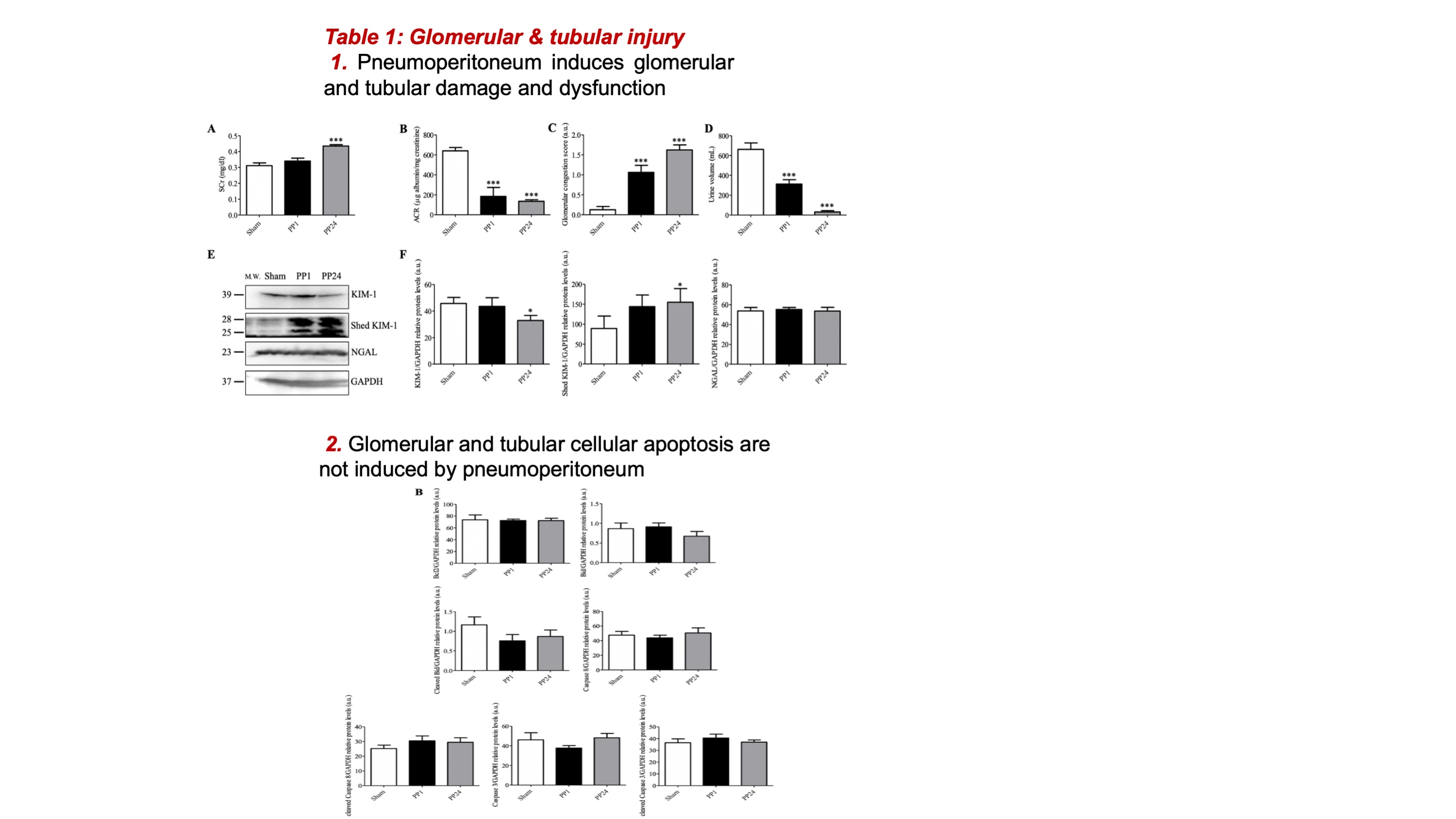
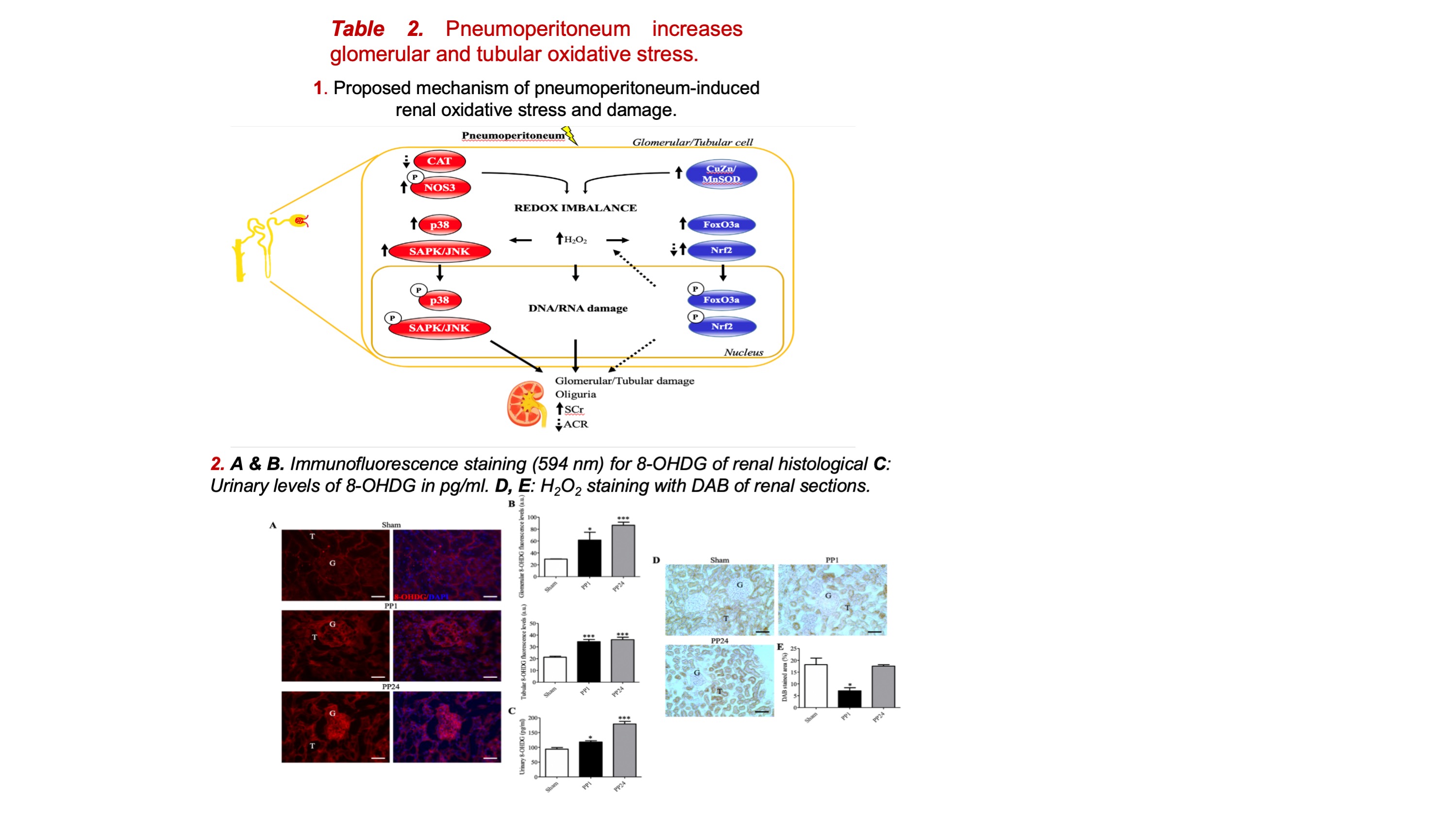
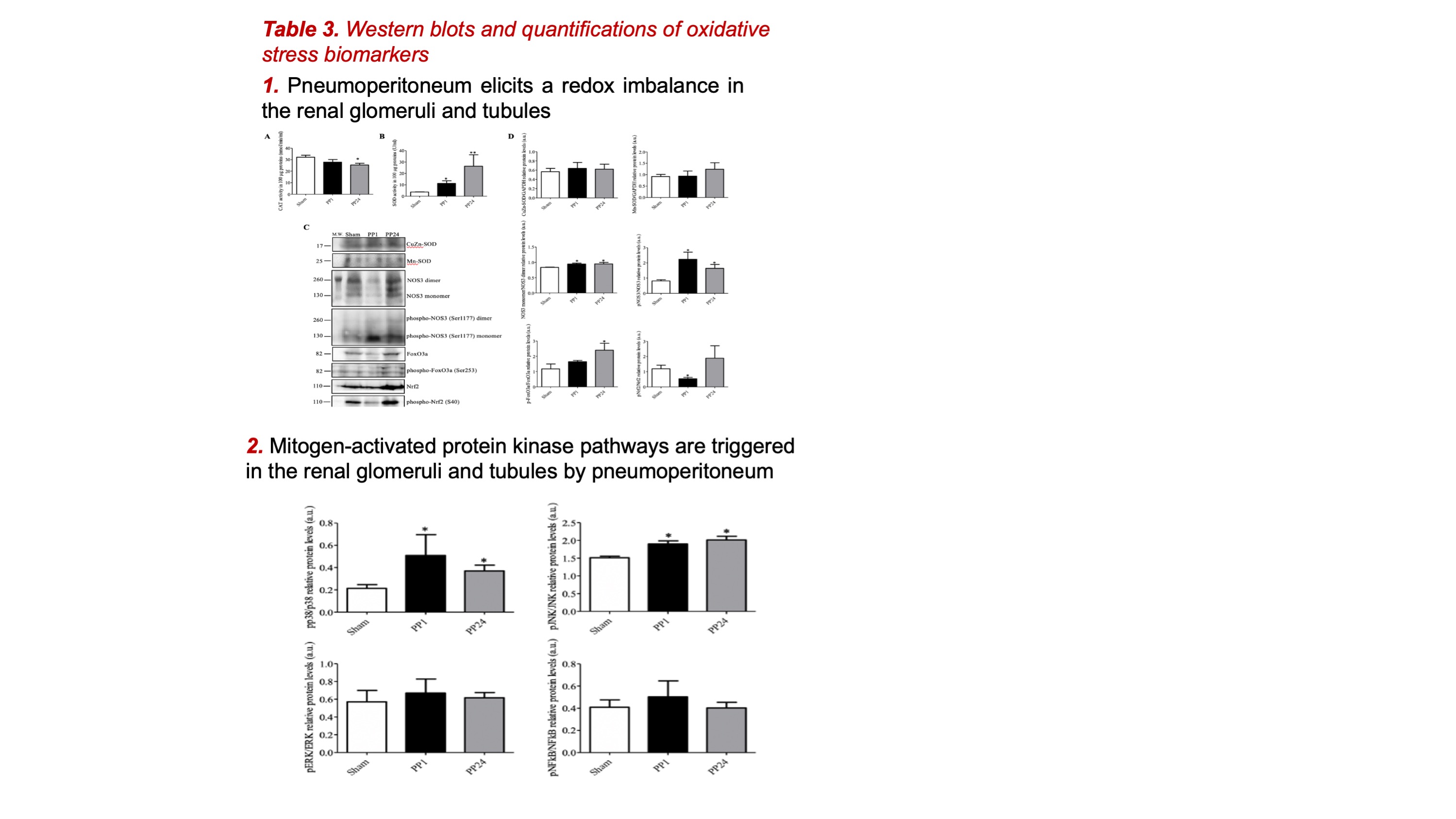
Introduction: Given the widespread use of laparoscopic and robotic surgeries, the effects of pneumoperitoneum (PNP) during minimally invasive surgery on kidney function become of great interest. PNP during laparoscopy causes transient renal functional impairment via various detrimental factors, such as oxidative stress. We, therefore, investigated the oxidative signaling pathways inherent to PNP-induced kidney injury. Methods: PNP was established at an intraperitoneal CO 2 pressure of 12 mmHg in Wistar rats randomly allocated into three groups: Sham, PNP1, and PNP24. PNP1 and PNP24 animals were sacrificed at one and 24 hours following PNP deflation, respectively. Renal histology, function, redox status, and signaling pathways were assessed. Results: PNP induced kidney injury and dysfunction with altered KIM-1 profile. Both expression and activity of antioxidant (CAT, SOD1/2) and oxidant (NOS3) enzymes, lipid peroxidation, and renal RNA/DNA damage biomarkers revealed redox imbalance after PNP, with an excess H2O2 production. Moreover, the antioxidant gene regulators FoxO3a and Nrf2 were activated. Nevertheless, PNP had no effect on the cellular apoptotic pathways Bcl2, Bid, Caspase 3 and 8. Finally, PNP stimulated the p38 and JNK mitogen-activated protein kinase (MAPK) pathways in the kidney. Conclusions: Our results demonstrate for the first time that PNP induces acute kidney injury due to renal redox imbalance linked to MAPK activation. These insights may open the way for further investigation into the renal therapeutic impact of managing PNP-associated oxidative stress during robotic surgery and explore procedure-specific kidney function recovery patterns i.e. after robotic partial nephrectomy or robotic kidney transplant SOURCE OF Funding: none