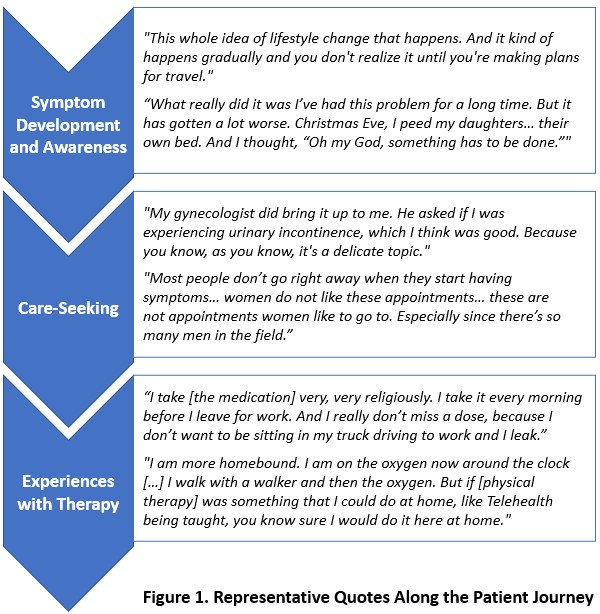
Introduction: Overactive bladder (OAB) is highly prevalent, affecting millions of Americans, and poses a significant symptom burden. The purpose of this study was to understand patient experiences with OAB and the impact of these experiences on OAB treatment. Methods: People with symptoms of OAB were recruited from a tertiary care clinic and from an online health research portal to complete semi-structured interviews regarding their OAB experiences. The interviews were recorded, transcribed, coded, and inductively analyzed to identify emerging themes. Results: We performed 19 interviews and identified several key themes central to the patient experience, including symptom impact and severity, knowledge, stigma, self-efficacy, and regret. We considered these themes along the following stages of the patient's OAB journey. Symptom Development and Awareness: The routine of self-care is insidious and normalized, making realization of a lifestyle that is centered around voiding less obvious to patients, leading to a delay of care-seeking. Participants noted restrictions on all aspects of life. Adjectives used to describe symptom impact included “annoyance, depression, humiliation and desperation.” Care-Seeking: Participants expressed coping behaviors during onset and gradual worsening of symptoms, however many recounted a “sentinel event” that heightened their severity perception and served as a cue to action. Routine primary care visit screenings and friend recommendations were additional cues to action. Reasons for care-seeking delay included lack of OAB knowledge, stigma, and embarrassment. Experiences with Therapy: Participants recognized that treatment outcomes depended on their engagement. Some individuals regretted their lack of self-advocacy and self-efficacy. Participants highlighted internal barriers (forgetfulness, doubting treatment effectiveness) and external barriers (comorbidities, COVID-19) to therapy adherence. Among those with high self-efficacy, fear of treatment failure, calendar tools, and social support networks facilitated treatment compliance (Figure 1). Conclusions: Living with OAB affects patients physically, mentally, and socially. Gaining a better understanding of OAB experiences can help physicians tailor their practice to meet patients’ needs. SOURCE OF Funding: NIDDK K-12 (Lane)