Session: MP20: Prostate Cancer: Basic Research & Pathophysiology I
MP20-01: Protein Kinase D1 (PrKD) protects against DNA damage by increasing α-catenin levels through putative serine681 and 685 phosphorylation of Cyclin Dependent Kinase 12 (CDK12) in prostate cancer (PC)
University of Florida College of Medicine - Jacksonville
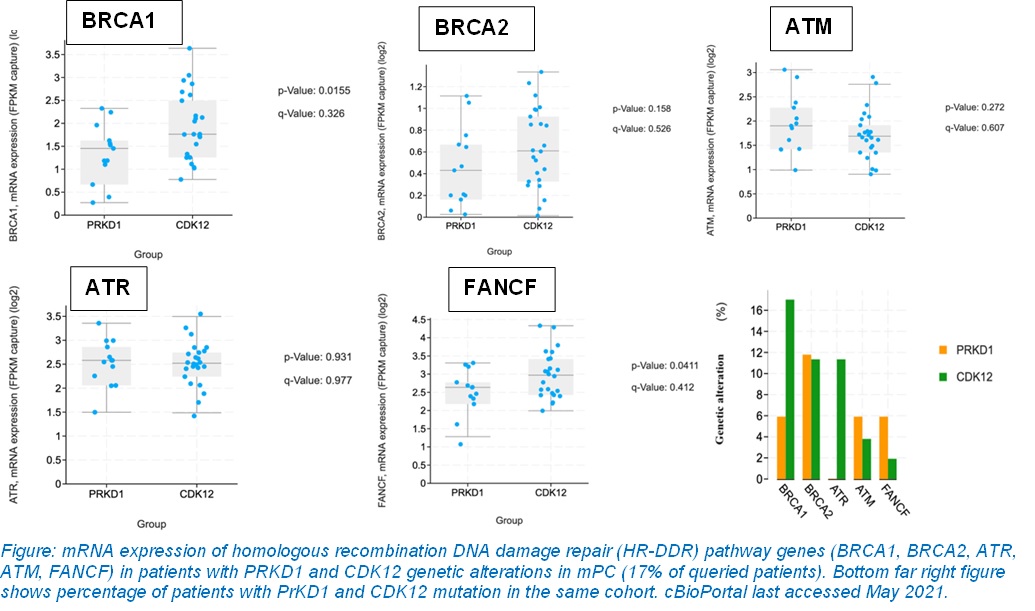
Introduction: PrKD is protective of DNA damage in PC and loss of PrKD leading to increased genomic instability is a novel potential mechanism. CDK12 mutated PC is now recognized as a distinct aggressive variant associated with genomic instability. We explored whether PrKD influences DNA damage through CDK12. Methods: The DNA damage and protein levels studied by COMET assay and western blot respectively and validated the findings in human PC samples by querying cBioPortal gene expression. Results: PrKD abrogated etoposide induced DNA damage in castration insensitive C4-2 PC cells. PrKD is a membrane bound protein that phosphorylates proteins in cell adherens junction including ß-catenin. As PrKD is the only known kinase to phosphorylate T120 in ß-catenin, mutation of T120 leads to nuclear translocation of transcriptionally active ß-catenin playing a role in DNA damage, uncouples the binding of ß- to a-catenin, which translocates to the nucleus and influences ß-catenin. PrKD increased the expression of a-catenin, which was attenuated by CDK12 wild type and double non-phosphorylated mutants of PrKD putative phosphorylation sites; serine (s) 681 and 685 but not as much by s681 mutant. PrKD suppressed the substrate phosphorylation of ?H2AX s139 by CDK12 s681 and s681/s685 non-phosphorylated mutant compared to wild type, which links PrKD substrate phosphorylation of CDK12 to DNA damage. Query of cBioPortal for concurrent PrKD1 and CDK12 mutations in PC with characteristic gene signature of DNA damage repair (DDR) revealed the highest concordance of PrKD1 and CDK12 mutations in patients with BRAC2 mutations and the DDR genes expression were not significantly different between patients with PrKD1 and CDK12 mutated patient except BRAC1 expression (rarely mutated in PC) suggesting that PrKD1 and CDK12 could be involved in the same signaling pathway (Figure). Conclusions: The study provides a validated mechanistic basis for the novel protective role of PrKD in DNA damage, which has potential implications in PC therapeutics linked to DNA damage. SOURCE OF Funding: none

.jpg "Allison Feibus, MD,MS photo")