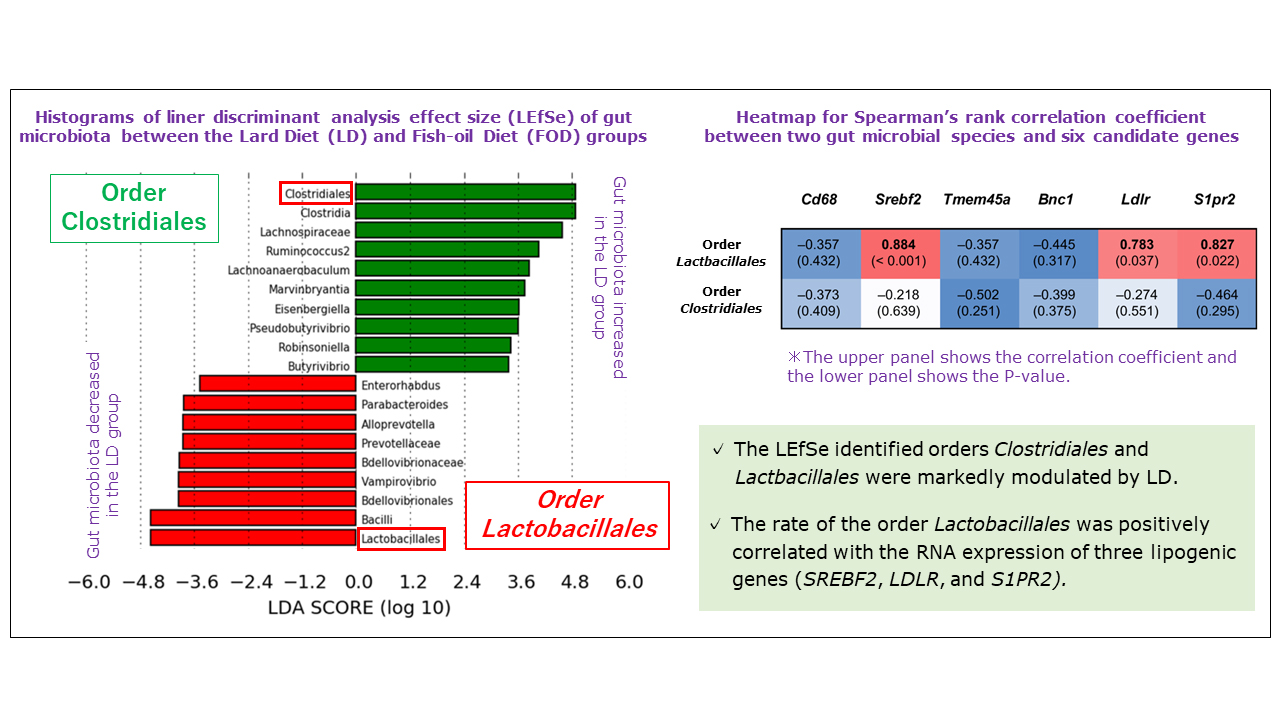
Introduction: Lard diet (LD) is a risk factor for prostate cancer (PCa) progression. The role of dietary dysbiosis in the development of PCa is largely unknown, even though it has recently become clear that it plays a significant role in progression of many cancers. Herein, we performed a comprehensive gut microbiome and intratumoral mRNA omics analyses to analyze targetable molecules involved in LD-induced PCa progression via gut microbial alteration. Methods: Pb-Cre; Pten (fl/fl) transgenic mice and C57BL6 mice subcutaneously inoculated with TRAMP-C2 PCa cells were fed with a LD rich in saturated fatty acid (SFA) or fish- oil diet (FOD) rich in polyunsaturated fatty acid. We obtained fecal and prostate/subcutaneous tumor samples. Using 16S rRNA gene amplicon sequencing, we compared the diversity and relative abundance of gut microbiota. We performed a cDNA microarray to assess the mRNA expression in the mouse PCa tissue. Results: More weight and prostate/subcutaneous tumor volume were gained by the LD-fed mice in two mouse models compared to the FOD-fed mice. In an integrated analysis of the two models, the LD group and the FOD group formed different gut microbial clusters. According to microbiome analysis, order Lactobacillales was relatively more abundant in the FOD group than in the LD group, and order Clostridiales was enriched in the LD group compared to the FOD group. The proportion of order Lactbacillales in the gut was negatively associated with the body weight and prostate weight of the mice. In microarray analysis, we found the modulation of lipid metabolism and cholesterol biosynthesis pathways with 10 significantly modulated genes including sphingosine 1-phosphate receptor 2 (S1PR2) and low-density lipoprotein receptor (LDLR) in PCa tissues. Of these genes, S1PR2 was highly correlated with the abundance of order Lactobacillales in the mouse gut. Moreover, PCa patients with a higher Gleason score (=8) and a higher body mass (BMI) index had significantly lower S1PR2 RNA levels in human prostatic specimens than those with a Gleason score = 7 and lower BMI. Conclusions: SFA may accelerate PCa progression by altering particular gut microbial species and lipogenic genes in PCa. Therapeutics with alteration of gut microbiota and candidate genes involved in diet-induced PCa progression may be attractive in PCa. SOURCE OF Funding: GlaxoSmithKline plc