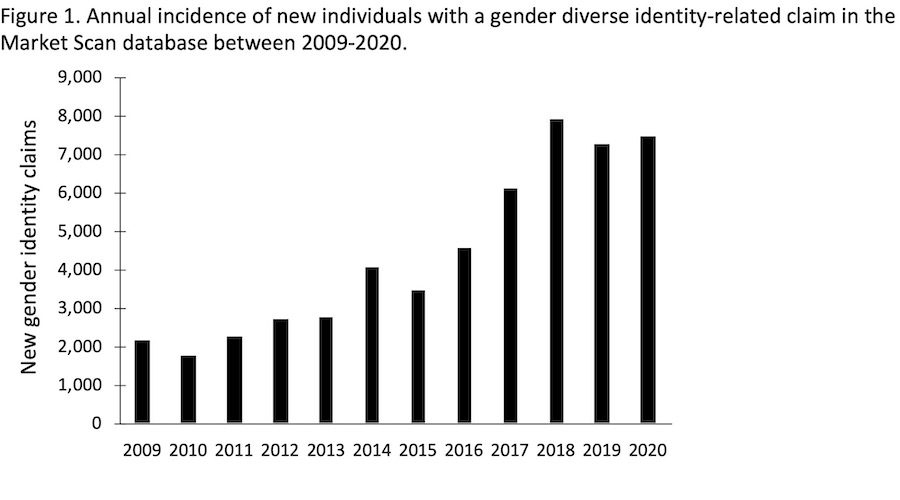
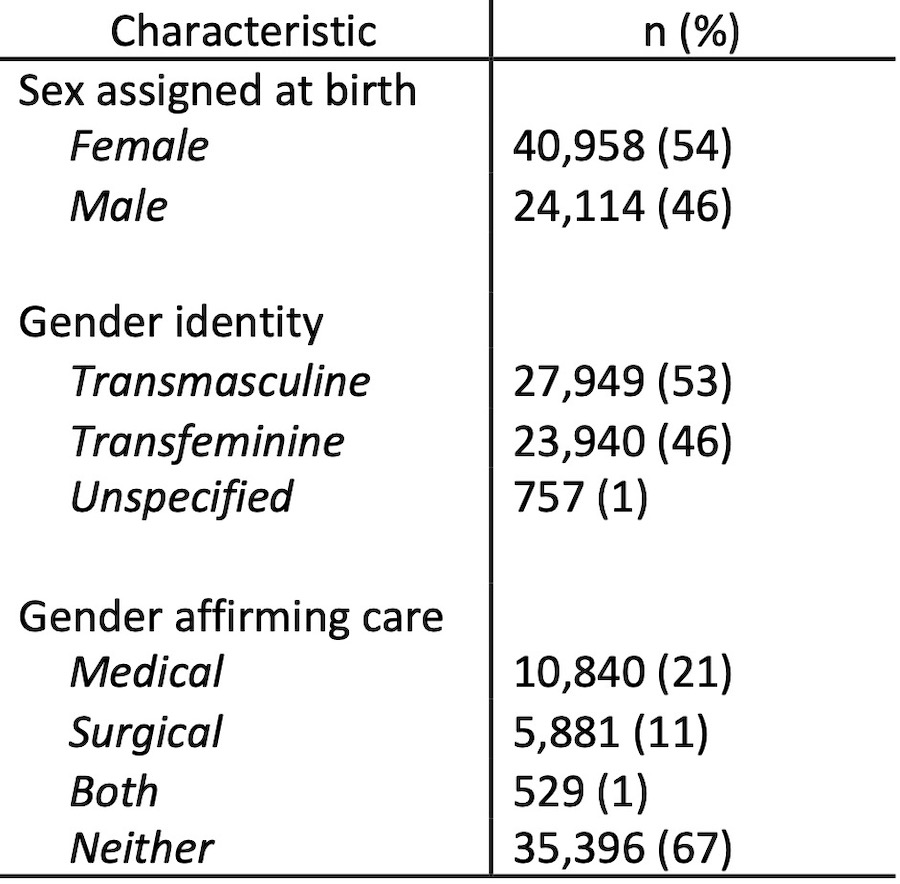
Introduction: Anti-discrimination legislation has been implemented over the past decade to improve access to gender affirming care. We aimed to examine the temporal relationship between the implementation of such legislation and utilization of gender affirming care using a commercial claims database. Methods: We used a previously described, tiered algorithm built around insurance claims including ICD codes, CPT codes, and pharmacy data to identify the annual incidence of new gender diverse persons in the 2009-2020 MarketScan database, and to examine the distribution of medical and surgical insurance claims for these individuals. Incidence was calculated using the first occurrence of a gender diverse identity claim (ICD code, pharmacy claim, or CPT code) per individual in the database. Medical claims included pharmacy claims for gender affirming hormones and surgical claims included CPT codes for gender affirming procedures. The claims distributions before and after 2014 were analyzed with Chi-square tests. Results: We identified 52,646 gender diverse persons in the database (2009-2020). Of these, 17,250 (32.8%) filed claims for gender affirming care (Table 1). Median age at first gender diverse identity-related claim was 27 years (range 18-65). The number of new individuals with a gender diverse identity-related claim increased annually between 2009 (1, 783) and 2020 (7,919) [Figure 1]. Notably, among individuals with available pharmacy claims only 25% had claims for gender affirming hormones. Conclusions: Implementation of anti-discrimination legislation coincides with increased incidence of gender diverse identity-related claims in a commercial database. However, given the relatively lower incidence of medical and surgical claims for gender affirming care it is possible that many gender diverse persons continue to pay out-of-pocket for their expenses. SOURCE OF Funding: None