Session: MP22: Bladder Cancer: Epidemiology & Evaluation I
MP22-04: Maintenance of skeletal muscles when receiving neoadjuvant chemotherapy improves the prognosis for patients with muscle invasive bladder cancer
Nagoya City University Graduate School of Medical Sciences
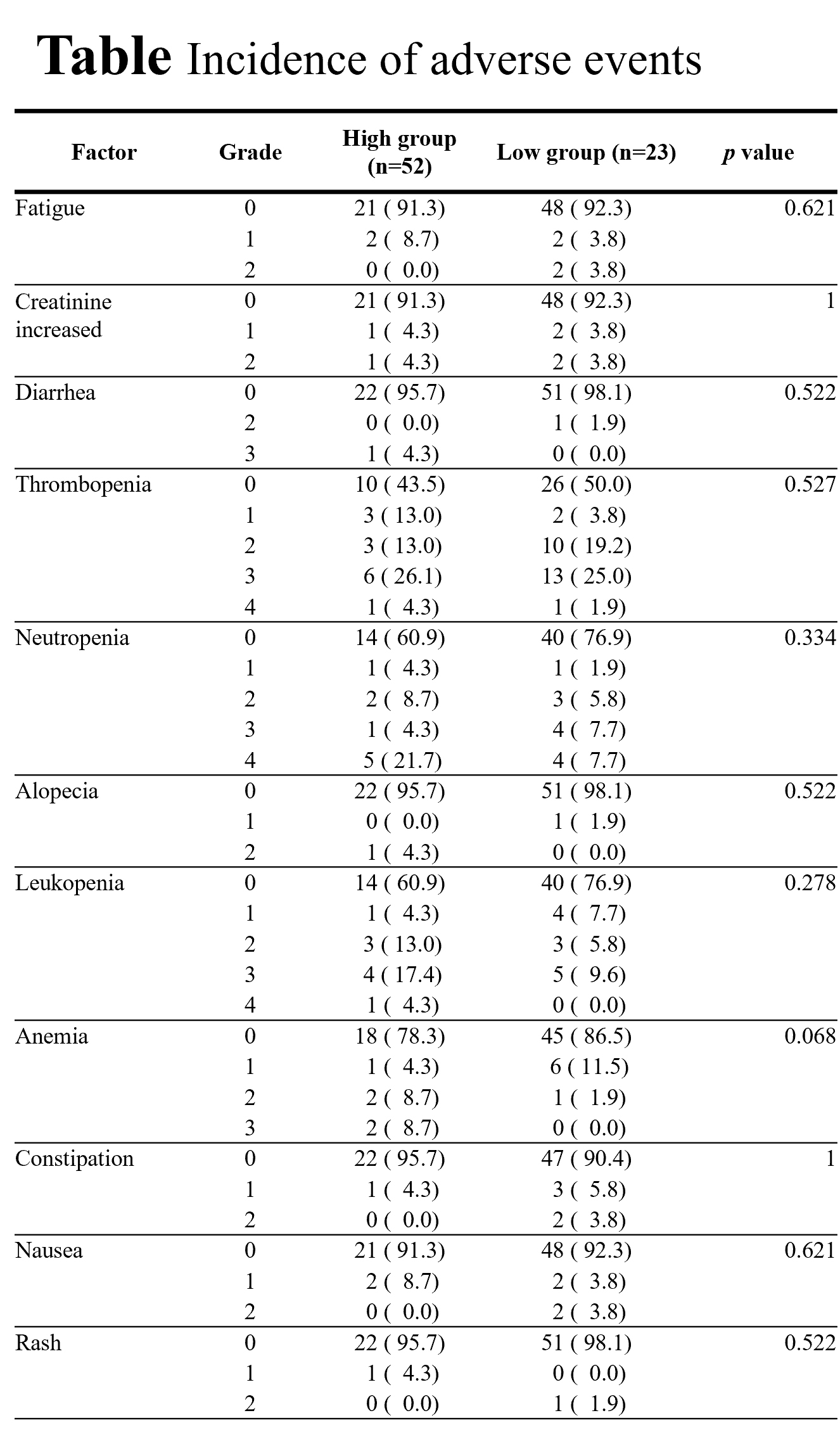
Introduction: The standard treatment for muscle invasive bladder cancer (MIBC) is radical cystectomy. Recently, according to accumulated evidence with neoadjuvant chemotherapy (NAC), a growing number of patients have received mainly platinum-based treatment. Generally, intensive supportive care is essential, particularly in such patients. However, there is no established and reputable standard indicator for supportive care for chemotherapy. To date, we described how nutritional status predicted survival outcome in patients with metastatic bladder cancer treated with immuno-chemotherapy. Therefore, in this study, we retrospectively analyzed biomarkers and the occurrence of adverse events in patients in good general condition receiving NAC. Methods: We retrospectively reviewed 75 patients with MIBC who received NAC between 2011 and 2022 at our hospitals. Skeletal muscle area at the third lumbar vertebra was measured using computed tomography images obtained from medical records, and a skeletal muscle index (SMI) was calculated. SMI alterations before and after chemotherapy were measured. Patients were divided into high and low SMI alteration groups, and their prognoses were analyzed. Results: Of the 75 patients, 52 and 23 were divided into high and low SMI alteration groups. There were no significant differences in age, body mass index, pathological grade, nutritional markers or the occurrence of adverse events between the two groups. The median progression-free survival (PFS) in the high group was 48.9 months (95% confidence interval [CI]: 18.2–NA); the PFS in the low group did not reach the median. These were statistically significant (p=0.04). Conclusions: Patients who showed skeletal muscle mass in good condition when receiving NAC resulted in favorable prognostic outcomes compared to patients in worse condition. No association was found between the amount of reduction in SMI and the occurrence of adverse events. SOURCE OF Funding: None.