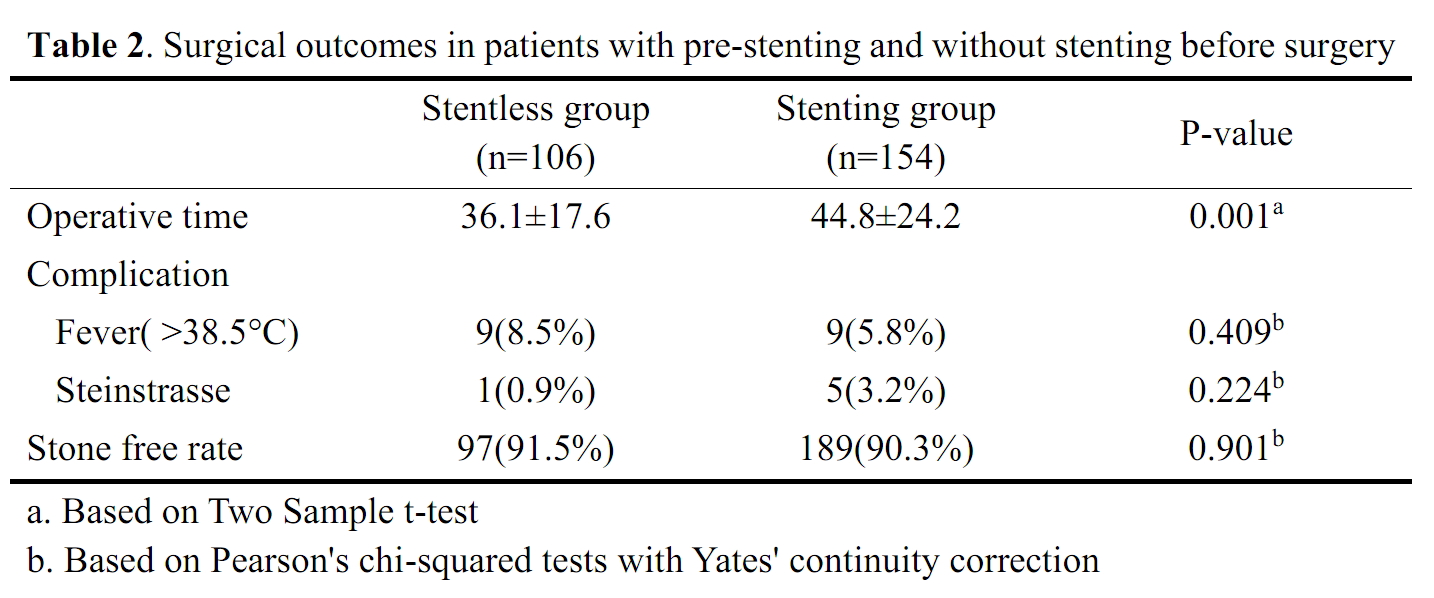
Introduction: Ureteral stent insertion induces ureter dilate passively, so it is used preoperatively as an option for retrograde intrarenal surgery (RIRS) in order to access easily and may increase stone expulsion pre- and postoperatively. The aim of this study was to assess the effect and benefit of ureteral stenting prior to RIRS. Methods: We retrospectively reviewed patients who had unilateral RIRS from 2016 to 2019. The patient characteristics were obtained retrospectively. Hydronephrosis was identified using pre-operative non-contrast computed tomography (NCCT) image according to Society for Fetal Urology grading system. Also, stone characteristics in terms of maximal stone length (MSL) and modified Seoul National University Renal Stone Complexity (S-ReSC) score were evaluated. Surgical outcomes including operational time, complication and stone-free rate were compared between stenting and stentless groups before surgery. Stone-free status was defined as either having no identifiable stone or stone fragments of <4 mm in size in NCCT. Results: A total of 260 patients were enrolled in this study. In stentless group, 106 patients had no stent before RIRS and 154 patients had pre-stenting in stenting group. In mean age, gender ratio, body mass index, stone laterality, there were no differences between two groups. In stone characteristics, mean MSL and Modified S-ReSC scores were similar in two groups. The rate of preoperative hydronephrosis was higher in stenting group (P=0.015) (Table 1). In surgical outcomes, stone-free rate showed no significant difference between two groups, however, operation time in stenting group was longer than stentless group (36.1±17.6 vs. 44.8±24.2 min; P=0.001). There were no differences in complications (Table 2). Conclusions: Contrary to our empirical decision without evidence, preoperative ureteral stenting did not affect stone-free rate in the current study. SOURCE OF Funding: None.