MP09-04: Diagnostic Performance of a Novel Radiomic Model for Predicting Post-Treatment Prostate Cancer Recurrence: A Comparison to CAPRA and MSKCC Nomograms
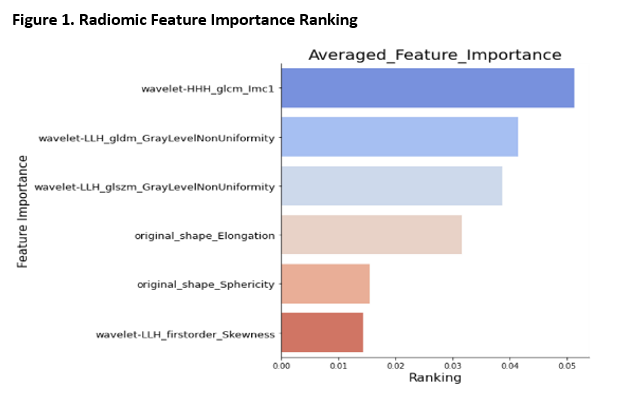
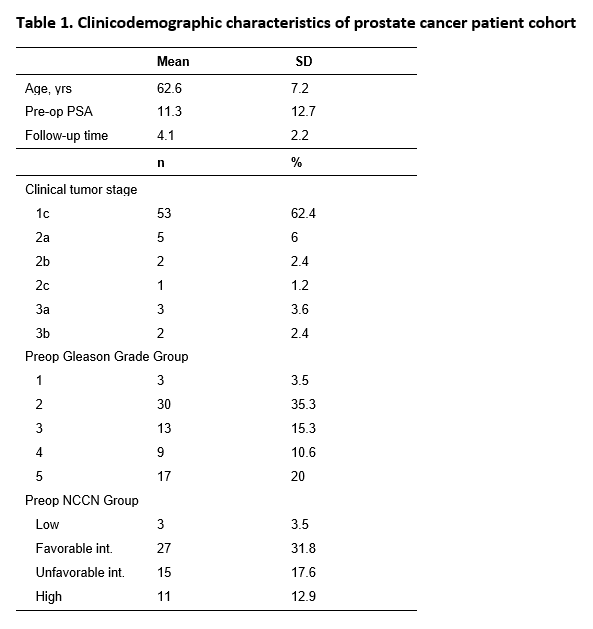
Introduction: mpMRI-derived radiomic features have been shown to capture sub-visual patterns for quantitative characterization of tumor phenotype. We seek to compare the diagnostic performance of a mpMRI-based radiomic model to currently available nomograms for prediction of post-radical prostatectomy (RP) biochemical recurrence (BCR). Methods: mpMRI was obtained from 76 patients who had underwent RP for treatment of localized PCa. All patients had =2 years follow-up and those with neo-adjuvant or adjuvant treatment were excluded. Radiomic analysis and cross-validation of mpMRI features yielded features significantly correlated with BCR, defined as two consecutive serum PSA=0.2ng/ml. These features were aggregated to construct a radiomic model, which was compared to the risk scores generated by inputting patients’ clinicodemographic features into the USCF Cancer of the Prostate Risk Assessment (UCSF-CAPRA) score and Memorial Sloan Kettering Cancer Center (MSKCC) Pre-Radical Prostatectomy nomogram. The performance of each model was compared utilizing receiver-operator curve (ROC) analysis and area under the curve (AUC) was reported. Results: Table 1 illustrates the clinicopathologic characteristics. In feature extraction and ranking, six radiomic features were determined to be important and non-redundant in predicting PCa recurrence (Figure 1). These features were aggregated into the radiomic model and repeated five-fold cross validation yielded a model with AUC of 0.95±0.06, 33% sensitivity, and 100% specificity. UCSF-CAPRA and MSKCC nomograms yielded AUC of 0.72±0.07 and 0.82±0.07, respectively. Conclusions: The mpMRI-derived radiomic model performed well when compared to the UCSF-CAPRA score and MSKCC Pre-Radical Prostatectomy nomogram. Future projects will incorporate patient demographics and disease characteristics available at the time of initial PCa diagnosis to improve the radiomic model accuracy. SOURCE OF Funding: N/A