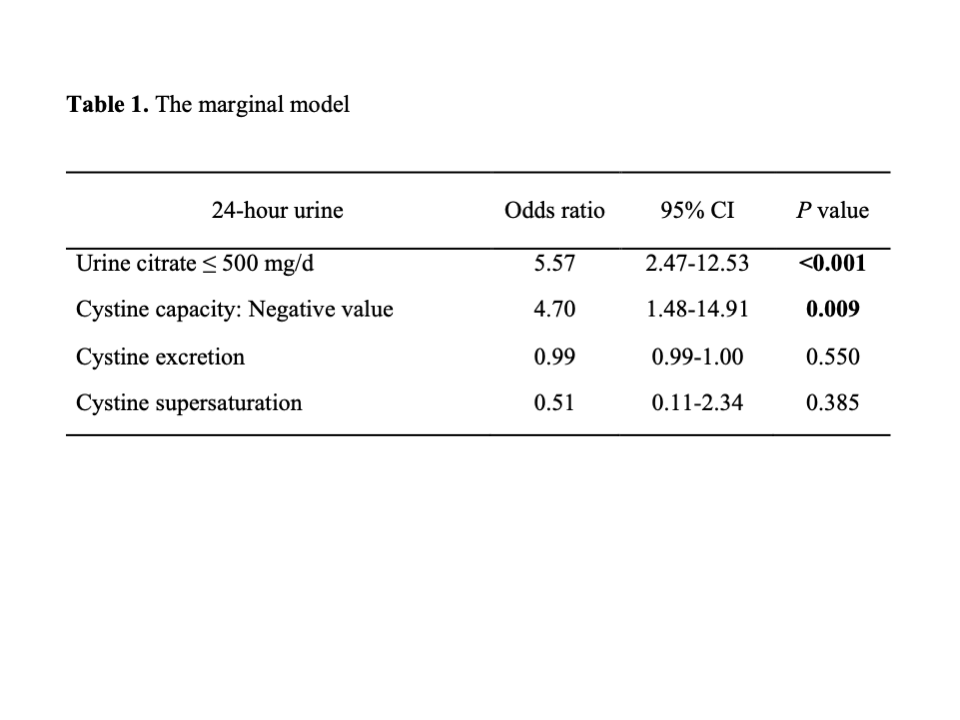
Introduction: Stone growth and recurrence in cystinuric patients is a challenging issue to manage. Controlling 24-hour urine parameters may be the key to preventing kidney stone formation in this population. This study aimed to determine the association between 24-hour urine and stone burden in cystinuric patients. Methods: We conducted a retrospective study on consecutive patients diagnosed with cystinuria from the Registry for Stones of the Kidney and Ureter (ReSKU) between 2017 and 2022. Patients were classified as having either stable or increased stone burden during clinic visits. An increasing stone burden was defined as an increasing stone number or growth = 3 mm from prior imaging. 24-hour urine specimens were collected every 4-6 months. Clinical characteristics, stone-related symptoms and surgeries, and the average of the 24-hour urine parameters from all visits were compared between the two groups. We performed a longitudinal analysis using the generalized estimating equation to determine the marginal model for the 24-hour urine and increasing stone burden at each visit. The chi-square goodness-of-fit test was applied to evaluate the model. Results: There were 20 patients in the increased stone burden and 24 in the stable group. The median initial stone burden in the increased and stable groups was 13 and 4.5 mm, respectively. Fifty symptomatic stone events were observed in the increased burden group and 16 for the stable group (p = 0.014). There were 28 surgical events in the increased burden group and 5 in the stable group (p = 0.007). We did not detect a significant difference in the average 24-hour cystine capacity between the two groups (p = 0.053). However, in longitudinal analysis, the marginal model demonstrated that urine citrate = 500 mg/d (OR 5.57, 95% CI 2.47–12.53) and a negative value of cystine capacity (OR 4.70, 95% CI 1.48–14.91) were significantly correlated with increasing stone burden at each visit (Table 1). Conclusions: In cystinuric patients, the 24-hour urine citrate and cystine capacity were highly associated with an increasing stone burden. In addition to general stone prevention advice, maintaining the values of these parameters within the normal range may be important to prevent the formation of kidney stones in this population. SOURCE OF Funding: None