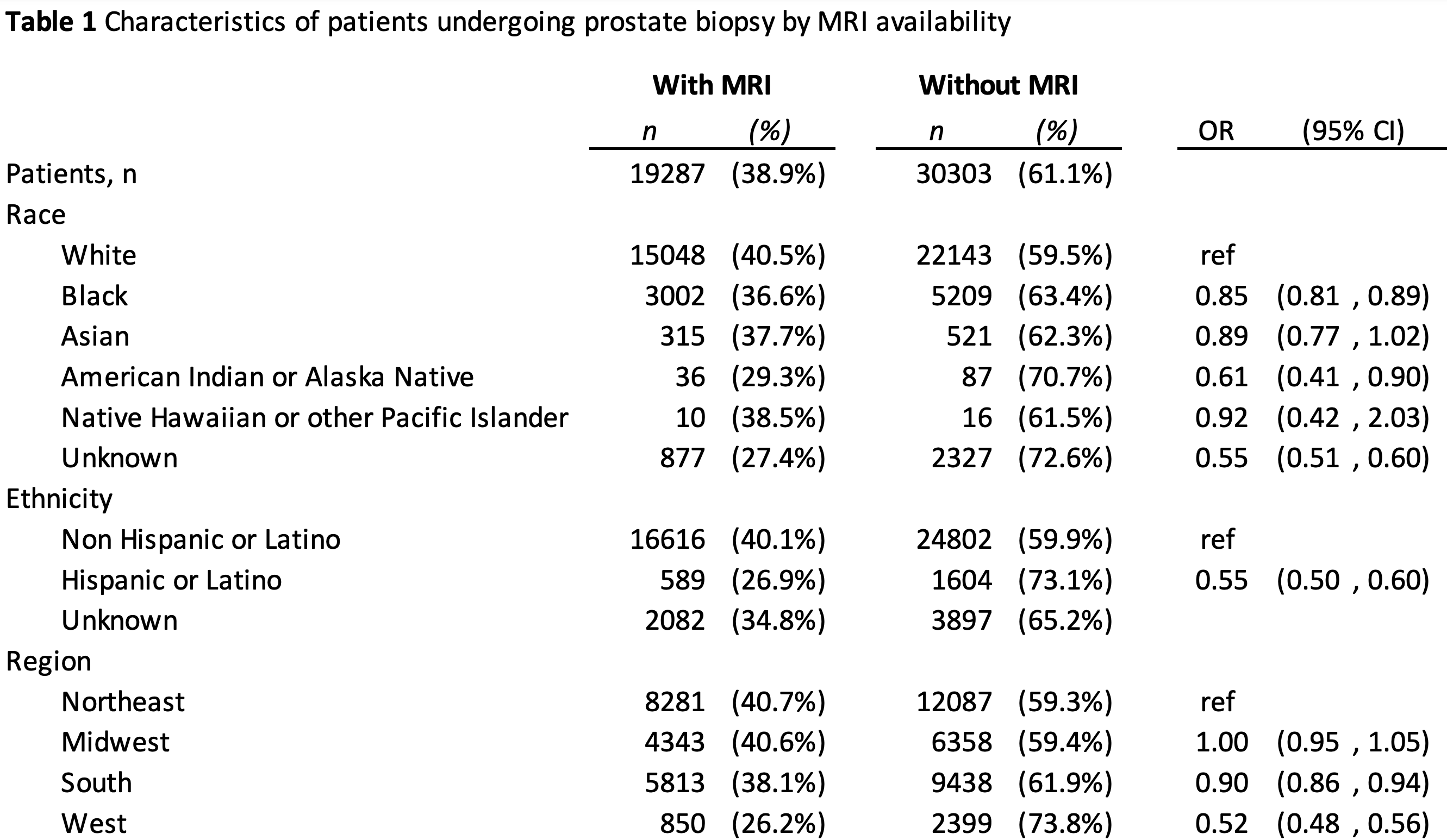
Introduction: Multi-parametric magnetic resonance imaging (mpMRI) prior to prostate biopsy has been recommended by the American Urologic Society (AUA) since 2019. Studies have shown biopsy naive men in minority groups are less likely to undergo mpMRI. We aimed to evaluate national trends in mpMRI utilization in biopsy naive men. Methods: The TriNetX US Collaborative Network database of 90,863,999 patients was retrospectively queried using current procedure terminology codes for prostate biopsy and prostate mpMRI with associated dates. One cohort contained men with prostate biopsy without prior mpMRI. A second cohort contained men with biopsy and mpMRI prior. Inclusion was restricted to biopsies performed in 2017 or later. Men were excluded if they had a documented biopsy prior to 2017, or if pre-biopsy prostate specific antigen (PSA) was greater than or equal to 20ng/dL to exclude metastatic disease at presentation. Data was stratified by race, ethnicity, and region. Uni-variable logistic regression modeling was performed to evaluate the likelihood of using mpMRI prior to biopsy, odds ratios (OR) with 95% confidence intervals (CI) not crossing 1 were considered statistically significant. Results: 49,590 men met inclusion for analysis, of which 39% had a pre-biopsy mpMRI. Compared to White men, Black and American Indian or Alaska Native men had a 15% and 39% lower likelihood of using mpMRI, respectively. Compared to non Hispanic men, Hispanic or Latino men had a 45% lower likelihood of using mpMRI. Men in the South and West had a 10% and 48% lower likelihood of using mpMRI, respectively, compared to men in the Northeast. Conclusions: In this nationwide clinical study, men in minority groups were less likely to undergo pre prostate biopsy mpMRI compared to men in majority groups. Additionally, men in the South and West were less likely to undergo pre prostate biopsy compared to men in the Northeast. Limitations include the retrospective nature and lack of inter-institutional standardization of coding. Further research is warranted to study the causation of these disparities. SOURCE OF Funding: This research received no specific grant from any funding agency in the public, commercial, or not-for-profit sectors.