Session: PD04: Prostate Cancer: Basic Research & Pathophysiology II
PD04-02: Using genomic and transcriptomic properties to determine androgen response in Ductal Prostate Cancers and determine efficacy of Poly(ADP-ribose) polymerase inhibitors with androgen signalling inhibitors therapy in vitro
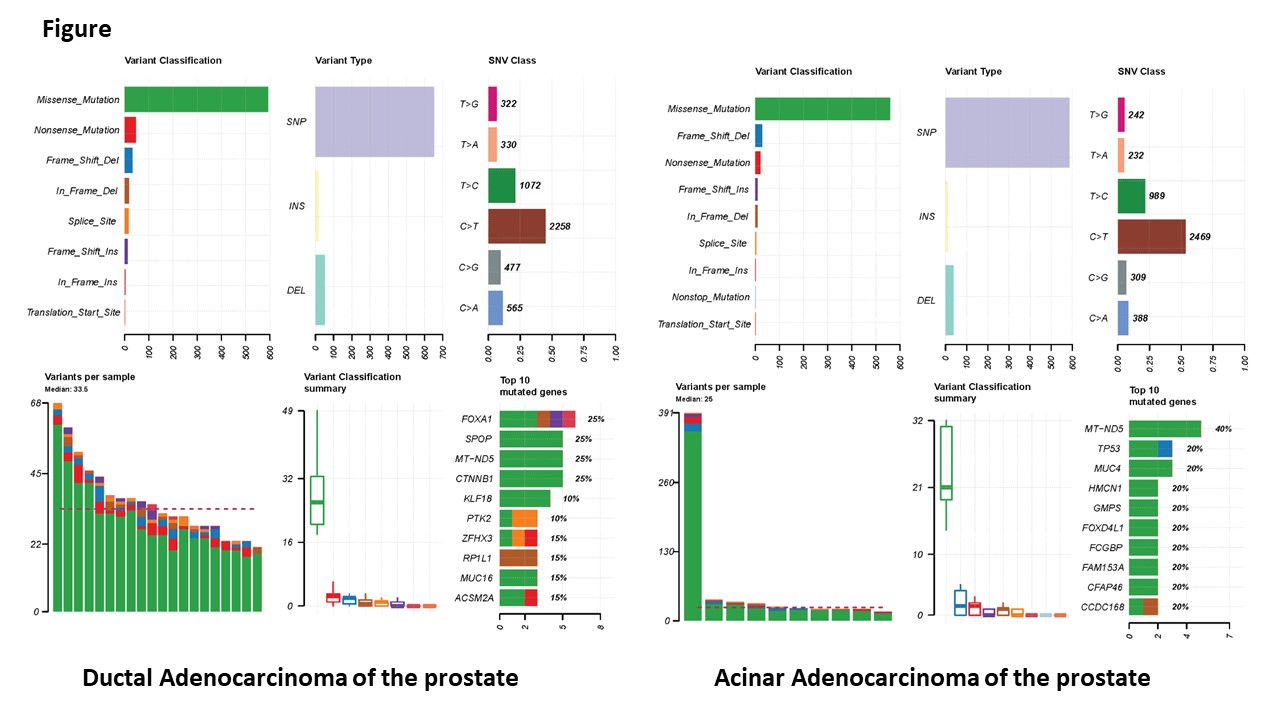
Introduction: The histologic variant prostatic ductal adenocarcinoma (DAC) has an aggressive biology with predisposition to metastasize early to visceral organs at low PSA levels. In contrast to acinar adenocarcinoma of the prostate (PAC), DACs have no effective systemic therapies, responding poorly to androgen deprivation therapy and chemotherapy. Poly(ADP-ribose) polymerase inhibitors (PARPi) may synergize with androgen signaling inhibitors (ARSI) inducing a “BRCAness” phenotype in castrate resistant prostate cancer (CRPC). A recent clinical trial demonstrated the efficacy of this combination therapy in CRPC, regardless of HR status. We aimed to characterize the genomic and transcriptomic properties of DAC to determine the androgen response and assess efficacy of PARPi + ARSI therapy in vivo. Methods: 20 DAC and 10 PAC tumors, matched for stage, grade and volume, were micro-dissected from radical prostatectomy samples. Whole exome sequencing, RNA sequencing and pathway analyses were performed. Validated BRCA2 heterozygous mutant (201.1A-Cx) and HR-proficient (287R) patient-derived DAC organoid models were treated with PARPi, enzalutamide and the combination of PARPi + enzalutamide. Results: DACs had higher rates of mutations compared to matched PAC tumors (Fig). Unsupervised hierarchical clustering of RNA expression identified a distinct DAC cluster, with downregulation of AR pathways and enrichment of HR pathways, compared to PAC. Niraparib + Enzalutamide significantly reduced organoid viability of BRCA2 heterozygous mutant (201.1A-Cx) and HR proficient (287R) cells compared to control, Niraparib or Enzalutamide alone. Moreover, PARPi and ARSI were synergistic in these DAC models. Similarly, Talazoparib + Enzalutamide reduced the viability of the HR proficient 287R organoid compared to control, Talazoparib or Enzalutamide (65% vs 100% vs 91% vs 78%, p<0.01). Conclusions: In contrast to PACs, primary DACs have a unique genomic and transcriptomic landscape with high rates of mutations associated with intrinsic androgen resistance. PARPi+ ARSI were more effective at decreasing DAC organoid viability than either treatment alone, regardless of the HR status. SOURCE OF Funding: N/A