Session: PD05: Infections/Inflammation/Cystic Disease of the Genitourinary Tract: Interstitial Cystitis
PD05-05: The real-life practice of intravesical botulinum toxin A injection for interstitial cystitis/bladder pain syndrome - Satisfaction rate and predictive factors
Assistant Professor, Department of Urology, School of Medicine, Tzu Chi Universi Department of Urology, School of Medicine, Tzu Chi University
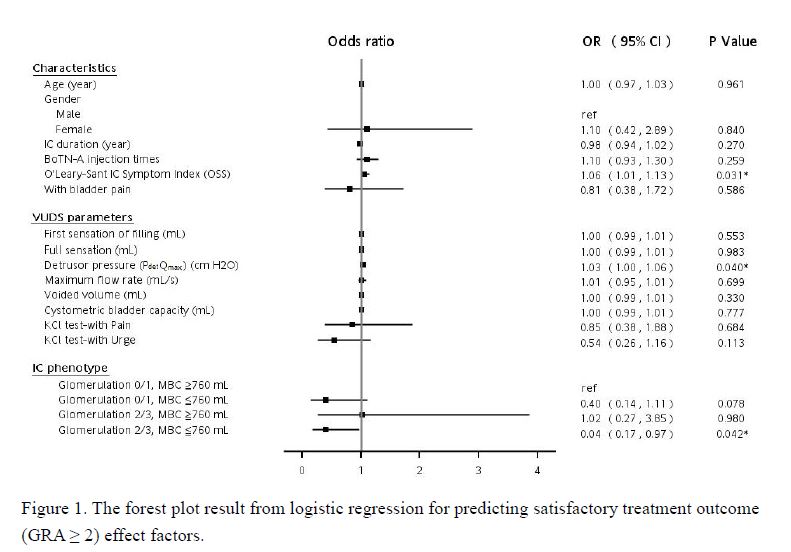
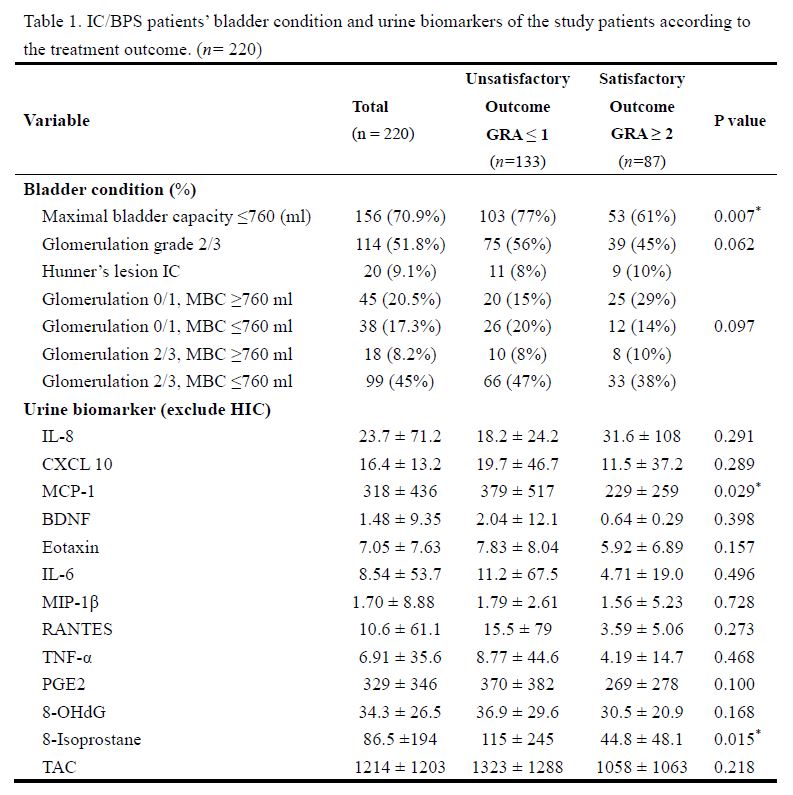
Introduction: Botulinum toxin A (BoNT-A) has been demonstrated to have anti-inflammatory and antinociceptive effects on bladder sensory disorders and has been shown effective in reducing bladder oversensitivity and increasing functional bladder capacity, however, the real-world treatment outcome on interstitial cystitis/bladder pain syndrome (IC/BPS) is still lacking. This study investigated the real-life practice of intravesical BoNT-A injection for patients with IC/BPS. Methods: This retrospective study included IC/BPS patients treated with 100U BoNT-A intravesical injection in the past twenty years. The treatment outcomes were assessed by the global response assessment (GRA) at 6 months post treatment. The treatment outcome was assessed by classification according to the GRA, clinical symptoms, urodynamic parameters, cystoscopic characteristics, and urine biomarkers, and the predictive factors for a satisfactory outcome were investigated. Results: Of a total of 220 patients (180 females, 40 males) enrolled in this study who received the BoNT-A injection, only 87 (40%) of patients had significantly satisfactory treatment outcomes; the satisfactory group has a significantly larger voided-volume, a lower urinary inflammatory protein MCP-1, and oxidative stress biomarker 8-isoprostane than the unsatisfactory group (Table 1). The IC severity and detrusor pressure are predictive factors to affect treatment outcomes under BoNT-A injection (Figure 1). Conclusions: IC/BPS patients with less inflammation in the bladder have a satisfactory outcome to intravesical BoNT-A injection. Patients with higher grade of bladder inflammation might need more intravesical BoNT-A injections to achieve a satisfactory outcome. SOURCE OF Funding: None