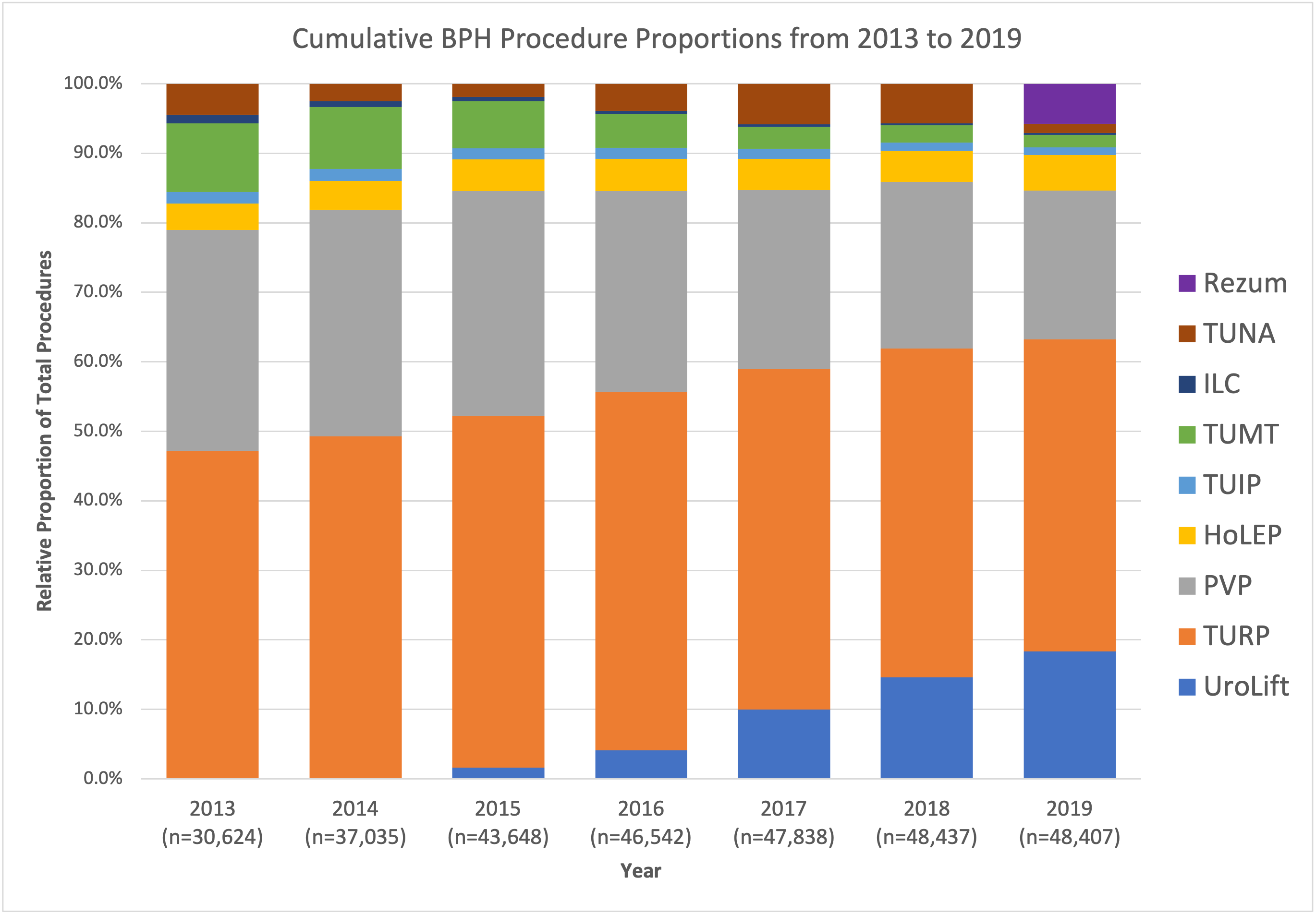
Introduction: Benign Prostatic Hyperplasia (BPH) is a common urologic pathology for older men. The prevalence and effect on quality of life has prompted the development of new surgical procedures to manage BPH while attempting to minimize treatment side effects. The objective of this study is to utilize TriNetX, a third-party database, to investigate temporal trends in BPH procedures from 2013 to 2019 in the United States Methods: Male patients aged 18-100 who were diagnosed with BPH were filtered in the TriNetX database. Yearly cohorts undergoing a BPH-related procedure were searched using Current Procedural Terminology (CPT) and International Classification of Diseases 10 (ICD-10) codes. Temporal data were analyzed for trends in treatment utilization. Procedures that were investigated in the study include prostatic urethral lift (UroLift), transurethral resection of the prostate (TURP), photoselective vaporization of the prostate (PVP), holmium laser enucleation of the prostate (HoLEP), transurethral incision of the prostate (TUIP), transurethral microwave thermotherapy (TUMT), interstitial laser coagulation (ILC), transurethral needle ablation (TUNA), and Rezum. Results: There were 302,531 BPH procedures recorded on the TriNetX Diamond Network. TURP was the most commonly performed procedure, accounting for 47.2% of procedures in 2013 and 44.9% in 2019. PVP remained a popular treatment but showed the greatest decrease in utilization over time (31.8% in 2013, 21.5% in 2019). UroLift was rapidly embraced as a treatment modality, as usage increased by 16.7% over a five-year period (1.6% in 2015, up to 18.3% in 2019). Other minimally invasive procedures such as Rezum (5.8%) and HoLEP (5.1%) increased in usage by 2019. Conclusions: TURP was the most common treatment modality from 2013-2019, constituting nearly half of all BPH related procedures. UroLift demonstrated the greatest increase in utilization, while PVP showed the greatest decline in utilization over this same time period. Rezum and HoLEP made up greater proportions of BPH procedures by 2019. TURP remains the mainstay surgical treatment for BPH but minimally invasive surgeries continue to gain popularity as surgical options for BPH each year. SOURCE OF Funding: N/A