Session: MP13: Benign Prostatic Hyperplasia: Surgical Therapy & New Technology I
MP13-07: Aquablation Therapy® vs Transurethral Resection of the Prostate: 5-year Outcomes of the WATER Randomized Clinical Trial for Medium-sized Prostates
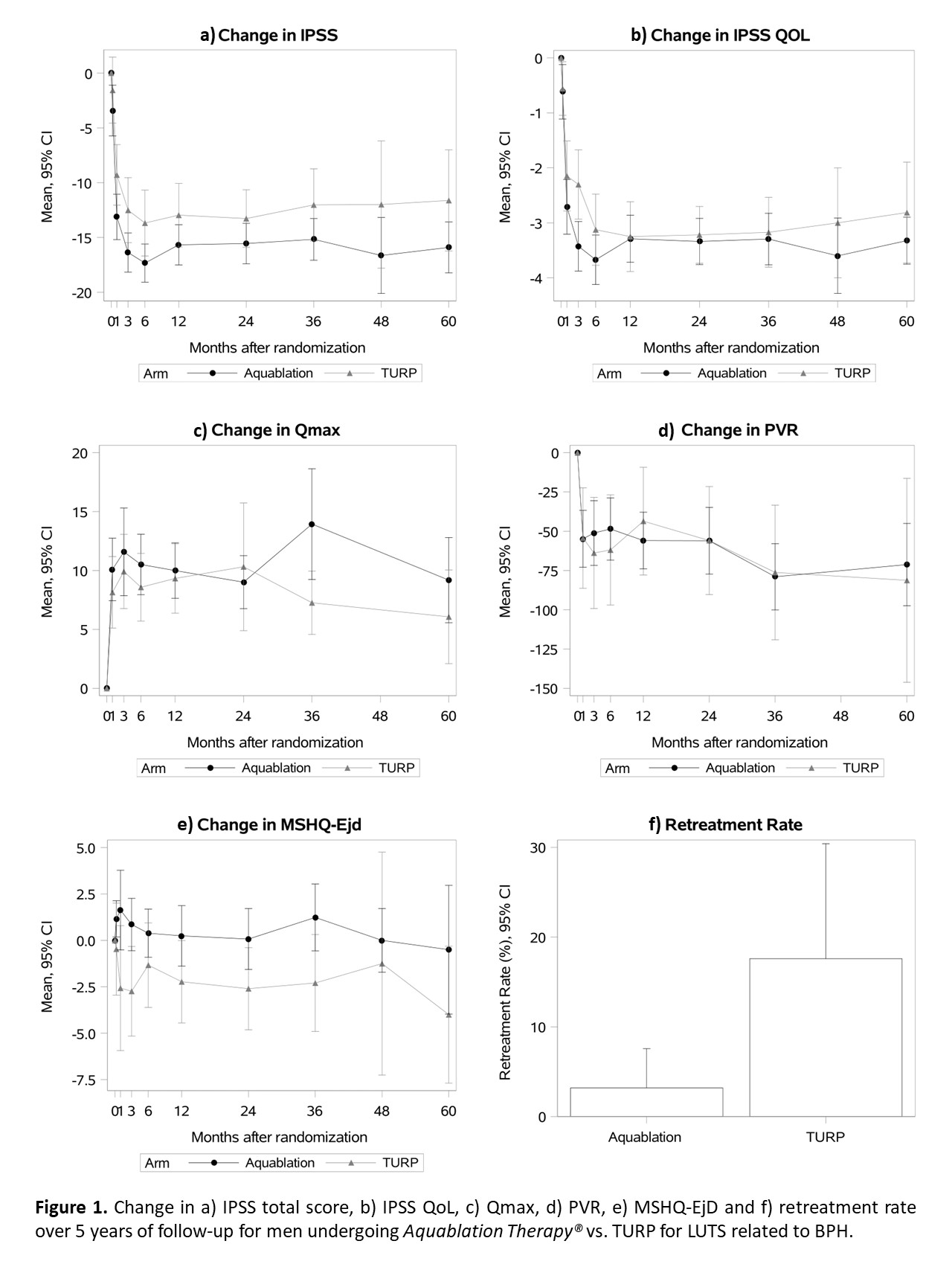
Introduction: The WATER trial previously introduced Aquablation® as a safe and effective TURP alternative in the management of lower urinary tract symptoms (LUTS) related to benign prostatic hyperplasia (BPH) for prostates <80 mL. To date, no long-term superiority endpoints have been reported for medium-sized prostates. In this subset analysis of the WATER cohort, we aim to compare the 5-year efficacy and safety of Aquablation® vs. TURP for the management of 50-80mL prostates. Methods: WATER is a double-blinded, multicenter and prospective randomized-controlled clinical trial for prostates 30-80 mL. 96 men with prostates 50-80 mL randomized to either Aquablation Therapy® or TURP from the initial cohort were retained for the subset analysis. Men received follow-up at 1, 3, 6 and 12 months, then annually up to 5 years. The primary efficacy endpoint was reduction of IPSS at 5-year follow-up. The primary safety endpoint was the occurrence of Clavien-Dindo postoperative complications grade 1 persistent (CD1P) and grade 2 (CD2) or higher at 6 months. Other measures included QoL, Qmax, PVR and MSHQ-EjD. Results: Both study groups had comparable baseline voiding parameters and clinical demographics. Overall reduction in IPSS score was significantly higher in the Aquablation group across 5 years of follow-up (-14.1 vs. -10.8, p=0.02). Changes in QoL, Qmax and PVR were similar across groups (p>0.05). The Aquablation group displayed no changes in MSHQ-EjD score, while TURP yielded poorer questionnaire scores across all follow-ups (0.6 vs -2.1, p=0.01). The Aquablation group achieved a significantly lower rate of CD1P and CD2 or higher events at 6 months (RD = -23.1%; 95% CI [-29.9, -15.5], p=0.018). Among complications, post-operative ejaculatory dysfunction was notably lower in Aquablation® (RD = -21.9%; 95% CI [-32.5, -10.7], p=0.0005), while risk of bleeding was similar. The surgical and medical retreatment rate was also lower in Aquablation® (RD= -14.4%, 95% CI [-2.29, -30.4], p=0.015). Conclusions: Aquablation Therapy® yields better long-term efficacy and safety outcomes than TURP in the management of LUTS for prostate volumes of 50-80 mL within the WATER trial. This further supports adoption of Aquablation Therapy® over TURP for men with medium-sized prostates. SOURCE OF Funding: The trial is funded by PROCEPT BioRobotics. No funding was provided for the abstract creation.

.jpg "Kussil Oumedjbeur, MD, MSC (he/him/his) photo")