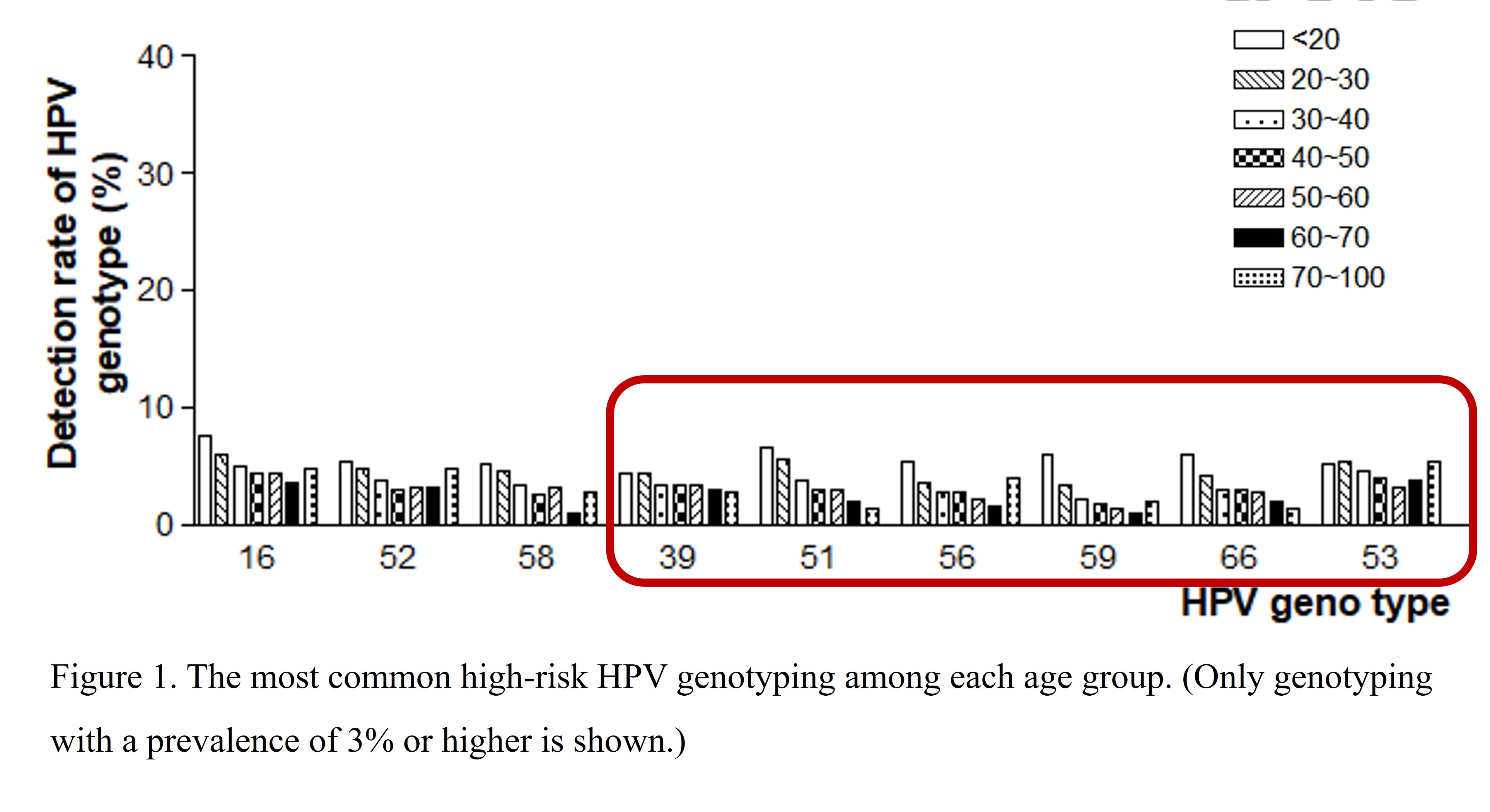
Introduction: Human papillomavirus (HPV) prevalence and genotype distribution are different between various nations and regions. Additionally, previous studies have mainly focused on HPV infection in women and epidemiological studies of HPV infection in men have been rarely reported. Therefore, we aimed to investigate the HPV infection status in men in Korea to establish vaccine-based HPV prevention strategies. Methods: Between January 2014 to June 2022, samples of 44,065 men, who were volunteered for testing or recommended to be tested by a clinician, were tested for the HPV detection and genotyping. Samples were collected from the coronal sulcus, glans penis, shaft, and scrotum. HPV detection and typing was conducted using the Anyplex™ II HPV 28 Detection system, which detects 19 high-risk (HR) HPVs and 9 low-risk (LR) HPVs. This study was approved by Ethical Committee of the Korea University Hospital. Results: Overall prevalence was 59.7%, and overall prevalence of HR and LR HPVs were 30.6% and 50.1%, respectively. The most prevalent genotypes of HR were 16 (5.2%), 53 (4.6%), 51 (4.2%), 52 (3.8%), 58 (3.7%), 39(3.6%) and 66(3.4%). Overall HPV prevalence was not associated with age. However, the prevalence of HR HPVs in teens (34.1%) and 20s (33.8%) were significantly higher than in other age groups. Of the 26,299 men with HPV infection, 9259 (35.2%) had a genotype that could not prevented by the 9-valent vaccine. Conclusions: A significant number of infections of genotypes that were not prevented by 9-valent vaccine were observed. Based on this, it is considered necessary to evaluate the usefulness of developing HPV vaccination for men. SOURCE OF Funding: None