Seoul St. Mary's Hospital, The Catholic University of Korea
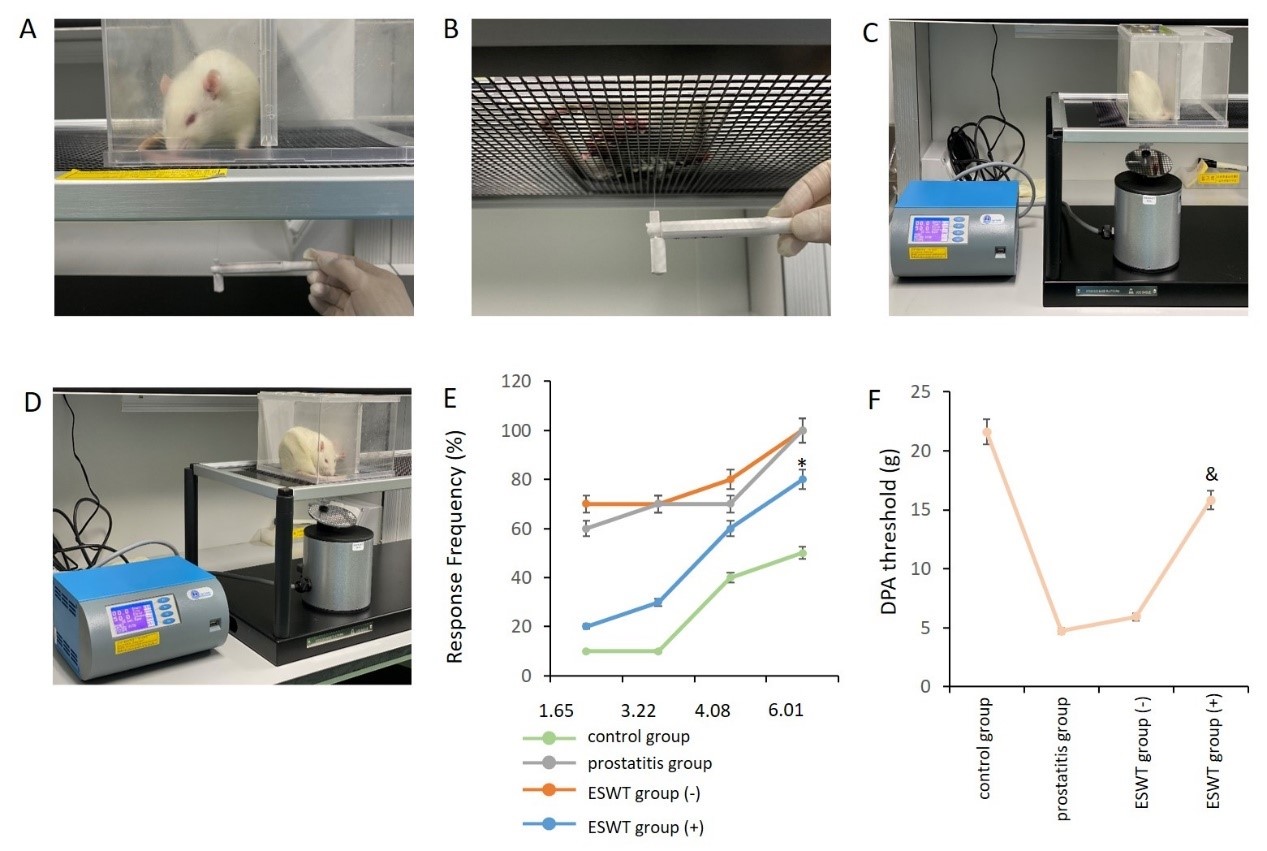
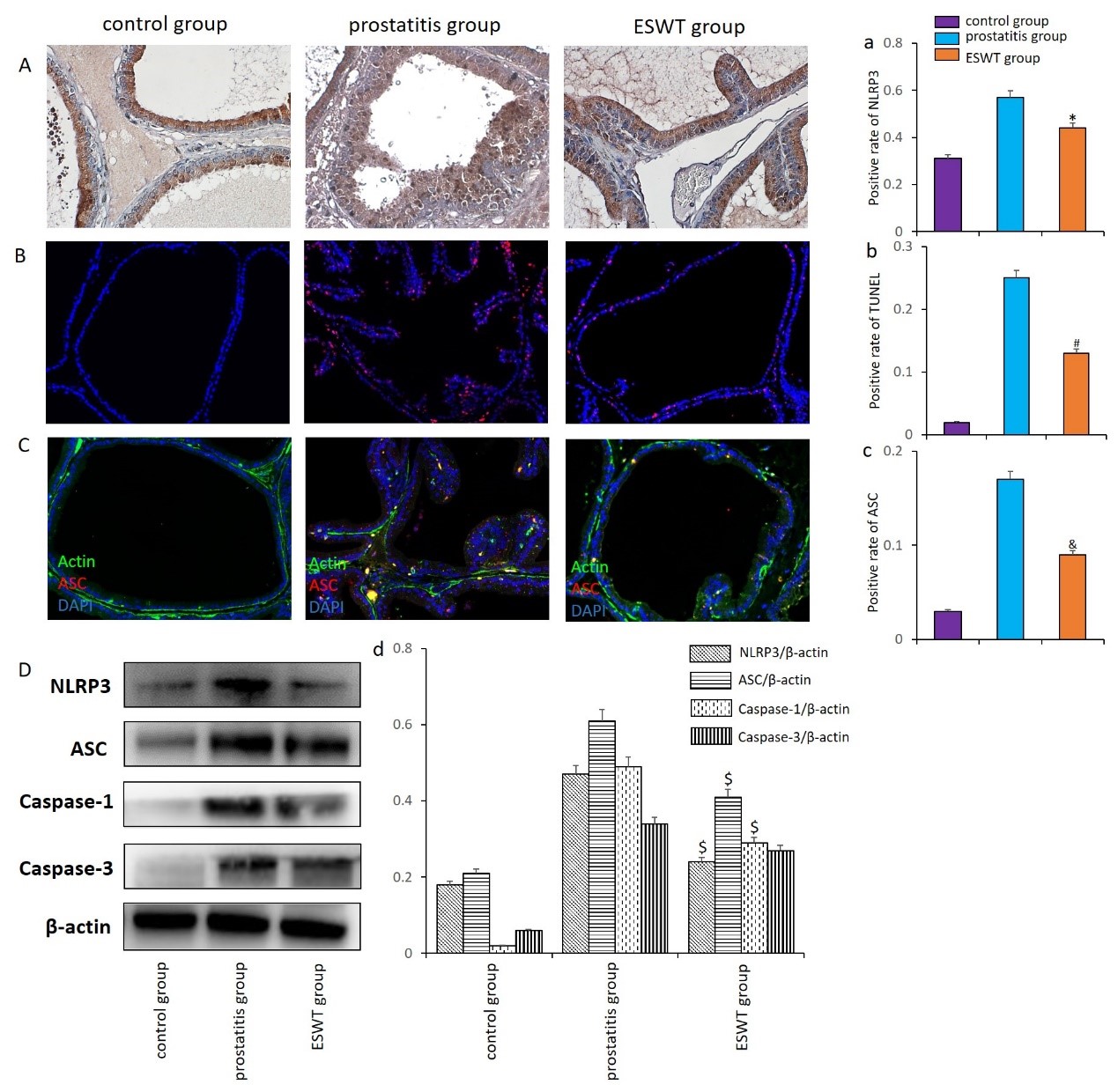
Introduction: To evaluate the anti-inflammatory and antioxidative effects of extracorporeal shockwave therapy (ESWT) on prostatitis using in-vitro as well as in-vivo experimental models and explore the mechanism. Methods: RWPE-1 cells randomly divided into 5 groups: 1) RWPE-1 group (normal control), 2) LPS group (lipopolysaccharide inducing inflammation), 3) 0.1ESWT group (treated by 0.1mJ/mm2 ESWT), 4) 0.2ESWT group (treated by 0.2mJ/mm2 ESWT) and 5) 0.3ESWT group (treated by 0.3mJ/mm2 ESWT). After ESWT administered, cells and supernatant were collected for ELISA and western blot. In vivo, Sprague-Dawley male rats (n=36) were randomly divided into 3 groups: 1) normal group, 2) prostatitis group, and 3) ESWT group (n=12 for each). Prostatitis was induced by 17 beta-estradiol and dihydrotestosterone(DHT) administration. An ESWT electromagnetic medical device, IMPO88 (Huons Meditech Co.,Ltd, Korea) was used in this experiment. Four weeks after ESWT, pain index was assessed for all groups and prostate tissues were collected for immunohistochemistry, immunofluorescence, apoptosis analysis and Western blot. Results: The optimal energy flux density of ESWT was 0.2 mJ/mm2 in vitro. ESWT ameliorated discomfort in rats with prostatitis. Inflammation was improved by ESWT in rats with prostatitis (p < 0.05). Compared to normal rats, overexpressed NLRP3 inflammasomes triggered apoptosis which was improved by ESWT in prostatitis (p < 0.05). TLR4-NF?B pathway was overactive with prostatitis, compared to normal and ESWT group (p < 0.05). BAX/BAK pathway was inhibited by ESWT in prostatitis rats (p < 0.05). Conclusions: ESWT improved CP/CPPS by reducing NLRP3 inflammasome and ameliorated apoptosis via inhibiting BAX/BAK pathway in a rat model. TLR4 might be the key protein bonding NLRP3 inflammasome and BAX/BAK pathway. ESWT might be a potential and promising approach for the treatment for CP/CPPS. SOURCE OF Funding: none