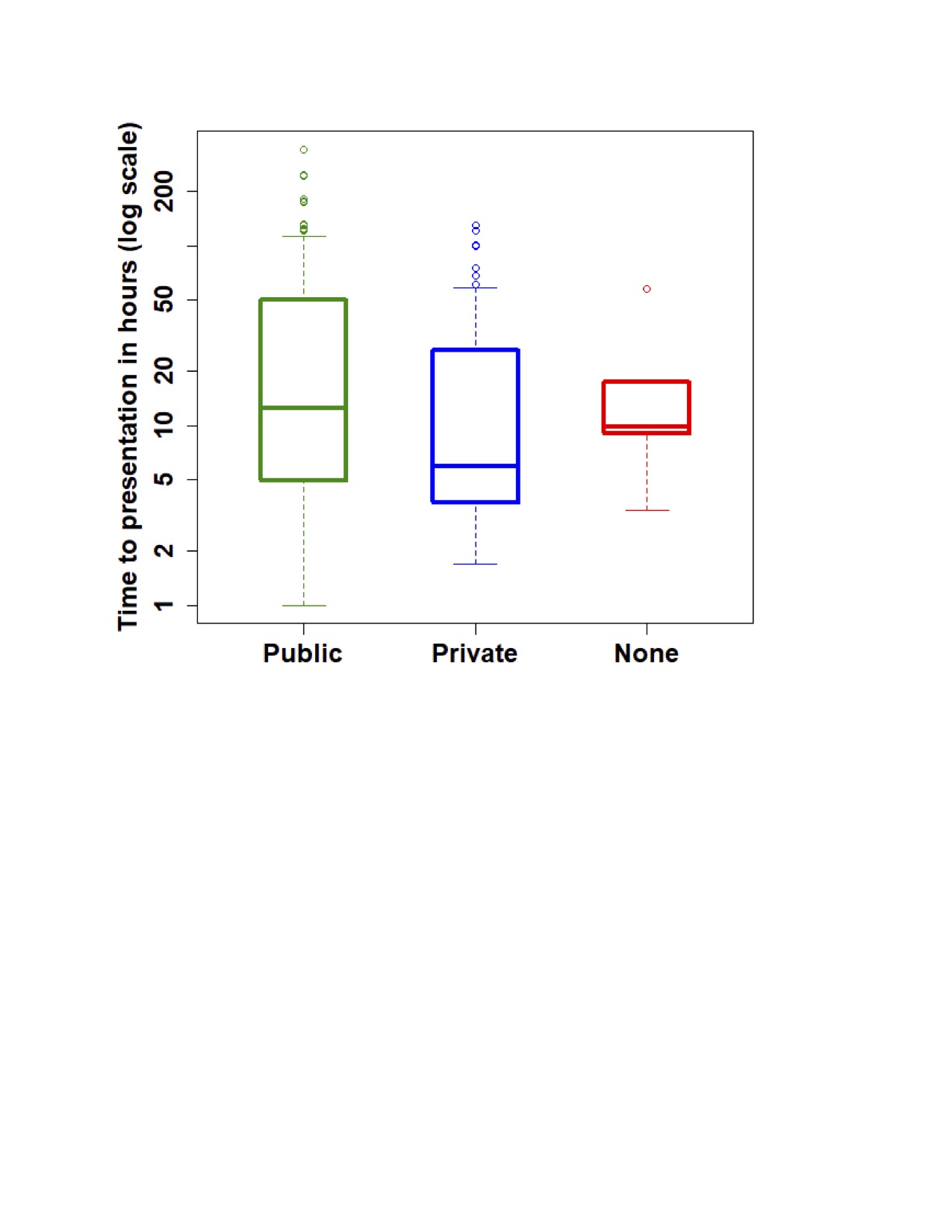
Introduction: Testicular torsion is a well-documented pediatric urological emergency that poses a time-sensitive risk to the testicle. Although management and treatment for suspected testicular torsion is standardized across most hospitals, delays may occur in time to presentation. Several social determinants of health (SDH) have been associated with higher orchiectomy rates for testicular torsion. However, factors associated with time to presentation are not well characterized. We investigated time from symptom onset to presentation patterns, hypothesizing an association between SDHs and prolonged time to presentation. Methods: A retrospective chart review of children = 17 years of age presenting with testicular torsion at a single tertiary pediatric center from 2013-2022 was performed. Children who were < 1 month of age, no documented time of symptom onset, or did not receive surgery were excluded. Demographics, symptom onset, time course of care, and surgical outcomes were extracted from the electronic medical records. The primary outcome measure of the study was time from symptom onset to ED presentation. SDHs such as interpreter utilization, race, zip code, area deprivation index, and insurance status were compared and analyzed using univariate analyses. Results: In total 253 children met inclusion criteria. The essential demographic variables include utilization of interpreter 22 (8.7%), public insurance 168 (66.4%), and Hispanic or Latino ethnicity 43 (17.0%). Racial make-up of the cohort was White 144 (56.9%), Black 79 (31.2%), Other 12 (4.7%), and Unknown 18 (7.1%). No difference was noted on univariate analysis of time to presentation between ethnicity, race, or interpreter usage. However, public insurance had a statistically significant greater time to presentation (Median 11.5 IQR 3.9-49.3 hrs vs 4.9, 2.7-26.2 hrs) (P=0.004) shown in Figure 1. A logistic regression analysis found ethnicity to have a higher association with adverse orchiectomy outcomes. Conclusions: Children with public insurance had significantly longer time intervals from reported symptom onset to presentation. Additionally, ethnicity was associated with higher orchiectomy rates. Further exploring barriers to seek care for testicular torsion serves as a foundation to reduce health disparities. SOURCE OF Funding: n/a