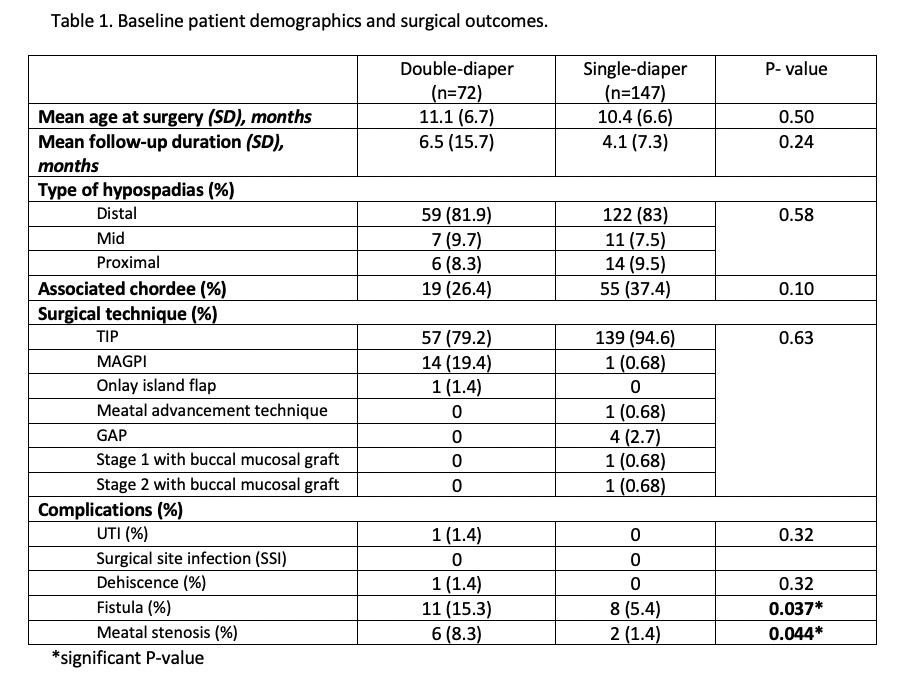
Introduction: Double-diaper technique is a common practice after hypospadias repair, which is believed to have fewer complications and better surgical outcomes. This practice is not evidence-based, and some families get stressed about this particular step of postoperative care. This study hypothesizes that the single-diaper technique offers similar surgical outcomes compared to the double-diaper technique. Methods: A single surgeon database was retrospectively reviewed for patients who underwent hypospadias repair between 2013 and 2021. Patients who were lost to follow-up and those in whom the type of diaper care (single or double diaper) was not documented were excluded. Patients in the single-diaper technique received the same type of dressing and discharge instructions, as those in the double-diaper group, except for leaving the catheter free inside the single diaper. Short-term complications including: surgical site infection (SSI), urinary tract infection (UTI) and wound dehiscence were the primary outcome; whereas long-term urethroplasty complications were secondary outcomes. Outcomes were analyzed according to the type of diaper care. Results: Among 323 patients reviewed, 219 patients met the inclusion criteria (72 patients in the double-diaper and 147 in the single-diaper group). Both study groups were similar regarding the age at surgery, follow-up duration, type of hypospadias, associated chordee and surgical technique. Looking at the primary outcomes, there was no statistically significant difference in SSI, UTI or wound dehiscence rates between the study groups. Only one dehiscence was reported in the single-diaper group for a patient with myelomeningocele who required self-catheterization. For the secondary outcomes, the incidence of meatal stenosis (8.3 vs. 1.4%, p=0.044), and fistula formation (5.4 vs. 15.3%, p=0.037) was significantly higher in the double-diaper than the single diaper group, respectively. Patient demographics and surgical outcomes are summarized in table 1. Conclusions: Single-diaper technique for hypospadias repair is simple, easy, and is not associated with increased risk of complications compared to double-diaper technique. SOURCE OF Funding: None