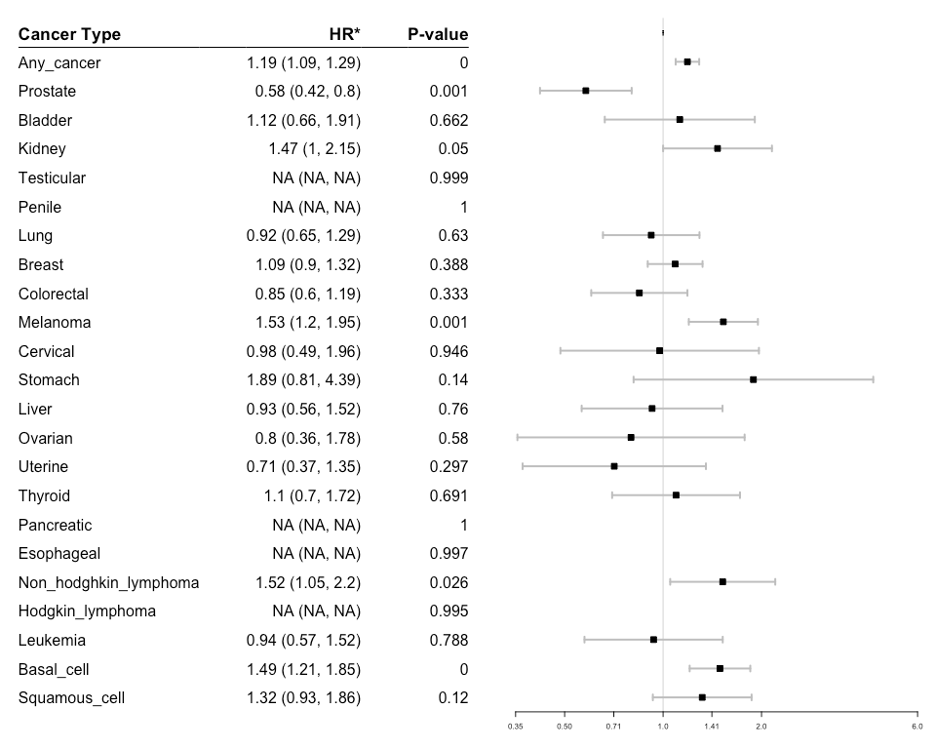
Introduction: Tumor necrosis factor-alpha inhibitors (TNF-I) are widely prescribed for chronic inflammatory conditions. Renal cell carcinoma (RCC) is known to be immune-responsive with the immune upregulation the mainstay of therapy for advanced disease. Prior studies of TNF-I use and malignancy risk with short follow-up have not demonstrated consistent associations outside non-melanoma skin cancers. We performed a broader, contemporary study of this potential relationship incorporating a large institutional cohort analysis. Methods: This was a retrospective, unmatched-cohort study involving a single academic medical center and conducted from 1998 to 2022. 11,086 patients with TNF-I exposure for inflammatory conditions and 32,665 patients with inflammatory conditions without TNF-I exposure were identified. Cox proportional hazards regression analysis, adjusting for age, race, gender, smoking status and underlying inflammatory disease type, was performed. TNF-I exposure was considered a time-varying factor, as TNF-I induction date was not fixed for patients in the TNF-I-exposed group. Models were fit incorporating all patients who developed any malignancy during the study period and individually for each type of cancer. Results of regression models were presented as forest plots with hazard ratios and 95% confidence intervals. Results: TNF-I exposure was associated with increased risk of any malignancy (HR=1.19, 95% CI 1.09-1.29, p<0.001). TNF-I exposure was positively associated with risk of RCC (HR 1.47, 95% CI 1.00-2.15, p=0.05). Conclusions: This increased risk of RCC in patients exposed to TNF-I suggests that this tumor microenvironment is potentially subject to TNF-mediated immune regulation and that patients on TNF-I may benefit from screening. SOURCE OF Funding: Polsky Urologic Cancer Institute, Northwestern University Feinberg School of Medicine