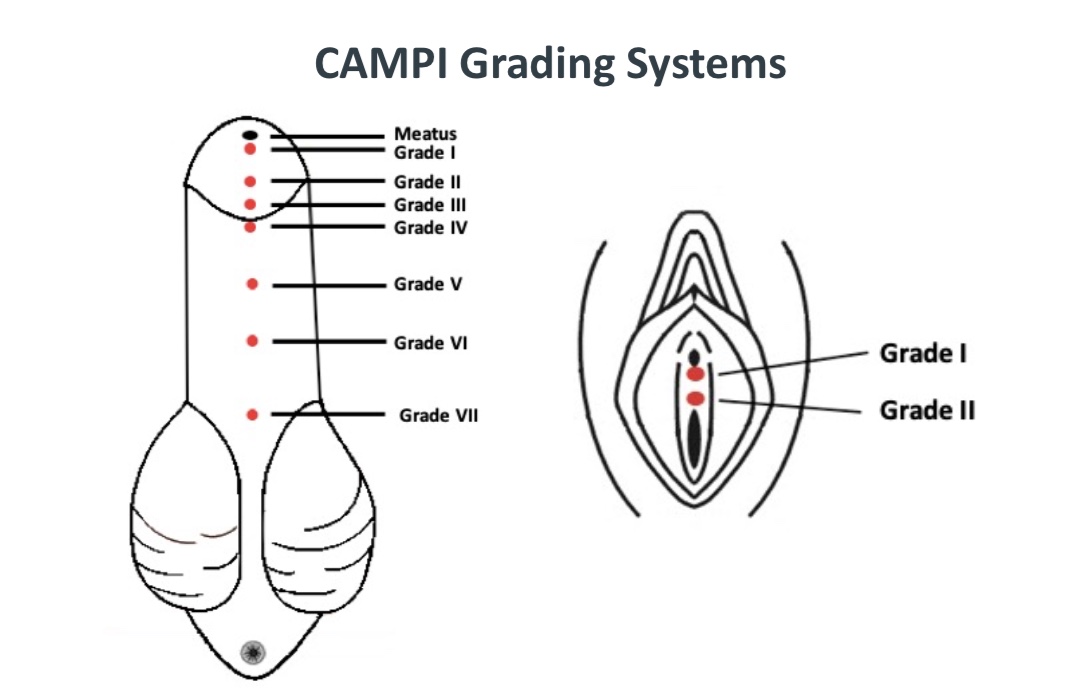
Introduction: Indwelling urethral catheters (IDC) are common in surgical practice. Given their widespread use, it is tempting to dismiss IDCs as benign drainage tubes. However, a significant complication is erosion of the urethra and surrounding soft tissues resulting in a pressure injury. We coined the term Catheter-Associated Mucosal Pressure Injury (CAMPI) for this form of iatrogenic hypospadias. Active treatment for CAMPI can be invasive with significant side effect profiles, emphasizing the importance of prevention in these patients. To date, there has been little research into CAMPI. Existing publications are either isolated case reports or small case series. This study explored the prevalence and risk factors of CAMPI in adults with long-term IDCs in regional Australia. Methods: A multi-centre cross-sectional study was undertaken at two large regional hospitals. The cohort was comprised of 200 adults with an IDC in-situ for > 4 weeks between January 2019 to June 2021. Data was collected via a voluntary questionnaire and review of medical records. A novel grading system based on existing hypospadias classification was developed (Image 1). Results: Overall prevalence of CAMPI was 9% (17/200). The mean IDC duration in patients with CAMPI was 39 weeks (9.7 months). The shortest time between IDC insertion and CAMPI detection was only 2 weeks. Prevalence was higher in males (16/169, 10%) compared to females (1/31, 3%). In males, the grades of CAMPI were meatal (7/17, 41%), glanular (3/17, 18%), coronal (4/17, 23%), subcoronal (1/17, 6%), distal penile shaft (1/17, 6%) and mid-penile shaft (1/17, 6%). The female case involved erosion of the urethral orifice during a long hospital admission. Over two-thirds of adults with a CAMPI had an IDC > 16Fr (13/18, 72%). Latex IDCs were more common than silicone IDCs in both groups (78% non-CAMPI vs 67% CAMPI, p=0.49). Poor mobility (36% non-CAMPI vs 72% CAMPI, p=0.01), community managed IDCs (26% non-CAMPI vs 50% CAMPI, p=0.03), and congestive cardiac failure (9% non-CAMPI vs 28% CAMPI, p=0.02) were associated with CAMPI formation. Conclusions: CAMPI is a prevalent complication of long-term IDCs and prevention is key. Catheter securement, hygiene and care must be prioritised by all clinicians who insert, manage and change IDCs. SOURCE OF Funding: Nil Funding